Why Does My Baby Arch His Back: Causes And What To Do

For parents in the United States, a baby arching his back is often a normal response to stretching, crying, hunger, or discomfort. Some babies also arch during feeding because of gas or reflux. However, repeated back arching with vomiting, poor feeding, breathing trouble, unusual movements, fever, or poor weight gain needs prompt medical advice.
The meaning depends on when the arching happens, how often it occurs, and what other signs appear. Back arching alone does not prove that a baby has acid reflux or another medical condition.
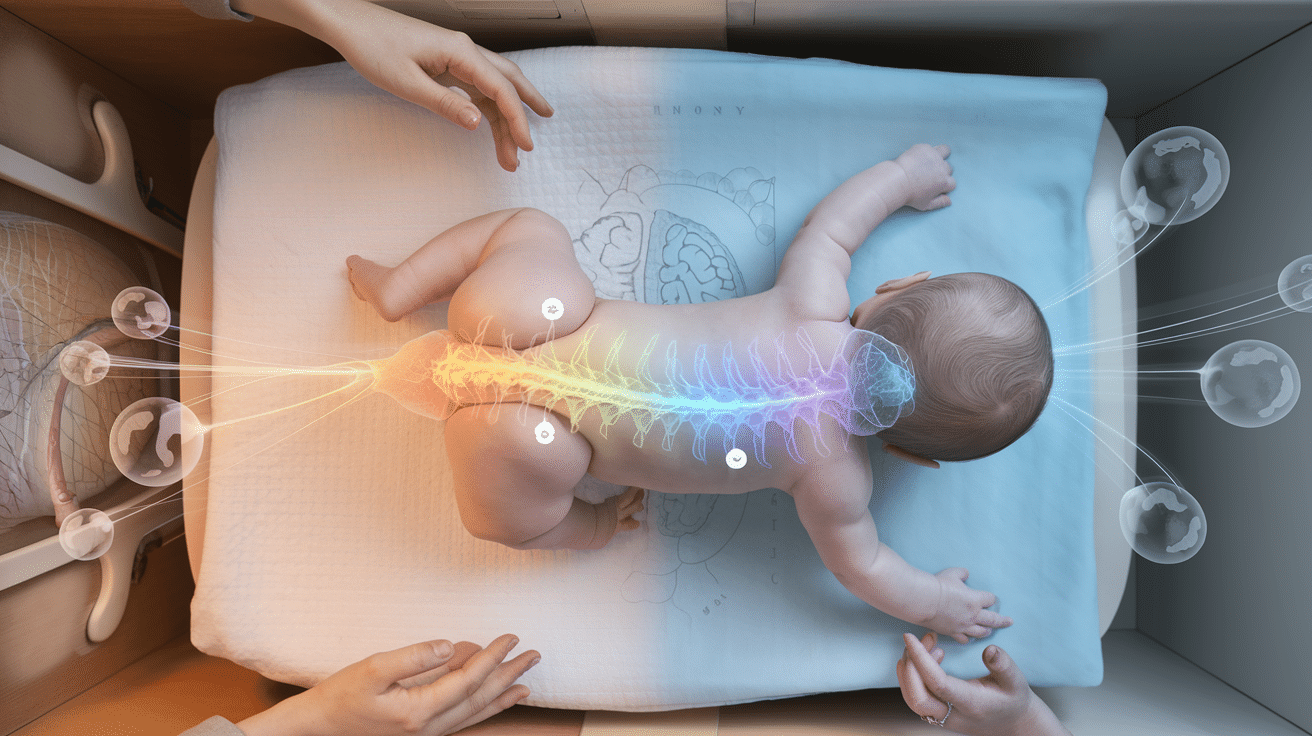
Common reasons a baby arches his back
Most cases have a simple cause. A baby may arch because he is trying to communicate, move his body, or respond to discomfort.
Stretching and normal movement
Young babies have limited control of their neck, back, and arms. They may arch while stretching after sleep, waking up, or moving their bodies. This is often brief and stops when the baby relaxes.
A baby may also arch during a startle response. A sudden sound, movement, bright light, or loss of support can make him extend his arms and back. This reflex is common in early infancy.
Crying or frustration
Crying can cause a baby to stiffen and arch. Hunger, a wet diaper, tiredness, heat, or too much noise may trigger this response.
Babies who cannot yet use words often communicate through their whole bodies. Arching may mean:
- “I am tired.”
- “I need a break.”
- “I do not like this position.”
- “I am hungry.”
- “I need to burp.”
- “Something hurts.”
If the baby settles after feeding, burping, a diaper change, or a quieter setting, the cause may be temporary discomfort or overstimulation.
Gas or a full stomach
Swallowed air can make a baby feel pressure in the stomach. Some babies arch, pull up their legs, grunt, or cry when they need to burp.
A very full stomach may cause similar behavior. This can happen when a baby drinks too quickly, takes more milk than he needs, or feeds while upset.
Reflux or gastroesophageal reflux
Infant reflux happens when stomach contents move back into the esophagus, the tube between the mouth and stomach. Reflux is common because a young baby’s digestive system is still developing.
Some babies arch during or after feeds. They may also:
- Spit up milk
- Swallow repeatedly
- Cough or hiccup
- Turn away from the bottle or breast
- Cry during feeds
- Seem uncomfortable when lying flat
Still, arching does not confirm reflux disease. Many healthy babies spit up without pain or poor growth. Doctors consider gastroesophageal reflux disease, or GERD, when reflux causes ongoing problems such as feeding refusal, poor weight gain, breathing symptoms, or significant distress.
A need to stop feeding
A baby may arch and turn away when he is full or needs a pause. Other fullness cues include slowing down, relaxing the hands, closing the mouth, or losing interest in the nipple.
Trying to make a baby finish a bottle can increase discomfort. Follow the baby’s hunger and fullness cues unless a health professional has given a specific feeding plan.
A healthy baby who arches briefly and then returns to normal is less likely to have a serious problem. The pattern matters more than one isolated episode.

Why does my baby arch his back while feeding?
Back arching during a feed can result from gas, a fast milk flow, feeding difficulty, or discomfort. The best next step is to look at the timing.
| What you notice | Possible explanation | What you can try |
|---|---|---|
| Arching at the start of feeding | Very hungry, upset, or overwhelmed | Calm the baby first and offer the feed again |
| Coughing, gulping, or choking | Milk may be flowing too fast | Pause, keep the baby upright, and ask a pediatric clinician for feeding advice |
| Arching near the end of feeding | Fullness, gas, or tiredness | Stop for a burp and follow fullness cues |
| Arching after most feeds | Reflux, swallowing air, or feeding intolerance | Keep a feeding record and discuss the pattern with the baby’s doctor |
| Refusing feeds or crying in pain | Possible illness or feeding problem | Contact the pediatrician promptly |
| Arching with spit-up but normal growth | Common infant reflux may be present | Ask about comfort measures; do not start medicine without medical advice |
Feeding steps that may help
If the baby is alert and breathing normally:
- Pause the feed when he begins to arch.
- Hold him upright with his head supported.
- Burp him gently.
- Check that clothing or the diaper is not tight.
- Offer the breast or bottle again only if he still shows hunger cues.
- Keep a note of the feed, symptoms, spit-up, and wet diapers.
For bottle-fed babies, make sure the nipple flow is appropriate. A flow that is too fast may cause gulping and air swallowing. A flow that is too slow may cause frustration. Ask a pediatrician, lactation consultant, or feeding therapist before changing nipple flow if feeding is difficult.
For breastfeeding, a forceful let-down may cause coughing, gulping, or pulling away. A lactation consultant can assess positioning and milk flow.
Do not prop a bottle. Do not feed a baby while he is lying flat. These practices can increase choking risk and may worsen feeding problems.

Is back arching a sign of acid reflux?
Back arching can occur with reflux, but it is not a reliable sign by itself. Reflux is more concerning when arching occurs with repeated feeding distress, poor growth, frequent vomiting, or refusal to eat.
The American Academy of Pediatrics and the North American Society for Pediatric Gastroenterology, Hepatology and Nutrition advise against treating normal spit-up as disease without signs of a problem. Acid-suppressing medicines are not harmless and should not be given to an infant unless a clinician recommends them.
Signs that may support a reflux problem
Contact the baby’s health care provider if arching is frequent and occurs with:
- Pain or distress during many feeds
- Repeated refusal to feed
- Poor weight gain
- Frequent vomiting
- Coughing, wheezing, or breathing problems
- Trouble sleeping because of feeding-related discomfort
- Blood in vomit or stool
- Fewer wet diapers than usual
A doctor may review the feeding history, growth chart, physical exam, and symptoms. Tests are not always needed.
Safe ways to reduce feeding discomfort
A clinician may suggest:
- Smaller, more frequent feeds
- More frequent burping
- Slower feeding
- Keeping the baby upright while awake after a feed
- Checking bottle nipple flow
- Reviewing breast milk or formula preparation
- Assessing swallowing and oral motor skills
Never place a baby to sleep on the stomach or side to treat reflux. The American Academy of Pediatrics recommends placing babies flat on their backs for every sleep, on a firm, level sleep surface. Do not use sleep positioners, wedges, inclined sleepers, or pillows.

Could back arching mean pain or another medical problem?
Sometimes. Back arching that is severe, repeated, sudden, or linked with other symptoms deserves medical attention.
Sandifer syndrome
Sandifer syndrome is an uncommon movement pattern linked with reflux or inflammation in the upper digestive tract. A baby may show episodes of back arching, neck twisting, or unusual head positioning, often around feeding.
The movements can look alarming. They may resemble a seizure, but Sandifer episodes are not seizures. A clinician must evaluate the baby because several conditions can cause similar movements.
Torticollis or muscle tightness
A baby with torticollis may favor one direction, tilt the head, or have trouble turning the neck. He may arch or become upset when placed in certain positions.
A pediatrician can check the baby’s movement and may refer the family to pediatric physical therapy. Do not force the neck into a new position.
Neurologic conditions
Rarely, back arching may occur with abnormal muscle tone, spasms, seizures, or other neurologic problems. Concerning signs include:
- Repeated episodes with the same unusual pattern
- Rhythmic jerking
- Staring with poor response
- Sudden stiffening or limpness
- Loss of skills
- One-sided weakness
- A change in alertness
- Trouble breathing or turning blue
A short video can help a clinician understand what happens. Record only if it is safe. Do not delay emergency care to make a video.
Infection or serious illness
A baby who arches with fever, marked irritability, poor feeding, unusual sleepiness, a bulging soft spot, repeated vomiting, or a stiff body may be seriously ill.
In the United States, any infant younger than 3 months with a rectal temperature of 100.4°F (38°C) or higher needs urgent medical assessment. Call the baby’s doctor or seek emergency care based on the doctor’s instructions.

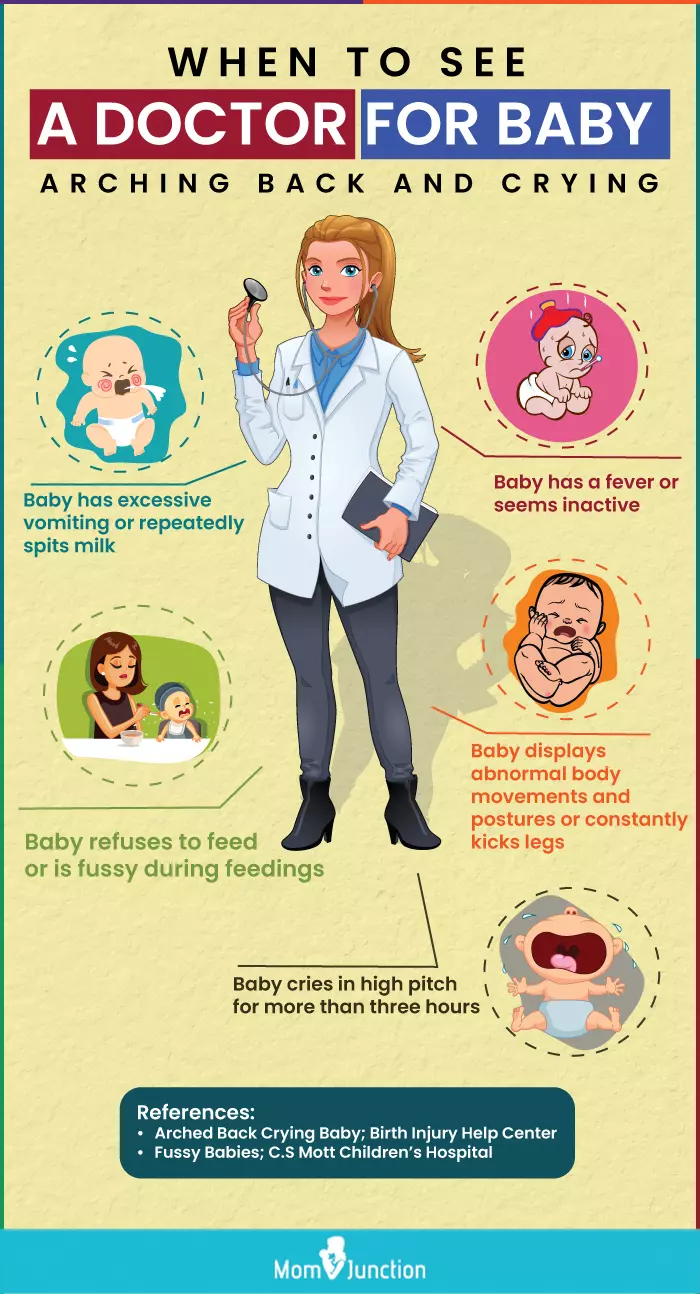
When should I call the pediatrician?
Call the pediatrician soon if your baby:
- Arches during most feeds
- Cries as if in pain
- Refuses several feeds
- Vomits often
- Has poor weight gain
- Has fewer wet diapers
- Has persistent cough, wheezing, or noisy breathing
- Has ongoing diarrhea, constipation, or blood in the stool
- Repeatedly twists the neck or body
- Has symptoms that are getting worse
Contact the doctor sooner if the baby is very young, was born prematurely, or has a known medical condition.
Seek emergency care now
Call 911 or go to the nearest emergency department if your baby:
- Has trouble breathing
- Turns blue, gray, or very pale
- Is difficult to wake
- Has a seizure or repeated abnormal movements
- Has green vomit
- Vomits blood
- Has blood in the stool with severe illness
- Has a swollen or hard belly
- Has signs of severe dehydration
- Has a fever and appears seriously ill
Projectile vomiting can have many causes. In a young baby, forceful repeated vomiting needs prompt evaluation because conditions such as pyloric stenosis can become serious.
Do not wait for a routine appointment when breathing, consciousness, hydration, or color is affected.
What parents can track at home
A simple record can reveal a pattern and help the pediatrician. Write down:
- Baby’s age
- Breast or bottle feeding
- Time and length of each feed
- Approximate amount taken, if bottle-fed
- When the arching starts
- How long it lasts
- Spit-up or vomiting
- Coughing, choking, or noisy breathing
- Wet diapers
- Stools
- Temperature
- What helped the baby settle
A video may be useful for brief unusual movements. Keep the baby safe, keep the camera steady, and show the whole body if possible.
Do not diagnose reflux from a video or symptom checklist. Use the information to support a professional assessment.

What not to do when a baby arches his back
Avoid common responses that can increase risk or delay care.
- Do not put a baby to sleep on the stomach to reduce reflux.
- Do not elevate the crib mattress.
- Do not use pillows, wedges, or positioners.
- Do not give water, herbal products, antacids, or reflux medicine without medical advice.
- Do not force a baby to finish a bottle.
- Do not shake, bounce, or handle the baby roughly.
- Do not restrain unusual movements.
- Do not assume every arch is reflux.
- Do not wait if the baby has breathing trouble, blue color, severe vomiting, or altered alertness.
Comfort measures are reasonable only when the baby is otherwise well, feeding normally, and breathing normally.

Key takeaways
- A baby may arch his back because of stretching, crying, gas, fullness, or normal infant reflux.
- Back arching alone does not diagnose GERD.
- Arching during feeds with coughing, choking, refusal, vomiting, or poor weight gain needs medical advice.
- Keep babies flat on their backs for sleep, even when reflux is suspected.
- Seek emergency care for breathing trouble, blue color, severe lethargy, green or bloody vomit, seizures, or serious dehydration.
- Track feeding, symptoms, wet diapers, and unusual movements to share with the pediatrician.
Frequently asked questions
Why does my baby arch his back and cry?
Crying with back arching may mean hunger, tiredness, gas, overstimulation, feeding difficulty, or pain. Check basic needs first. If it happens often, occurs during feeds, or comes with vomiting or poor feeding, call the pediatrician.
Why does my baby arch his back when lying down?
A baby may arch while stretching, becoming upset, or trying to change position. Reflux discomfort is another possible cause, but it cannot be confirmed by this sign alone. Always place the baby on his back on a firm, flat sleep surface.
Why does my baby arch his back and throw his head back?
This may occur during crying, frustration, stretching, or a startle response. Repeated head and neck movements, poor head control, unusual stiffness, or reduced alertness need a medical assessment.
Is it normal for a baby to arch his back during sleep?
Brief stretching or startling can be normal. Repeated arching with crying, stiffening, unusual movements, breathing changes, or trouble waking is not something to ignore. Do not change safe-sleep positioning to stop the arching.
Can formula cause a baby to arch his back?
A baby may react to feeding problems, swallowed air, overfeeding, or an intolerance. Formula is not always the cause, and changing formulas without guidance may make feeding harder. Discuss persistent symptoms with the pediatrician before making a change.
How can I tell whether my baby is having a seizure?
Some seizures cause repeated stiffening, jerking, staring, unresponsiveness, or changes in breathing or color. Back arching can also resemble other movements, such as reflux-related posturing. Treat a first concerning episode as urgent and call 911 when the baby is unresponsive, has trouble breathing, turns blue, or has prolonged or repeated movements.
Conclusion
A baby arching his back is often a short-lived response to stretching, crying, gas, feeding, or normal reflux. The safest way to judge the behavior is to consider the full pattern: when it happens, whether the baby feeds and grows well, and whether warning signs appear.
Pause during feeds, burp the baby, follow hunger and fullness cues, and keep sleep flat and on the back. Contact the baby’s pediatrician when the behavior is frequent, painful, or linked with feeding or growth concerns. Seek emergency care for breathing trouble, color change, severe vomiting, seizures, or unusual difficulty waking.