
Why Do Babies Get Gassy: Causes And Relief Tips

For families in the United States, gas is one of the most common reasons a young baby seems fussy. Babies often get gassy because they swallow air while feeding, crying, or using a bottle. Their digestive systems are also still developing, so moving milk through the gut can create pressure and discomfort.
Most baby gas is normal and improves with time. Simple steps such as better feeding positions, regular burping, gentle movement, and keeping a baby upright after feeds may help. However, gas with fever, vomiting, blood in the stool, poor feeding, or a swollen belly needs prompt medical attention.

What causes gas in babies?
Babies get gas when air enters the stomach or when gut bacteria break down milk and create gas in the intestines. A baby may swallow more air when crying, feeding quickly, using a bottle, or having trouble staying latched.
Common causes include:
- Swallowing air during feeds: A shallow breast latch, a fast milk flow, or a bottle nipple with a fast flow can lead to extra air.
- Crying for a long time: Babies often swallow air while crying, which can increase gas later.
- An immature digestive system: The muscles and nerves that move food through the gut are still developing.
- Normal digestion: The gut produces gas as it processes breast milk or formula.
- Constipation: Stool that moves slowly can trap gas and cause belly pressure.
- Feeding changes: A new formula, larger feeds, or a change in feeding routine may briefly affect digestion.
- Food sensitivity or allergy: Less often, cow’s milk protein allergy or another problem can cause gas along with other symptoms.
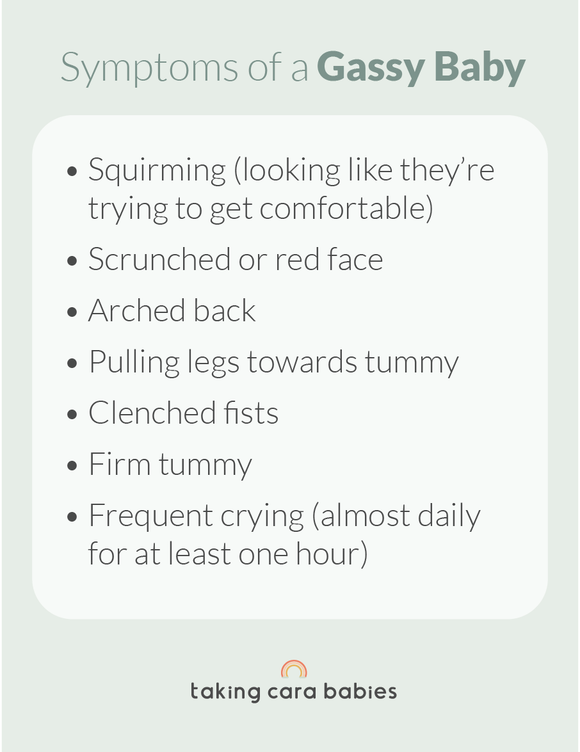
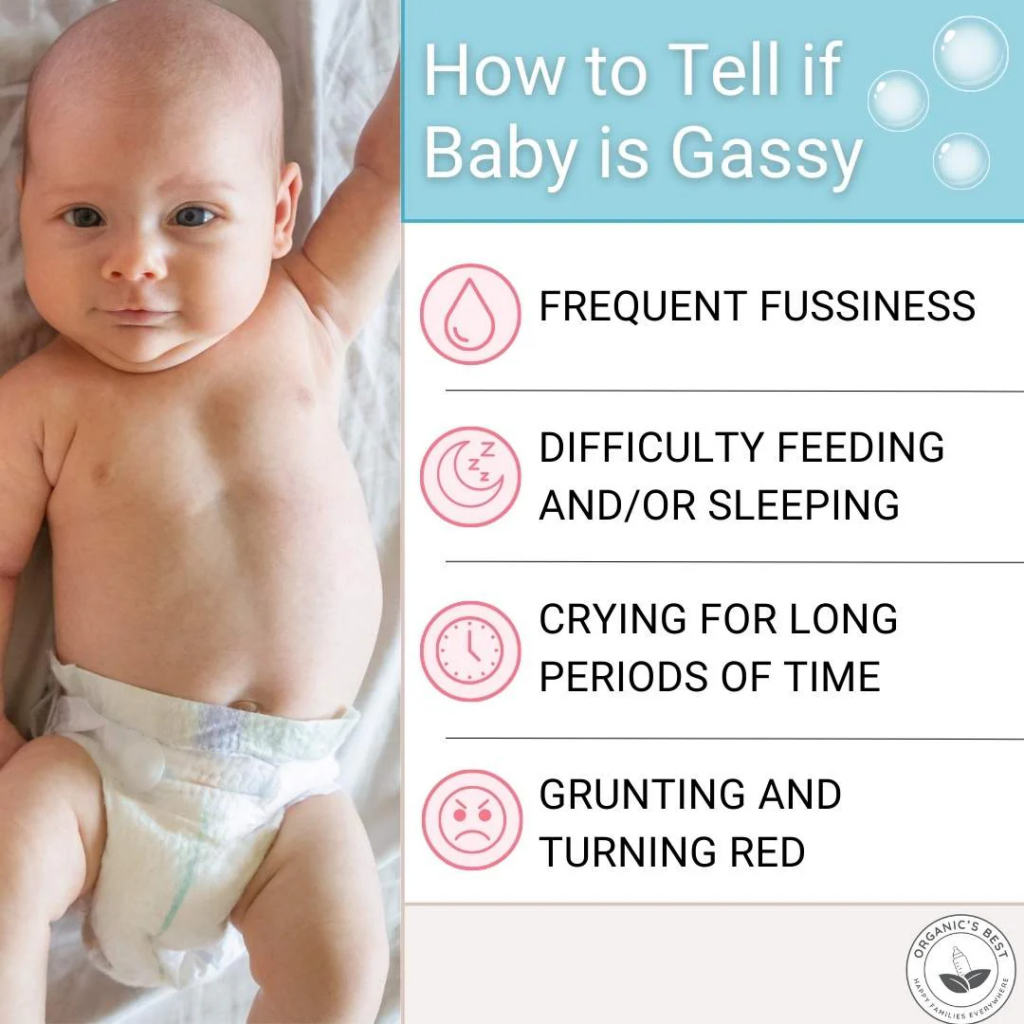
Gas can feel painful when it stretches the stomach or intestines. A baby may pull up their legs, clench their fists, turn red, grunt, or cry. These signs can look dramatic, but they do not always mean that a serious illness is present.
Why are breastfed and bottle-fed babies gassy?
Both breastfed and formula-fed babies can have gas. The feeding method may change how much air a baby swallows, but gas alone does not prove that a baby cannot tolerate breast milk or formula.
Breastfed babies
A breastfed baby may swallow air when the latch is shallow or when milk flows very quickly. A strong let-down reflex can cause coughing, gulping, clicking sounds, or pulling away from the breast. These feeding patterns may increase air intake.
A lactation professional or pediatric clinician can check the baby’s latch and feeding pattern. In many cases, improving the latch helps more than removing foods from the parent’s diet.
Some babies may react to proteins from foods in a breastfeeding parent’s diet, but this is not the usual cause of simple gas. A food reaction is more concerning when gas occurs with blood or mucus in the stool, eczema, repeated vomiting, diarrhea, poor weight gain, or marked distress. Speak with the baby’s clinician before making major diet changes.
Formula-fed babies
Bottle-fed babies may swallow air if the nipple flow is too fast, the nipple is not filled with milk, or the baby drinks too quickly. Feeding position also matters. Keep the bottle at an angle that keeps milk in the nipple rather than letting the baby pull in air.
Do not change formula repeatedly without medical guidance. Frequent changes can make it harder to tell what is causing symptoms and may not relieve ordinary gas. Always mix powdered formula with the exact amount of water listed on the label. Too much or too little water can be unsafe.

How can you tell if gas is causing discomfort?
Gas may be one cause of fussiness, but crying does not always come from gas. Babies can cry because they are hungry, tired, too warm, overstimulated, wet, or in need of comfort.
Signs that may occur with gas include:
- Passing gas during or after crying
- Pulling the legs toward the belly
- A tight or tense-looking abdomen that later softens
- Grunting or straining
- Squirming during feeds
- Turning red while pushing
- Short periods of relief after burping or passing stool
- Fussiness that improves after passing gas
A baby who strains, grunts, and turns red before passing a soft stool may have infant dyschezia. This happens when a young baby is still learning to coordinate abdominal pressure with relaxation of the pelvic muscles. It usually improves on its own and is not the same as constipation.
Constipation is more likely when stools are hard, dry, or painful to pass. Stool frequency varies, especially among breastfed babies. The texture of the stool matters more than the number of bowel movements alone.
Gas is less likely to be the only issue when a baby has ongoing vomiting, poor weight gain, blood in the stool, breathing trouble, or a firm, swollen abdomen.
Safe ways to relieve baby gas
The safest approach is to reduce swallowed air and help the baby move trapped gas. Use gentle steps, and stop if the baby seems uncomfortable.
1. Improve the feeding position
Keep the baby’s head and upper body slightly higher than the stomach during feeding. The baby’s neck should stay straight, not bent sharply forward.
For bottle feeding:
- Hold the bottle at an angle that keeps the nipple full of milk.
- Let the baby pause when they show signs of needing a break.
- Avoid forcing the baby to finish the bottle.
- Use the nipple flow recommended for the baby’s age and feeding skill.
- Replace damaged or collapsed nipples.
For breastfeeding, aim for a deep latch. The baby’s mouth should take in more than just the nipple. Clicking, repeated unlatching, coughing, or painful feeding may signal a latch or milk-flow problem.
2. Burp during and after feeds
Some babies need to burp during a feed. Others burp well only at the end. Try a gentle burp when the baby switches breasts, pauses during a bottle, or seems uncomfortable.
You can hold the baby:
- Upright against your chest
- Sitting on your lap with the head supported
- Face down across your lap while keeping the head higher than the chest
Support the head and neck. Pat or rub the back gently. A baby does not need to produce a loud burp for the feeding to be successful.
3. Keep the baby upright after feeding
Hold the baby upright for about 10 to 15 minutes after a feed if this seems to help. This may reduce spit-up and give swallowed air time to rise.
Always place the baby flat on their back on a firm, empty sleep surface for sleep. Do not use a sleep positioner, inclined sleeper, couch, recliner, or adult bed to manage gas or reflux.
4. Try gentle movement
When the baby is awake and supervised, you can:
- Move the legs in a slow bicycle motion.
- Bring the knees gently toward the belly, then release.
- Give supervised tummy time.
- Massage the abdomen lightly in a clockwise direction.
Do not press hard on the belly. Avoid these movements right after a full feed if the baby tends to spit up.
5. Check the feeding pattern
Overfeeding can cause discomfort and more spit-up. Watch for hunger and fullness cues rather than feeding by the clock alone. A full baby may turn away, relax their hands, slow down, or stop sucking.
Ask the baby’s pediatric clinician about feeding amounts if the baby vomits often, seems hungry after every feed, has poor weight gain, or has fewer wet diapers than expected.

What should you avoid giving a gassy baby?
Do not give a young baby water, juice, tea, herbal products, or home remedies unless the baby’s clinician specifically recommends them. Babies under 12 months should not have honey because of the risk of infant botulism.
Use caution with over-the-counter gas drops. Products containing simethicone are sold in the United States, but evidence that they relieve routine infant colic or gas is limited. Ask a pediatric clinician or pharmacist before using any medicine, especially for a newborn or a baby who takes other medicines.
Avoid:
- Gripe water
- Herbal teas
- Essential oils
- Homemade remedies
- Frequent formula changes
- Rectal stimulation
- Laxatives or suppositories without medical advice
- Propping a bottle
- Feeding a baby while lying flat
- Putting a baby to sleep on the stomach or side
A product labeled “natural” is not automatically safe for an infant. Supplements may contain ingredients that are not well studied in babies, and product quality can vary.
When is baby gas a sign of a medical problem?
Gas usually causes brief discomfort but does not make a baby look seriously ill. Contact a health care professional promptly if gas occurs with other symptoms.
Seek urgent medical care for a baby with:
- A rectal temperature of 100.4°F (38°C) or higher, especially if younger than 3 months
- Green vomit or repeated forceful vomiting
- Blood in the vomit or stool
- A hard, swollen, or very tender belly
- Trouble breathing or blue, gray, or very pale skin
- Extreme sleepiness, weakness, or difficulty waking
- Refusal to feed
- Signs of dehydration, such as far fewer wet diapers, a very dry mouth, or no tears when crying
- Poor weight gain
- Crying that is severe, unusual, or cannot be consoled
Call the baby’s clinician if fussiness continues, feeding becomes difficult, stools change sharply, or you are worried. Trust your judgment. A parent or caregiver does not need to wait for every warning sign before asking for help.
In the United States, you can contact your pediatrician’s office, an urgent care center, or your local emergency department. Call 911 for breathing problems, blue skin, unresponsiveness, or another immediate emergency.
How long does baby gas last?
Gas often peaks during the first weeks and months of life as feeding and digestion develop. Many babies have more crying and fussiness around 6 weeks of age, with gradual improvement by 3 to 4 months. Each baby differs, so age alone cannot explain every symptom.
Normal gas should not steadily worsen or interfere with feeding and growth. The pattern matters:
| Pattern | What it may suggest |
|---|---|
| Brief fussiness with normal feeding and growth | Common infant gas or normal digestive development |
| Straining before soft stools | Infant dyschezia |
| Hard, dry stools | Constipation |
| Gas with rash, blood in stool, vomiting, or poor growth | Possible food allergy or another medical issue |
| Gas with fever, swollen belly, or green vomit | Possible urgent illness |
Keep a short record for a few days if symptoms continue. Note feeding times, breast or formula intake, vomiting, stool texture, wet diapers, crying periods, and what helped. This gives the clinician useful information without requiring guesswork.
Can probiotics or a special diet help?
Probiotics do not help every gassy baby, and the effect may depend on the specific strain and the baby’s feeding method. Some research has found possible benefit for certain breastfed infants with colic, but evidence is not strong enough to treat all infant gas with probiotics.
Do not start a probiotic, special formula, elimination diet, or thickener without asking the baby’s clinician. A specialized formula may be appropriate for a diagnosed allergy or another medical need, but it is not automatically better for routine gas.
Parents who breastfeed also do not need to remove dairy, soy, or other foods just because a baby is gassy. Unneeded restrictions can make eating harder and may reduce important nutrients. Dietary changes make more sense when a clinician identifies a pattern and provides a safe plan.
Key takeaways
- Babies commonly get gas from swallowed air and normal digestion.
- Gas can happen with both breastfeeding and formula feeding.
- A good latch, paced bottle feeding, burping, upright holding, and gentle movement may help.
- Keep babies on their backs on a firm, flat sleep surface, even when gas or reflux is present.
- Do not give water, gripe water, herbal products, or medicine without appropriate medical advice.
- Fever, green vomit, blood in the stool, poor feeding, breathing trouble, dehydration, or a swollen hard belly requires medical attention.
Frequently asked questions
Is it normal for babies to fart a lot?
Yes. Frequent farting can be normal when a baby feeds well, has regular wet diapers, grows as expected, and otherwise seems well. The sound or smell of gas alone does not show that a baby has a medical problem.
Does switching formula help baby gas?
Sometimes a clinician may recommend a different formula, especially when symptoms suggest an allergy or intolerance. For ordinary gas, repeated formula changes often do not help. Ask the baby’s clinician before switching, and prepare formula exactly as directed.
Should I stop eating dairy if my breastfed baby is gassy?
Not for gas alone. Dairy avoidance may be considered when the baby also has signs such as blood or mucus in the stool, eczema, repeated vomiting, diarrhea, or poor growth. Discuss the symptoms with a pediatric clinician before changing your diet.
Can I give gas drops to a newborn?
Ask a pediatric clinician or pharmacist first. Simethicone gas drops are available in the United States, but they may not relieve routine infant gas, and dosing depends on the product. Never use adult products or give a medicine that is not labeled for the baby’s age.
Does tummy time help with gas?
Supervised tummy time while the baby is awake may support movement and can sometimes help a baby pass gas. It is not a sleep position. Always place the baby on their back for sleep and stay with them during tummy time.
What to do next
If your baby is feeding well and has no warning signs, try one change at a time: improve the feeding position, pause to burp, keep the baby upright briefly, and use gentle leg movements while the baby is awake. If the problem continues or you are unsure whether the symptoms are normal, contact the baby’s pediatric clinician.
For reliable U.S. guidance, review information from the American Academy of Pediatrics, the Centers for Disease Control and Prevention, and the National Institute of Diabetes and Digestive and Kidney Diseases.