Why Is My Baby Wheezing: Causes And When To Worry

A baby who is wheezing may have a common viral infection, but noisy breathing can also signal a serious problem. Call 911 in the United States now if your baby has blue, gray, or pale lips; severe trouble breathing; pauses in breathing; is hard to wake; or cannot feed because of breathing difficulty.
If your baby is breathing comfortably but has a new wheeze, contact the child’s pediatrician today. Babies can worsen quickly, especially during respiratory infections. This guide explains what wheezing sounds like, common causes, safe steps at home, and when your baby needs urgent care.
What Does Baby Wheezing Sound Like?
Wheezing is a high-pitched, musical sound caused by narrowed lower airways. It often sounds louder when your baby breathes out, although severe airway narrowing can cause sounds during both breathing in and breathing out.
Parents may use the word “wheezing” for many types of noisy breathing. The sound’s timing and quality can help a clinician find the cause.
| Sound | When it happens | Possible meaning |
|---|---|---|
| Wheeze | Often when breathing out | Narrowed small airways, such as with bronchiolitis or asthma |
| Stridor | Usually when breathing in | Narrowing in the throat or upper airway, such as croup |
| Snoring or rattling | During sleep or with congestion | Nasal mucus or upper-airway blockage |
| Grunting | At the end of a breath | The baby may be working hard to keep the lungs open |
| Wet or crackly sounds | During breathing | Mucus, infection, or fluid in the airways |
A recording can help. If it is safe, record a short video that shows your baby’s breathing and the sound. A video does not replace medical care, but it may help the pediatrician understand what you heard.
Wheezing versus congestion
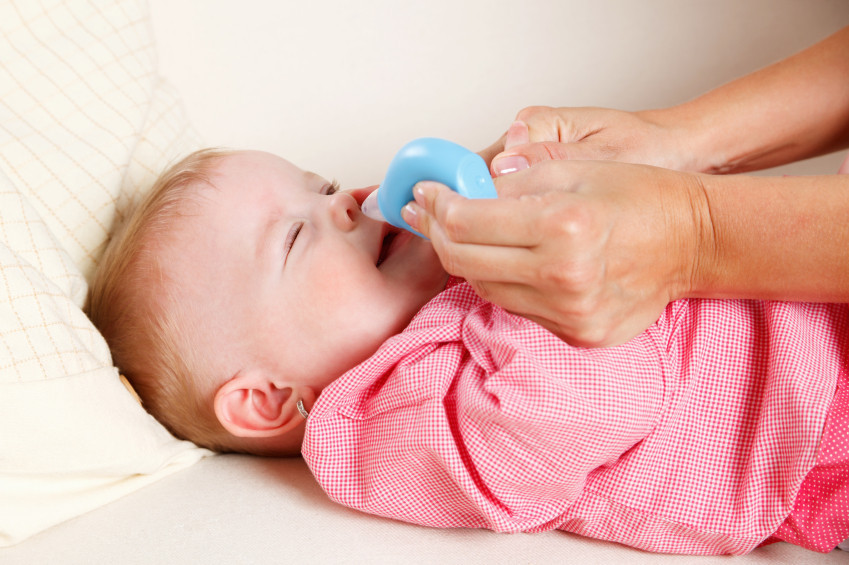
A stuffy nose can make a baby sound loud or raspy. Nasal congestion often improves after gentle suction. True wheezing usually comes from the chest and may continue even after the nose is clear.
Do not wait for a perfect label. If your baby seems to struggle for each breath, seek help based on the effort and behavior you see.

Why Is My Baby Wheezing?
The most common causes include viral bronchiolitis, mucus, croup-like upper-airway swelling, asthma or reactive airways, pneumonia, and something inhaled into the airway. A clinician must consider your baby’s age, symptoms, medical history, and how the breathing sounds.
1. Bronchiolitis
Bronchiolitis is a viral infection that causes swelling and mucus in the small airways. Respiratory syncytial virus, or RSV, is one common cause, but other viruses can cause it too.
It often begins like a cold:
- Runny nose
- Stuffy nose
- Mild cough
- Lower appetite
- Fever in some babies
Over the next few days, the cough may worsen. Your baby may wheeze, breathe faster, or have trouble feeding. Infants younger than 6 months and babies born early may face a higher risk of severe illness.
2. A cold with heavy mucus
Mucus in the nose and throat can create a rattling or whistling sound. Babies have small nasal passages, so even a small amount of mucus can make breathing sound loud.
If the sound improves after gentle nasal suction, congestion may be the main cause. However, a baby can have both nasal congestion and a lower-airway illness.
3. Croup or another upper-airway illness
Croup often causes a barking cough and a harsh sound when breathing in. That sound is called stridor, not wheezing.
Croup can become urgent if the noisy breathing occurs while your baby is calm or resting. Drooling, trouble swallowing, a weak cry, or a baby who looks frightened or exhausted also needs prompt medical assessment.
4. Asthma or sensitive airways
Asthma is less often diagnosed in very young infants because many other conditions can cause wheezing. Still, repeated wheezing may reflect sensitive or reactive airways.
A family history of asthma, eczema, or allergies may raise the chance of asthma later. Only a pediatric clinician can decide whether repeated breathing symptoms fit asthma or another condition.
5. Pneumonia
Pneumonia is an infection in the lungs. It may cause cough, fever, rapid breathing, poor feeding, low energy, or breathing that looks harder than usual.
Some babies with pneumonia do not have a high fever. A baby who is breathing fast, feeding poorly, or acting unusually sleepy should be assessed promptly.
6. An inhaled object
A sudden cough or wheeze after eating or playing can mean that food or a small object entered the airway. This is an emergency, even if the symptoms seem to improve.
Do not put your fingers into your baby’s mouth to search for an object unless you can clearly see it and remove it safely. Call 911 if your baby cannot breathe, cry, or cough normally.
7. An allergic reaction
Wheezing can occur during a severe allergic reaction. Look for sudden hives, swelling of the lips or tongue, vomiting, weakness, or trouble breathing.
Call 911 immediately for signs of anaphylaxis. If your child has a prescribed epinephrine auto-injector, use it as directed while emergency help is on the way.
8. Less common causes
Less common causes include airway structure problems, heart or lung disease, or exposure to smoke and other irritants. A wheeze that keeps returning, occurs without a cold, or affects feeding needs a medical review.

When Is Baby Wheezing an Emergency?
Call 911 in the United States if your baby has any of these signs:
- Blue, gray, or very pale lips, face, or skin
- Breathing pauses or stops
- Severe struggle to breathe
- Ribs, skin above the collarbone, or skin below the ribs pulling in with each breath
- Nostrils widening with each breath
- Grunting
- A baby who cannot cry, cough, or make normal sounds
- Choking or suspected inhalation of an object
- Sudden wheezing with facial swelling, hives, or collapse
- Extreme sleepiness, limpness, or difficulty waking
Do not drive yourself if your baby is in severe distress. Place the call on speaker and follow the dispatcher’s instructions.
Signs that need same-day medical care
Contact your pediatrician or seek urgent care today if your baby:
- Is breathing faster than usual
- Has a new wheeze
- Feeds much less than normal
- Has fewer wet diapers
- Vomits repeatedly
- Has a fever and is younger than 3 months
- Has a cough or wheeze that is getting worse
- Has a chronic lung, heart, or immune condition
- Was born prematurely and now has breathing symptoms
A young baby can become dehydrated before the problem looks severe. Feeding trouble is often an early warning sign.

What Should I Do if My Baby Is Wheezing?
If your baby is alert and breathing comfortably, take simple steps while you arrange medical advice.
- Keep your baby calm and upright while awake. Crying can make breathing harder. Hold your baby against your chest or keep them upright in your arms.
- Clear a blocked nose gently. Use saline drops made for infants, then use a bulb syringe or nasal aspirator as directed. Suction before feeds if congestion makes feeding hard.
- Offer normal breast milk or formula feeds. Give smaller, more frequent feeds if your baby cannot manage a full feed. Do not force-feed.
- Watch breathing effort. Look at the ribs, belly, nostrils, color, and alertness—not only the sound.
- Track wet diapers. Fewer wet diapers can signal dehydration.
- Call the pediatrician. Explain when the wheezing began, whether it is getting worse, and whether your baby has fever, cough, poor feeding, or exposure to illness.
What not to do
Do not give an infant over-the-counter cough or cold medicine unless a clinician specifically tells you to do so. These products can cause serious side effects in young children and do not treat the cause of wheezing.
Do not give honey to a baby younger than 12 months because of the risk of infant botulism. Do not use someone else’s inhaler, nebulizer medicine, antibiotics, or steroid medicine.
Do not use steam from boiling water. It can burn a baby and does not reliably treat the cause of wheezing. Avoid cigarette smoke, vaping aerosols, strong scents, and fireplace smoke.
Never let a baby sleep in a car seat, swing, or your arms because they sound congested. For sleep, place your baby flat on their back on a firm, clear sleep surface. Do not elevate the mattress with pillows or sleep positioners.

How Do Doctors Check a Wheezing Baby?
A clinician will first assess how hard your baby is breathing and whether the baby is getting enough oxygen. The evaluation may include:
- Listening to the lungs
- Checking breathing rate and effort
- Measuring oxygen saturation
- Checking temperature and hydration
- Asking about feeding and wet diapers
- Asking when the sound began
- Reviewing birth history and medical conditions
- Asking about choking, smoke exposure, sick contacts, and allergies
Many babies with bronchiolitis do not need antibiotics. Antibiotics treat bacteria, not viruses. A clinician may recommend supportive care, observation, or hospital treatment based on breathing effort, oxygen level, hydration, age, and overall appearance.
Tests such as an X-ray or viral test are not needed for every wheezing baby. The clinician decides whether testing will change treatment.

Does Baby Wheezing Always Mean RSV?
No. RSV is one possible cause, but other viruses can also cause bronchiolitis and wheezing. A cold, influenza, COVID-19, croup, pneumonia, asthma-like airway sensitivity, an allergic reaction, or an inhaled object can produce similar sounds.
You usually cannot identify the virus by sound alone. The more useful questions are:
- Is your baby working hard to breathe?
- Can your baby feed?
- Are there enough wet diapers?
- Is your baby alert?
- Is the condition improving or worsening?
A clinician may test for a virus in some settings, but the test does not always change care. Follow the pediatrician’s advice about testing, isolation, and protecting other household members.

How Can I Help Prevent Breathing Problems?
You cannot prevent every infection, but several steps lower risk:
- Wash hands before touching your baby.
- Ask sick visitors to stay home.
- Avoid cigarette smoke and vaping around your baby.
- Keep your baby away from people with respiratory symptoms when possible.
- Clean frequently touched surfaces.
- Keep vaccines current for eligible family members.
- Ask your pediatrician about recommended protection against RSV for your baby and during pregnancy.
In the United States, RSV prevention options may depend on a baby’s age, season, health conditions, and whether the birth parent received an RSV vaccine during pregnancy. Ask a pediatric clinician for current guidance rather than relying on an older schedule.

Common Mistakes Parents Make
Focusing only on the noise
A loud sound can be less dangerous than quiet, severe breathing effort. Watch your baby’s color, alertness, feeding, and chest movement.
Waiting for a fever
Serious illness can occur without a fever. Breathing trouble, poor feeding, and unusual sleepiness matter even when the temperature is normal.
Suctioning too often or too forcefully
Gentle suction can help a blocked nose. Forceful or repeated suction may irritate the nasal lining and cause swelling. Use saline and follow product directions.
Assuming an old prescription is safe
A medicine prescribed for an older child or a previous illness may be wrong for a young baby. Use only medicine prescribed or approved for that child and situation.
Lying a struggling baby flat
A baby who is working hard to breathe needs medical advice, not only a new sleep position. Keep the baby upright while awake and seek care. Do not use unsafe sleep devices.

Frequently Asked Questions
Can teething cause wheezing?
Teething does not usually cause true wheezing. A baby who is teething may drool or have mild congestion, but chest wheezing should not be blamed on teething without medical assessment.
Should I take my baby outside for fresh air?
Fresh, clean air may feel comfortable, but it does not treat bronchiolitis, pneumonia, asthma, or an inhaled object. Avoid cold air, smoke, and pollution. Seek care if breathing is difficult.
Can a humidifier help a wheezing baby?
A cool-mist humidifier may ease dry nasal passages for some babies, but it does not treat the cause of wheezing. Clean it every day as directed. Avoid warm-mist humidifiers and steam because of burn risk.
How long does wheezing last after a cold?
The course varies by cause. Viral symptoms may worsen over several days before they improve, but a baby with ongoing or worsening wheezing needs a pediatric assessment. Do not use duration alone to decide that breathing is safe.
Is wheezing during sleep normal?
Noisy breathing during sleep may come from nasal congestion, but repeated chest wheezing is not considered normal. Record the sound if possible and contact the pediatrician, especially if your baby wakes, feeds poorly, or works hard to breathe.

Key Takeaways
- Call 911 for severe breathing trouble, blue or gray color, pauses in breathing, choking, or a baby who is hard to wake.
- Common causes include bronchiolitis, colds, croup, pneumonia, reactive airways, allergies, and inhaled objects.
- A baby’s breathing effort, feeding, wet diapers, and alertness are more important than the sound alone.
- Use gentle nasal saline and suction for congestion, but avoid cough medicines, honey under age 1, steam, smoke, and unprescribed medicines.
- Contact the pediatrician the same day for a new wheeze, worsening symptoms, poor feeding, dehydration signs, or fever in a baby younger than 3 months.
Conclusion
Your baby may wheeze because a viral infection or mucus has narrowed the airways, but wheezing can also point to pneumonia, an allergic reaction, or an inhaled object. Because babies can worsen quickly, treat breathing effort and behavior as the key warning signs.
If the wheeze is new, call your pediatrician today. If your baby is struggling to breathe, turning blue or gray, choking, or becoming difficult to wake, call 911 in the United States.