
Establishing a schedule for a young infant is less about a rigid timetable and more about recognizing repeating patterns. At this stage, the “schedule” is dictated by the baby’s immediate physiological needs rather than the hands of a clock.
What a “schedule” means for newborns
For a 1- or 2-month-old, a schedule is a predictable sequence of events, often referred to as the E.A.S.Y. routine (Eat, Activity, Sleep, You-time). Instead of “feeding at exactly 8:00 AM,” it means “feeding whenever the baby wakes up.” This flow helps the baby understand what comes next, which provides a sense of security without forcing an unnatural pace on their developing system.
Why strict schedules are not recommended
Strict, clock-based schedules can be problematic in early infancy because a baby’s caloric and sleep needs fluctuate daily. During growth spurts, a baby may need to nurse every 90 minutes; a rigid schedule might lead to underfeeding. Furthermore, forcing a baby to stay awake until a “scheduled” nap time can lead to overstimulation, making it significantly harder for them to eventually fall asleep.
Routine vs flexibility in early infancy
The goal in the first 8 weeks is rhythmic flexibility. You should aim for a consistent order of operations (e.g., diaper change, feed, play, nap) while remaining flexible on the timing. This allows you to accommodate “cluster feeding” sessions or longer-than-usual naps while still maintaining a structure that helps the household function.
Understanding Your Baby’s Natural Rhythm
Success in the first two months comes from learning your baby’s unique “body language.” By observing their signals, you can anticipate their needs before they result in a full-blown crying episode.
Hunger cues vs clock-based feeding
Feeding “on demand” is the gold standard for 1- and 2-month-olds. Waiting for the clock to hit a certain time can lead to a distressed baby. Instead, watch for early hunger cues such as:
-
Rooting: Turning the head toward a touch on the cheek.
-
Sucking on hands: Or smacking lips together.
-
Fidgeting: Increasing physical activity while awake.
Crying is actually a late hunger cue, and it is often much harder to get a crying baby to latch properly.
Sleep cues and wake windows
At 1 to 2 months old, “wake windows” (the time a baby can stay awake between naps) are very short, typically between 60 and 90 minutes. If you miss this window, the baby’s body produces cortisol, leading to an “overtired” state. Watch for sleep cues like:
-
Staring off into space (the “glazed” look).
-
Pulling at ears or rubbing eyes.
-
Becoming suddenly fussy or jerky in movement.
How routines naturally form in the first 2 months
Routines form as you respond consistently to these cues. Around the 6-to-8-week mark, you may notice your baby naturally starts to cluster their long sleep stretches at night or becomes more alert during specific morning hours. By following their lead and keeping environmental cues consistent (like dimming lights at the same time every evening), you help their internal circadian rhythm begin to align with the 24-hour day.
Feeding Patterns at 1 and 2 Months
Feeding in the second month of life is characterized by more efficient intake, but it still requires high frequency to support rapid growth. During this time, babies are not just gaining weight but are also undergoing significant brain and nervous system development.
3.1 Breastfed Baby Feeding Schedule
Breast milk is rapidly digested, which dictates a more frequent feeding pattern compared to other methods.
-
How often breastfed babies eat: Most 1- and 2-month-olds will nurse 8 to 12 times in a 24-hour period. This typically works out to a feeding every 2 to 3 hours. At this stage, you should still feed on demand rather than following a strict clock, as your baby’s hunger may vary based on their activity level.
-
Typical feeding duration: A feeding session usually lasts between 20 and 45 minutes. As babies get closer to 8 weeks, they often become more efficient, potentially draining a breast in 10 to 15 minutes. It is important to let the baby finish the first breast (to ensure they get the calorie-rich “hindmilk”) before offering the second.
-
Cluster feeding and growth spurts: You may notice periods where your baby wants to nurse every hour for several hours. This “cluster feeding” often happens in the evening and is common during growth spurts at 6 weeks and 2 months. It is a natural way for the baby to signal your body to increase milk production.
3.2 Formula-Fed Baby Feeding Schedule
Formula takes longer to break down in the digestive system, which often leads to slightly longer intervals between feedings.
-
How often formula-fed babies eat: Formula-fed infants usually eat every 3 to 4 hours. Because formula curdles differently in the stomach than breast milk, these babies often feel “full” for longer stretches.
-
Average ounces per feeding: At 1 month, babies typically take 3 to 4 ounces per feeding. By the end of the 2nd month, this often increases to 4 to 5 ounces.
-
Differences from breastfed babies: Formula-fed babies are more prone to overfeeding if the bottle is offered too quickly. Using “paced bottle feeding” techniques can help them recognize their fullness cues, similar to how a breastfed baby controls the flow.
3.3 Combination Feeding Schedules
Many families choose “combo feeding” to allow for flexibility, such as a partner helping with night feeds or preparing for a return to work.
-
Mixing breast and bottle feeding: To maintain a successful combo schedule, it is often recommended to wait until breastfeeding is well-established (usually 3 to 4 weeks) before introducing a bottle. This helps prevent “nipple confusion” or preference.
-
Transitioning between feeding methods: When moving between the breast and bottle, consistency is key. Using a slow-flow nipple on the bottle ensures the baby has to work for the milk at a similar pace to the breast. If you are replacing a breastfeeding session with formula, be mindful that your supply may dip unless you pump during that window to signal continued demand to your body.
Comparison of Feeding Patterns
| Feeding Type | Frequency (24 hrs) | Typical Volume/Duration | Digestion Speed |
| Breastfed | 8–12 times | 20–45 mins total | Very Fast |
| Formula-fed | 6–8 times | 3–5 ounces | Moderate |
| Combo-fed | 7–10 times | Variable | Variable |
Sample Baby Schedule for a 1-Month-Old
At four weeks old, a baby’s life is a continuous loop of eating and sleeping. The goal of a 1-month-old baby schedule is to establish a gentle rhythm that helps the infant distinguish between day and night.
Morning routine
The day usually begins between 6:00 AM and 8:00 AM. A morning routine at this stage is simple: a diaper change, a full feeding, and perhaps five minutes of “tummy time” or looking at high-contrast black-and-white cards. Exposure to natural light during this window is crucial for helping the baby’s internal clock develop.
Daytime naps and feedings
Daytime is characterized by short “wake windows” of only 45 to 60 minutes. After a feed and a quick diaper change, the baby will likely be ready for another nap. Expect 4 to 6 naps per day. Feedings remain frequent, occurring every 2 to 3 hours to ensure the baby meets their caloric needs during daylight hours.
Evening routine and bedtime
The “witching hour” often occurs in the late afternoon or early evening, where babies may be fussier. A soothing bedtime routine—such as a warm bath, a fresh diaper, and a final “cluster feed”—can start around 7:00 PM or 8:00 PM. The goal is to lower stimulation and prepare the nervous system for sleep.
Night feedings and sleep patterns
Sleep at one month is fragmented. Expect 2 to 3 night wakings for feedings. Because their stomachs are small, they cannot yet “sleep through the night.” Keep night interactions quiet and dark to signal that it is time for rest, not play.
Sample Baby Schedule for a 2-Month-Old
By the second month, the “fog” begins to lift. You will notice more predictable patterns as the baby becomes more alert and social.
Changes from the first month
The most notable change in a 2-month-old baby schedule is the emergence of social smiles and more purposeful movement. The baby may begin to consolidate sleep slightly more at night, perhaps giving you one “long” stretch of 4 to 5 hours.
Slightly longer wake windows
Wake windows stretch to about 60 to 90 minutes. This extra time allows for more developmental play, such as reaching for toys or practicing rolling. It is vital to watch for “sleepy cues” (like rubbing eyes or yawning) to avoid an overtired state that can ruin the next nap.
Early bedtime routines
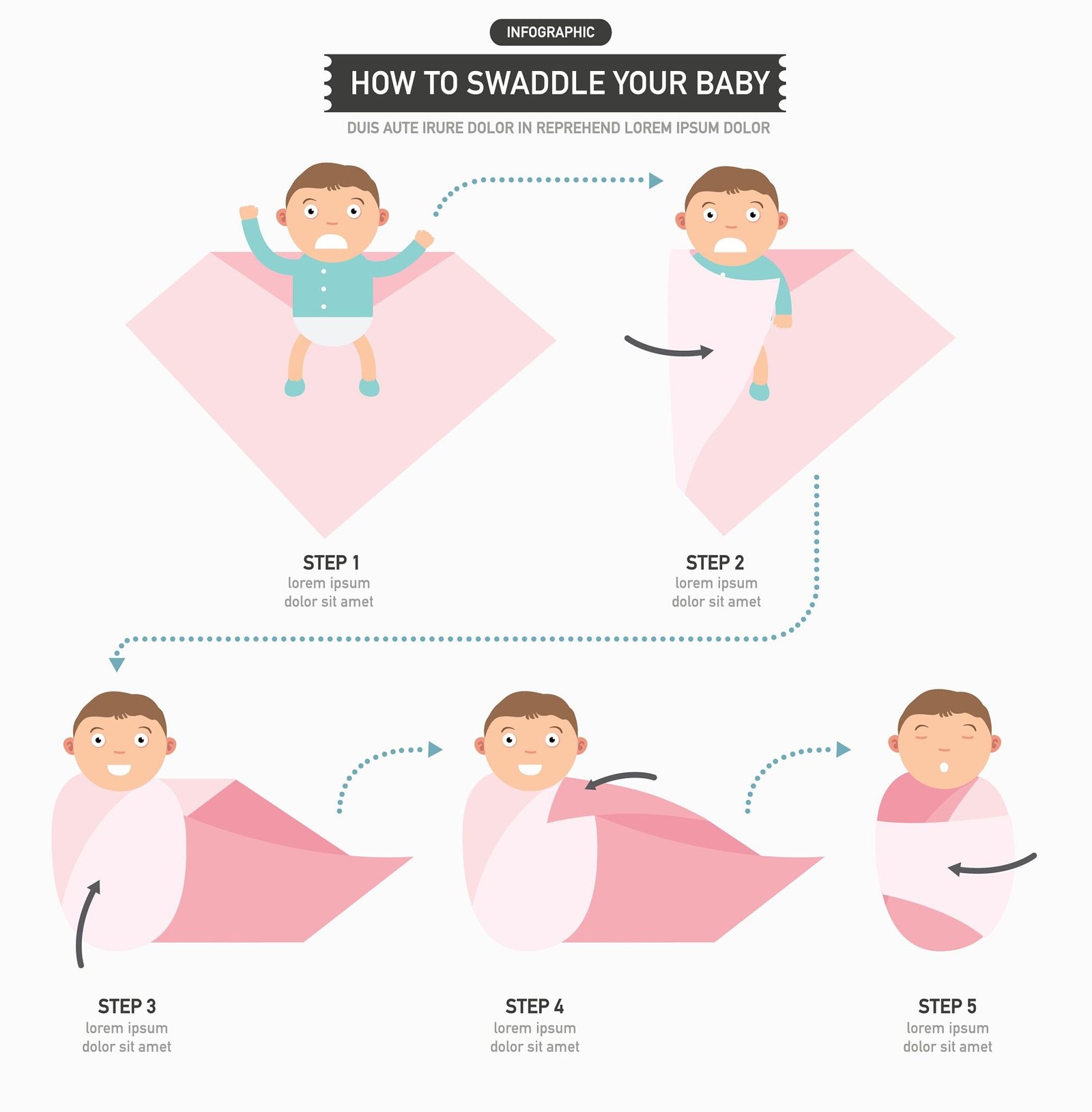
Many 2-month-olds benefit from an earlier bedtime, often between 7:00 PM and 9:00 PM. A consistent sequence—book, song, feed—helps the baby understand that the long sleep stretch is coming. This is the perfect time to introduce a swaddle or sleep sack to help manage the “startle reflex.”
Night waking expectations
While some babies begin to sleep longer, most 8-week-olds still require 1 or 2 feedings during the night. These are “business only” sessions: feed, burp, change if necessary, and straight back to the bassinet.
Sleep Patterns for 1- and 2-Month-Old Babies
Understanding the biology of infant sleep helps set realistic expectations and reduces parental stress.
Total hours of sleep per day
Infants at this age typically sleep 14 to 17 hours out of every 24. However, this sleep is not continuous. It is spread across multiple naps and night segments, as the baby’s brain is constantly processing new information and their body is growing rapidly.
Day sleep vs night sleep
In the first month, babies often have “day-night confusion.” By the second month, they begin to produce melatonin. You will notice that daytime naps are often shorter (30 minutes to 2 hours), while nighttime sleep becomes more consolidated as their circadian rhythm matures.
Why long sleep stretches are uncommon
Biologically, infants need to wake frequently to eat. Additionally, human infants spend a large portion of sleep in REM (Active) sleep, which is lighter and easier to wake from. This is a survival mechanism that protects against SIDS and ensures they can signal for help if they are cold, hungry, or uncomfortable.
Safe sleep recommendations
Always follow the ABC’s of safe sleep:
-
Alone: No pillows, blankets, or toys.
-
Back: Always place the baby on their back to sleep.
-
Crib: Use a firm, flat sleep surface in a smoke-free environment.
Naps at 1 and 2 Months
Naps are essential for brain development, but they can be the most unpredictable part of a caregiver’s day.
Number of naps per day
Expect anywhere from 4 to 6 naps daily. At this age, nap “lengths” are not yet synchronized with a clock. One nap might be 20 minutes, while the next is 3 hours. Both are perfectly normal.
Length of naps
A “short” nap of 30–45 minutes is one full sleep cycle for an infant. While frustrating for parents, these short naps are developmentally appropriate. As the baby’s nervous system matures toward the 4-month mark, these naps will gradually begin to lengthen.
Contact naps vs crib naps
Many 1- and 2-month-olds prefer contact naps (sleeping on a caregiver). This is due to the “fourth trimester” instinct—they crave the warmth and heartbeat they had in the womb. Balancing one or two crib naps a day can help build familiarity with the bassinet, but contact naps are a healthy way to bond and ensure the baby gets enough rest.
Nap variability and normal behavior
If your baby naps beautifully one day and refuses to sleep the next, do not panic. Nap variability is the only “constant” in the first two months. Environmental factors like temperature, noise, or minor digestive discomfort can all influence the quality of a nap.
Playtime and Developmental Activities
At 1 and 2 months old, “play” is synonymous with connection and sensory exploration. These activities are designed to strengthen the baby’s physical muscles and stimulate their rapidly growing brain.
Tummy time guidelines
Tummy time is essential for developing the neck, shoulder, and core muscles required for rolling and sitting. For a newborn, start with 2 to 3 minutes, several times a day, ideally after a diaper change when the baby is alert. You can perform tummy time on your chest or on a firm mat. By the second month, aim for a total of 20 to 30 minutes throughout the day.
Sensory play and interaction
Your face and voice are your baby’s favorite “toys.” Engaging in “serve and return” interaction—mimicking their coos and smiles—builds neural pathways. Use high-contrast toys (black and white patterns), narrate your daily chores, or sing gentle songs to provide auditory and visual stimulation.
How play fits into a daily routine
Play should happen during the “A” (Activity) part of the E.A.S.Y. routine. Because wake windows are short, play usually lasts only 10 to 15 minutes. It should occur after a feeding when the baby is satiated but before they show signs of tiredness to ensure they are receptive to the stimulation.
Getting Into a Gentle Routine (Not a Schedule)
A gentle routine focuses on the order of events rather than the time on the clock. This approach reduces parental stress while providing the baby with a predictable world.
Reading and responding to cues
A routine is built on observation. Instead of forcing a nap, you wait for the “long stare” or the “ear pull.” Responding promptly to these cues teaches the baby that their needs will be met, which eventually leads to a more settled infant who is easier to transition into a routine.
Creating predictable patterns
While the timing may vary, the sequence should remain the same. For example, a “nap routine” might always be: change diaper, put on sleep sack, sing one song, and lay down. This repetition acts as a psychological “signal” to the baby that it is time to transition from activity to rest.
Why consistency matters more than timing
Consistency creates a “biological rhythm.” If the environment and the sequence of events remain stable, the baby’s nervous system can relax. A baby who knows that “bath follows play” will eventually begin to produce sleep hormones during the bath, regardless of whether it happens at 6:00 PM or 7:00 PM.
Feeding Tips for 1- and 2-Month-Olds
Feeding is the most time-consuming part of the first two months. Using the right techniques ensures the baby is well-nourished and physically comfortable.
On-demand feeding explained
On-demand feeding means offering the breast or bottle whenever the baby shows hunger signs. This is critical in the first 8 weeks to establish a mother’s milk supply and ensure the baby’s small stomach is replenished. Do not wait for crying, as it is a late cue that makes latching more difficult.
Alternating breasts when breastfeeding
To maintain an even supply and prevent mastitis, start each feeding on the breast you finished with last time. This ensures the baby reaches the “hindmilk”—the high-fat milk at the end of the session—which is essential for weight gain and satiety.
Paced bottle feeding
If bottle-feeding, use the “paced” method. Keep the bottle horizontal so the baby must actively suck to get milk, rather than letting gravity pour it in. This prevents overfeeding and makes the transition between breast and bottle easier.
Burping frequency
Babies at this age swallow a lot of air. Try to burp your baby halfway through a feeding (or when switching breasts) and again at the end. If the baby is fussy or pulls away from the nipple, a trapped air bubble is often the culprit.
How to Tell If Your Baby Is Getting Enough Milk
Since you cannot see the volume of milk consumed during breastfeeding, you must rely on physical “output” and growth markers to gauge success.
Wet and dirty diaper counts
Output is the most reliable daily indicator of intake. A 1- or 2-month-old should have at least 6 to 8 heavy wet diapers every 24 hours. Stool patterns vary; some babies have a bowel movement after every feed, while others (especially breastfed ones) may go several days without one, provided the stool is soft.
Weight gain expectations
Pediatricians typically look for a gain of about 5 to 7 ounces per week during the first two months. Most babies regain their birth weight by 2 weeks of age and continue on a steady upward curve on their personalized growth chart.
Hunger and fullness signs
A satiated baby will have “relaxed” hands and a soft body. A hungry baby often has clenched fists and a tense expression. If your baby pulls away and turns their head, they are likely full. Trusting these cues prevents overfeeding and helps the baby maintain their natural self-regulation.
Growth Spurts and Schedule Changes
Just as you feel a routine is forming, a growth spurt will likely disrupt it. These are temporary but intense phases of development.
Common growth spurt ages
Major growth spurts typically occur at 3 weeks, 6 weeks, and 2 months. During these windows, the baby is physically growing in length and head circumference while their brain is making massive neurological leaps.
Increased feeding frequency
During a spurt, your baby will “cluster feed.” They may want to eat every hour for a period of 2 to 3 days. This is not a sign that your milk is “disappearing”; it is the baby’s way of “ordering” more milk for the following week.
Temporary sleep disruptions
Growth spurts often cause “sleep regressions.” The baby may wake more frequently at night or refuse naps they previously took. Once the spurt passes (usually in 48 to 72 hours), the baby will often return to their previous rhythm, sometimes even sleeping longer than before.
Common Schedule Concerns
Every caregiver faces challenges where the baby’s behavior doesn’t seem to match the “typical” routine.
Baby feeding too often
If your baby wants to eat every 60 to 90 minutes, they may be cluster feeding or using the breast for comfort. Ensure they are getting a “full feed” rather than “snacking” by keeping them awake during nursing sessions (tickle their feet or change their diaper).
Baby sleeping too little
A baby who sleeps significantly less than 14 hours may be overtired. When a baby misses their wake window, their body produces adrenaline, making it harder for them to stay asleep. Focus on shorter wake windows to help them “catch up” on rest.
Baby refusing naps
Nap refusal is often due to overstimulation or a lack of environmental cues. Ensure the nap space is dark, use a white noise machine to mask household sounds, and use a swaddle to prevent the “startle reflex” from waking them up.
Baby eating more at night
This is called “day-night reversal.” To fix this, keep the house bright and active during the day and very dark and quiet at night. Ensure the baby gets plenty of full feedings during daylight hours to reduce the need for “catch-up” calories at 3:00 AM.
Mental Health and Parental Support
The first two months of parenthood are a period of intense physical and emotional transition. While the focus is often on the baby, the mental well-being of the caregivers is the foundation of a healthy household.
Sleep deprivation realities
Chronic sleep fragmentation is a physiological stressor. During the first 8 weeks, “sleeping when the baby sleeps” is often easier said than done, but resting even without sleeping can help manage cortisol levels. It is vital to share nighttime duties with a partner if possible to ensure at least one 4-hour block of uninterrupted sleep, which is the biological minimum for maintaining cognitive function.
When to seek help
If you find yourself feeling unable to care for your baby, experiencing intrusive thoughts, or feeling a persistent sense of hopelessness, it is time to seek professional support. These are not signs of “bad parenting” but are often medical responses to extreme exhaustion and hormonal shifts. Contact your OB-GYN or a mental health professional if your “baby blues” persist beyond the first three weeks.
Postpartum mood concerns
Postpartum Depression (PPD) and Postpartum Anxiety (PPA) are common medical conditions. Symptoms can include excessive crying, difficulty bonding with the baby, or a constant “racing” heart. Early intervention through therapy or medication can significantly improve the experience of early parenthood and help you return to your “gentle routine” with more confidence.
When to Contact a Pediatrician
While most schedule disruptions are normal, certain physical signs require a professional medical evaluation to ensure the baby is thriving.
Feeding concerns
You should contact your pediatrician if your baby consistently refuses multiple feedings in a row, has a weak suck, or appears to be in pain while eating. If a baby is unable to stay awake long enough to complete a feeding, it may indicate an underlying issue that needs to be addressed.
Poor weight gain
If the baby is not meeting their 5 to 7 ounce per week growth target, or if they have dropped significantly on their growth curve, a doctor may need to evaluate your feeding technique or check for issues like tongue-tie or reflux. Regular “well-baby” checkups are the best time to track these patterns.
Excessive sleepiness or fussiness
While infants sleep a lot, they should be easy to rouse for feedings. If your baby is “lethargic” (meaning they don’t wake up even with physical stimulation) or if they cry inconsolably for more than three hours a day (a sign of severe colic), a medical checkup is necessary to rule out infection or physical discomfort.
Frequently Asked Questions
Clear, direct answers to common search queries help caregivers set realistic expectations for the first 60 days of life.
How often should a 1-month-old eat?
A 1-month-old should eat 8 to 12 times in a 24-hour period. This typically equates to a feeding every 2 to 3 hours. Breastfed babies may eat more frequently than formula-fed babies because human milk is digested more rapidly.
How often should a 2-month-old eat?
By 2 months, most babies eat 6 to 10 times per day. As their stomach capacity grows, they can take in more volume per session, which may allow for slightly longer stretches (3 to 4 hours) between feedings during the day.
How long should a 2-month-old sleep at night?
Sleep varies, but many 2-month-olds can manage one 4 to 6-hour stretch of sleep at night. However, it is still developmentally normal for an 8-week-old to wake once or twice for a “night feed” to maintain their blood sugar and growth.
Should I wake my baby to feed?
Once your baby has surpassed their birth weight and your pediatrician has confirmed healthy growth, you generally do not need to wake them to feed at night. During the day, however, you may want to wake them if a nap exceeds 3 hours to ensure they get enough “daylight calories” to help them sleep better at night.
Can a 2-month-old follow a schedule?
A 2-month-old can follow a predictable routine (Eat, Activity, Sleep), but they are too young for a “clock-based” schedule. Their needs for food and sleep change daily based on growth spurts and neurological development, so flexibility is the best approach.
Key Takeaways: What to Expect at 1 and 2 Months
Navigating the first two months is a journey of discovery. By prioritizing the baby’s needs over a rigid plan, you create a low-stress environment for growth.
Flexibility over structure
The best “plan” is to have no plan other than responding to your baby. A 1-month-old baby schedule is naturally chaotic; trying to force a structure will only lead to frustration. As long as the baby is eating and sleeping, the timing is secondary.
Feeding and sleep will change often
Expect “two steps forward, one step back.” You may have three days of great sleep followed by a week of frequent waking due to a 6-week growth spurt. This is not a sign of a failed routine; it is a sign of a healthy, growing infant.
Following your baby’s cues is best
Your baby is the best communicator you have. By focusing on their early hunger signs and sleep signals, you ensure they are always “ahead of the curve” in terms of comfort. This responsiveness builds a strong bond and eventually leads to a more predictable routine as they move toward the 3-month mark.

- When Can Babies Start Sleeping on Their Stomach? - March 1, 2026
- Can Babies Sleep on a Slight Incline? Safety Guidelines - March 1, 2026
- 10 Natural Ways to Improve Your Sleep Quality Tonight - March 1, 2026