
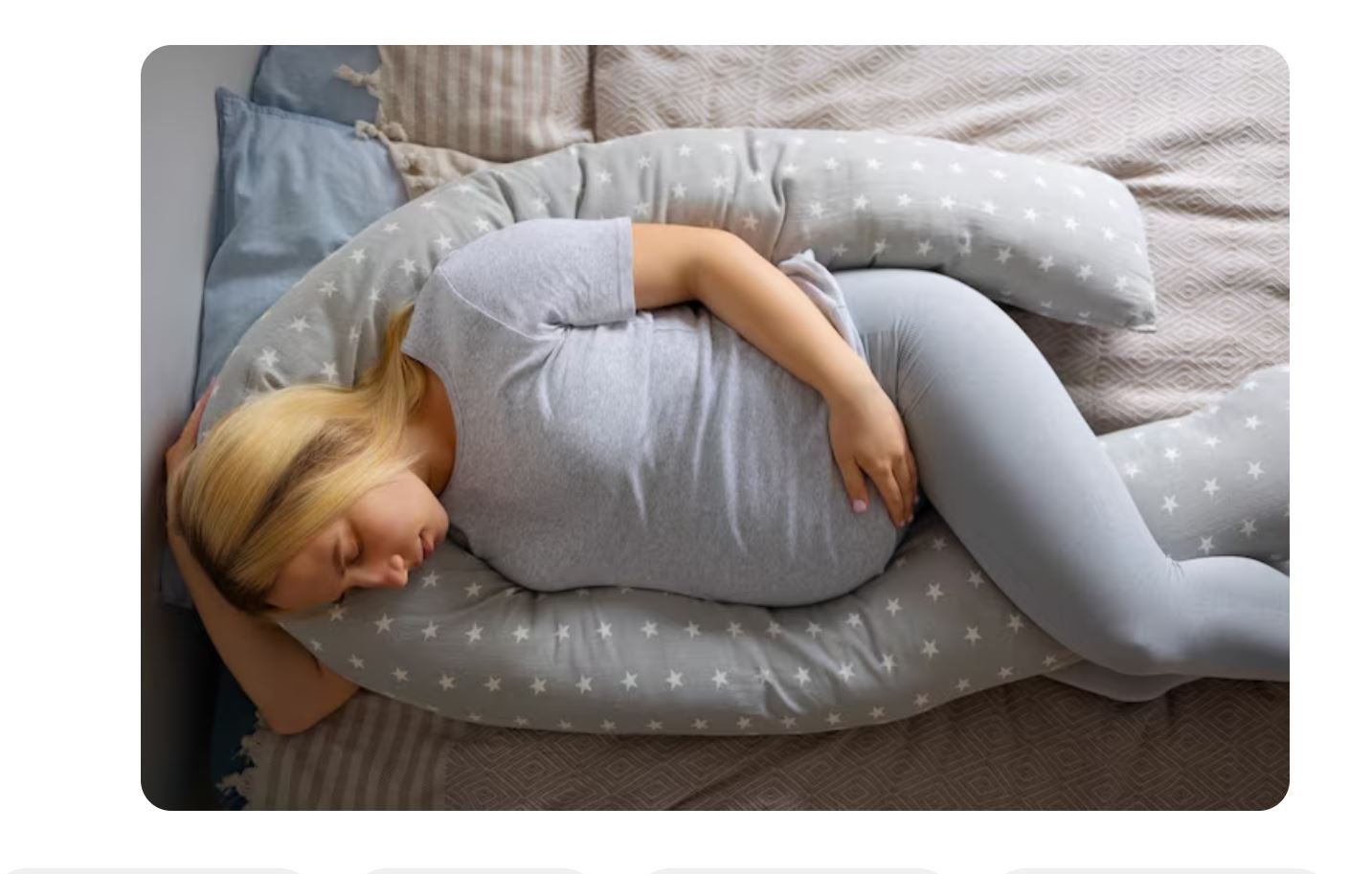
Finding a restful night’s sleep during pregnancy often feels like a competitive sport where the rules change every week. As your bump grows, your center of gravity shifts, putting immense strain on your lower back and making your favorite pre-pregnancy sleeping positions feel like a distant memory.
If you’re tossing and turning with an aching spine, you aren’t alone. Approximately 60% to 70% of pregnant women experience significant back pain, which often peaks during the night when the body is trying to recover. This informational guide provides an in-depth look at the best sleep positions for pregnancy back pain, backed by clinical research and ergonomic tips to help you reclaim your rest.
Why Pregnancy Causes Back Pain at Night
To solve the problem, we must understand the “why.” During pregnancy, your body undergoes significant physiological changes that directly impact your spinal alignment:
-
Hormonal Shifts: The hormone relaxin loosens your ligaments and joints to prepare for birth, but it also makes your spine less stable and more prone to “slipping” out of alignment.
-
The Anterior Shift: The extra weight of the baby pulls your lower back forward, creating an exaggerated curve (lordosis) that compresses the lumbar discs.
-
Venous Pressure: When lying down, the weight of the uterus can press on major blood vessels, causing a “heavy” or throbbing sensation in the lower back.
-
Abdominal Separation: As your “six-pack” muscles stretch, they stop supporting the spine, forcing your back muscles to work 24/7.
Detailed Analysis: The Best Sleep Positions for Relief
The consensus among healthcare providers, including the Mayo Clinic and the American Pregnancy Association, is that Side Sleeping (SOS – Sleep On Side) is the gold standard.
1. Left-Side Sleeping: The “Ideal” Position
Sleeping on your left side is widely considered the best position for both back pain and baby’s health.
-
The Benefit: It prevents the heavy uterus from resting on your liver and the inferior vena cava (IVC)—the large vein that carries blood back to your heart.
-
Back Relief: By lying on your side with knees tucked toward your chest (the fetal position), you open up the facet joints in your spine, reducing pressure on the lower discs.
2. Right-Side Sleeping: A Safe Alternative
Many mothers worry that right-side sleep is “forbidden” due to older studies. However, modern research (including the 2019 The Lancet study) shows that right-side sleep is equally safe for most healthy pregnancies. If your left hip is sore or you have “side-sleeping fatigue,” switching to the right side can provide much-needed relief.
3. The Supported Recline
If you suffer from severe upper back pain or GERD (acid reflux), sleeping at a 45-degree angle can be a lifesaver.
-
How to do it: Use a wedge pillow or a stack of firm pillows to prop up your torso. This takes the weight off your diaphragm and eases the strain on your thoracic spine.
-
Why it works: It mimics the ergonomics of a zero-gravity chair, distributing weight across the hips rather than just the lower back.
How to Sleep to Relieve Back Pain (Actionable Steps)
Simply lying on your side isn’t always enough. You need “sleep engineering” to keep your spine in a neutral, relaxed state.
The Three-Pillow Strategy
-
The Knee Pillow: Place a firm pillow between your knees and ankles. This keeps your hips “square” and prevents your top leg from pulling your pelvis forward, which is the #1 cause of sciatica during pregnancy.
-
The Bump Wedge: A small, slanted “wedge” pillow tucked under your bump prevents your uterus from pulling on your back muscles as gravity tries to drag the bump toward the mattress.
-
The Back Brace: A long body pillow or rolled-up towel tucked firmly against your spine prevents you from rolling onto your back accidentally.
Ergonomic Tips for Bed Mobility
-
The “Log Roll”: When getting out of bed, do not sit straight up (the “crunch” motion). Instead, roll onto your side, drop your legs over the edge, and use your arms to push yourself up. This protects your abdominal wall (diastasis recti).
-
Mattress Firmness: If your mattress is too soft, your hips will sink, causing a “C” curve in your spine. Consider a memory foam mattress topper to provide localized support without buying a new bed.
Comparison: Sleep Positions at a Glance
| Position | Safety Status | Back Pain Impact | Best For |
| Left Side | Recommended | High Relief | Maximum Circulation & Kidney function |
| Right Side | Safe | High Relief | Relieving hip pressure on the left |
| Back (Supine) | Avoid (After 20 Weeks) | Increases Pain | Avoiding—can cause dizziness |
| Stomach | Safe (Early) | Low Relief | Only possible in the first trimester |
| Reclined | Safe | Moderate Relief | Heartburn & Rib pain |
Critical Safety: Which Sleeping Position is Not Allowed?
As you enter the second and third trimesters, doctors strictly advise against sleeping flat on your back (the supine position).
The Medical Reason:
When you lie on your back, the weight of the uterus compresses the aorta and the inferior vena cava. This can lead to:
-
Decreased oxygen and blood flow to the placenta.
-
Lower maternal blood pressure, leading to “Supine Hypotensive Syndrome” (dizziness and nausea).
-
Worsening back pain because the spine must support the entire weight of the pregnancy against the mattress.
Pro Tip: If you wake up on your back, don’t panic! Your body’s internal alarm system will usually wake you up with discomfort long before any harm occurs. Just roll back to your side and adjust your pillows.
Understanding the Timeline: What is the Hardest Month?
While every woman’s journey is unique, the 8th month (weeks 32–36) is often cited as the most difficult for sleep and back pain.
-
Maximum Tension: The baby is gaining weight rapidly, but hasn’t “dropped” into the pelvis yet, putting maximum pressure on your ribs and mid-back.
-
The “Insomnia of Pregnancy”: Frequent bathroom trips, vivid dreams, and baby’s midnight kicks make it hard to stay in a comfortable position for more than two hours.
-
Shortness of Breath: The uterus is high up, making it hard to find a position where you can breathe deeply and relax your back muscles.
Can a pregnant lady sleep on the right side?
Yes, you can absolutely sleep on your right side. While the left side is technically “optimal” because it keeps the uterus entirely off the liver and provides the clearest path for the inferior vena cava (the large vein returning blood to the heart), the right side is a perfectly safe and healthy alternative.

In 2019, a major clinical study published in The Lancet analyzed data from multiple countries and found no increased risk of pregnancy complications for women who slept on their right side compared to their left. If your left hip is sore or you simply feel more comfortable on your right, feel free to switch.
What happens if you accidentally sleep on your right side?
In short: Nothing bad happens. If you wake up on your right side, your baby is still getting plenty of oxygen and nutrients. The human body is remarkably good at protecting a pregnancy. If a position were truly restricting your blood flow to a dangerous level, your brain would trigger an “alarm” in the form of:
-
Dizziness or lightheadedness.
-
Nausea.
-
A pins-and-needles sensation.
-
General restlessness that forces you to shift.
Modern OB-GYNs emphasize that getting quality sleep is more important than stressing over whether you tilted 15 degrees to the right.
Common Sleep Problems During Pregnancy
Sleep becomes a moving target as your trimesters progress. Here are the most frequent hurdles:
-
Insomnia: Often caused by anxiety, hormonal shifts, or simply the inability to find a comfortable position.
-
Frequent Urination: As the baby grows, they put direct pressure on the bladder, leading to 3–5 bathroom trips per night.
-
Restless Leg Syndrome (RLS): A jumpy, tingly sensation in the legs that usually peaks in the evening.
-
Heartburn (GERD): Pregnancy hormones relax the valve between the stomach and esophagus, causing acid to creep up when you lie flat.
-
Sleep Apnea: Increased weight and nasal congestion can sometimes cause snoring or brief pauses in breathing.
Which trimester is side sleeping most important?
Side sleeping becomes critical during the Third Trimester (Weeks 28–40).
-
First Trimester: You can sleep in any position you find comfortable, including your stomach or back. The uterus is still tucked behind the pelvic bone and isn’t heavy enough to compress major vessels.
-
Second Trimester: Most doctors suggest transitioning to your side around Week 20. This is when the uterus grows heavy enough to potentially compress the vena cava if you lie flat on your back.
-
Third Trimester: This is the most vital time. By the 7th, 8th, and 9th months, the weight of the baby, placenta, and amniotic fluid is significant. Side sleeping (either left or right) ensures maximum blood flow to the placenta and prevents the “heavy” back pain associated with supine (back) sleeping.
Frequently Asked Questions (FAQ)
1. Is it safe to use a heating pad on my back while I sleep?
You can use a heating pad on your lower back for 15–20 minutes to relax muscles before bed, but do not sleep with it on. Overheating the core can be dangerous for fetal development. Use a warm (not hot) maternity compress instead.
2. Is a U-shaped or C-shaped pregnancy pillow better?
-
U-shaped: Best if you toss and turn, as it supports both sides.
-
C-shaped: Best for targeted back support or if you share a smaller bed and don’t want to crowd your partner.
3. Why does my back hurt more in the morning?
This is often due to “static loading.” If your spine isn’t supported by pillows, your muscles stay “on” all night to hold your body in place. By morning, they are fatigued and stiff.
4. When should I stop sleeping on my stomach?
Most women naturally stop by week 16–20. If you are a dedicated stomach sleeper, look into a “donut” pregnancy mattress with a hole in the center, though side-sleeping remains safer for the back.
5. Does walking during the day help with sleep pain?
Absolutely. Gentle prenatal yoga or a 20-minute walk helps keep the ligaments supple and prevents the “locking” of the sacroiliac (SI) joints that causes nighttime spasms.

- When Can Babies Start Sleeping on Their Stomach? - March 1, 2026
- Can Babies Sleep on a Slight Incline? Safety Guidelines - March 1, 2026
- 10 Natural Ways to Improve Your Sleep Quality Tonight - March 1, 2026