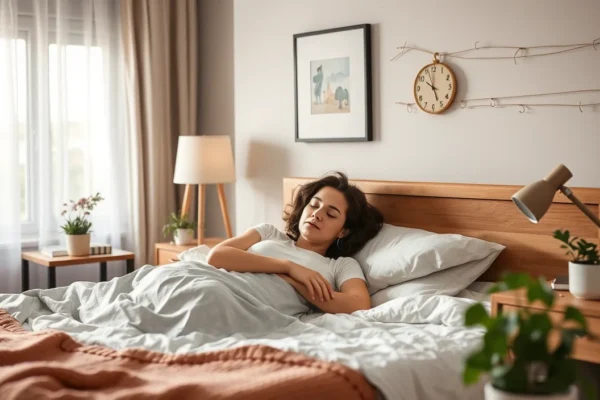
You are lying in a dark, quiet room. The house is still. Everyone else is asleep. But your mind is running at full speed, your chest feels tight, and no matter how many times you close your eyes, sleep refuses to arrive. This experience is far more common than most people realize, and it is happening to millions of people every night across the United States, Canada, and Austria.
Over one third of people in the United States report sleeping less than seven hours each night, and nearly half report having trouble falling or staying asleep. Mattress Online The consequences reach well beyond morning grogginess. Poor sleep over time raises the risk of heart disease, depression, obesity, and a weakened immune system. It affects your focus, your mood, your relationships, and your performance at work or school.
What most people do not know is that your breath is one of the most powerful, immediate tools available to change how your nervous system feels within just a few minutes. You do not need a prescription. You do not need a device, a supplement, or an app. You just need to breathe differently and consistently.
This guide covers nine of the most effective, scientifically supported breathing exercises for falling asleep fast. Each technique is explained in clear, simple language with step-by-step instructions that work for teenagers, adults, seniors, and everyone in between. Whether your sleeplessness is driven by anxiety, stress, an overactive mind, or simply the habit of lying awake, there is at least one method in this article that will help you tonight.
The recommendations in this guide are informed by peer-reviewed clinical research, guidance from licensed sleep psychologists, and published studies from medical databases including PubMed. The techniques described are non-invasive, drug-free, and safe for most healthy adults and children to try immediately.
Why Your Breathing Pattern Controls Whether You Sleep
Controlled breathing for sleep works by directly activating the parasympathetic nervous system, which lowers your heart rate, reduces cortisol levels, and tells your entire body it is safe to relax and rest. This is the biological opposite of the fight-or-flight response that keeps you alert, tense, and awake.
When you understand why sleep breathing techniques work, you use them with real confidence rather than hoping for the best. Your body operates in two primary states managed by the autonomic nervous system. The sympathetic state keeps you alert and active. The parasympathetic state allows rest, digestion, and sleep. When you lie in bed unable to sleep, your body is stuck in the wrong state, still running in alert mode even though your environment is telling it to stop.
Techniques of slow, deep breathing at a frequency of approximately 0.1 Hz, used in combination with sleep hygiene and relaxation therapies, may be highly effective in initiating sleep as well as facilitating falling back asleep. The autonomic nervous system is integral to sleep initiation, maintenance, and disruption. Sleep Advisor
There is a strong correlation between breathing and sleep, as 80 percent of sleep involves slow, regular breaths. Nose breathing influences the parasympathetic nervous system, which calms the body and helps it relax. Your breath not only affects how long it takes you to fall asleep but can also determine the overall quality of your rest. Sleep Foundation
How Breathing Rate Affects Your Nervous System Directly
The average adult breathes between twelve and twenty times per minute at rest. This rate, while normal for waking life, is too fast and shallow to trigger the deep relaxation needed for sleep. Slowing your breath to between four and six cycles per minute activates the vagus nerve, which is the longest nerve in your autonomic system and the direct pathway to your parasympathetic state.
The longer your exhale compared to your inhale, the stronger this calming signal becomes. This is why techniques like 4-7-8 breathing and box breathing emphasize extended or held exhales. They are not arbitrary counts. They are designed to maximize vagal nerve stimulation and push your body out of alert mode and into rest mode as quickly as possible.
| Breath Rate Per Minute | Nervous System Effect | Impact on Sleep |
|---|---|---|
| 20 or more | Sympathetic activation | Keeps you alert and awake |
| 12 to 18 | Neutral, everyday state | Minimal sleep benefit |
| 6 to 10 | Mild parasympathetic shift | Light relaxation begins |
| 4 to 6 | Strong parasympathetic activation | Ideal for sleep onset |
Who Gets the Most Benefit from Sleep Breathing Techniques
In a 2020 study published in Sleep Medicine Reviews, researchers concluded that breathwork is an effective tool to improve sleep quality, reduce anxiety and stress levels, and promote relaxation before bedtime. They reviewed over fifty studies and concluded that breathwork can be beneficial for people of all ages and backgrounds. Turmerry
Breathing exercises work especially well for people who experience racing thoughts at bedtime, those dealing with work stress or financial anxiety, anyone who wants to avoid or reduce sleep medication, teenagers struggling with irregular sleep schedules, older adults who wake frequently during the night, and shift workers or frequent travelers dealing with disrupted sleep cycles.
The 4-7-8 Breathing Technique That Works in Minutes
The 4-7-8 method is one of the most widely recommended breathing exercises for falling asleep fast because it directly targets anxiety, lowers heart rate, and creates a sedative-like effect that most people begin to feel within two to three cycles. It requires no equipment, costs nothing, and works in any position.
Breathing techniques like 4-7-8 breathing play a huge role in activating the parasympathetic nervous system and helping you shift back toward tranquility. It has also been shown to decrease heart rate and blood pressure, which puts the body in the right state for sleep. Blissful Nights
The 4-7-8 breathing technique was originally developed by Dr. Andrew Weil and can be used whenever you need to calm your nerves, whether at night or during the day. Sleep specialist and psychologist Dr. Michael Breus has noted that just a few deep breaths set to this specific rhythm can be enough to relax a person who has woken in the middle of the night and help them fall back asleep feeling refreshed. Bryte
Step by Step Guide to 4-7-8 Breathing
Begin by lying flat on your back in bed with your body as relaxed as possible. Part your lips slightly and breathe all the air out of your lungs completely with a quiet sighing sound. Close your mouth and inhale slowly through your nose for exactly four seconds. When the four seconds are up, close your throat gently and hold your breath for seven seconds without straining or tensing. Open your mouth and exhale fully for eight seconds with a long, slow, audible sigh as if blowing out a candle at the far end of the room. That is one complete cycle. Beginners should repeat this three to four times. With practice, work up to eight full cycles.
The extended eight-second exhale is what makes this technique uniquely powerful for sleep. When your exhale is significantly longer than your inhale, your body receives an amplified parasympathetic signal, and this slows your heart rate, drops your blood pressure, and begins to bring the muscles from tension into softness within seconds.
Why 4-7-8 Breathing Beats Counting Sheep Every Time
Counting sheep gives your mind something mild to do but does nothing to change your physiological state. Your heart rate stays elevated, your muscles stay tense, and your cortisol levels remain unchanged. The 4-7-8 technique, by contrast, directly changes your body chemistry. It is not a distraction from wakefulness. It is a biological switch that moves you from one nervous system state to another. Practice it for one week consistently and most people report falling asleep noticeably faster by day three or four.
Box Breathing for Sleep Used by Navy SEALs and Elite Athletes
Box breathing, also known as square breathing or tactical breathing, is used by Navy SEALs, military pilots, emergency responders, and professional athletes to quickly calm the nervous system under extreme pressure. It works with equal effectiveness for anyone lying in bed who cannot switch their brain off after a long day.
Box breathing is widely used to help people remain focused, manage different types of stress, and keep a positive state of mind. This is one of the easiest breathing techniques to master, making it a popular choice for beginners, and research has shown it can reduce stress and improve mood. Sleepopolis
How to Practice Box Breathing at Bedtime
Lie down in bed or sit with your back gently supported. Close your eyes and breathe all the air from your lungs. Inhale slowly and smoothly through your nose for four seconds. Hold your breath at the top for four seconds without tensing your shoulders or jaw. Exhale completely through your mouth for four seconds, letting your belly fall. Hold the empty breath for four seconds before beginning again. Repeat this four-sided cycle for four to six rounds. Each four-count segment is one side of an imaginary square you trace with your breath.
The visualization of a square is more helpful than it sounds. It gives your mind a simple, focused task that occupies the thinking brain just enough to prevent rumination without creating stimulation. This is why box breathing is particularly effective for people whose problem at bedtime is not physical tension but an inability to stop mentally replaying the day.
The Military Sleep Method Built Around Box Breathing
The United States Navy Pre-Flight School developed a military breathing technique as a way to train pilots to fall asleep in two minutes, even while sitting up. Military breathing for sleep uses a combination of visualization and tactical breathwork to calm the nervous system and reduce stress. The body scan increases awareness of each muscle group as you systematically relax from your lower body upward. Sleep Foundation
The full military method pairs box breathing with a progressive muscle scan. After two rounds of box breathing, soften every muscle in your face and jaw completely. Drop your shoulders away from your ears and let both arms rest loosely at your sides. Bring your awareness slowly up your body from your feet, calves, and thighs, consciously releasing tension in each area. Once your body feels heavy and still, visualize a single calm scene such as a still lake, a quiet forest, or a warm familiar room. Hold that image gently. If thoughts interrupt, return without frustration to the scene and resume the breath. Most people who practice this consistently for two weeks report falling asleep significantly faster than they did before.
Diaphragmatic Breathing That Rewires
Diaphragmatic breathing, widely known as belly breathing, forms the biological foundation of nearly every effective sleep breathing technique. It works by engaging the diaphragm fully instead of the shallow chest muscles, which activates the body’s natural relaxation response in a way that upper-chest breathing simply cannot.
A growing number of studies have shown that diaphragmatic breathing, which is deep breathing that inflates the abdomen while keeping the chest flat, may trigger body relaxation responses that increase the likelihood of getting good sleep. Turmerry
How to Practice Belly Breathing Before You Sleep
Lie on your back in bed with your knees slightly bent and a pillow under your head for comfort. Place one hand flat on your chest and the other hand on your belly just below your ribcage. Inhale slowly through your nose for four seconds, deliberately pushing your belly outward so the hand on your stomach rises. The hand on your chest should stay almost completely still. Exhale gently through pursed lips for five to six seconds and let your belly fall naturally back toward the mattress. Continue for five to ten minutes, focusing only on the sensation of your hands rising and falling with each breath cycle.
| Breathing Type | Muscles Used | Nervous System Effect | Best Use |
|---|---|---|---|
| Chest breathing | Chest, neck, shoulders | Sympathetic activation | Exercise, urgency |
| Belly breathing | Diaphragm, abdomen | Parasympathetic activation | Sleep, relaxation |
| Mixed breathing | Both | Neutral effect | Normal rest |
Why Most Adults Have Forgotten How to Breathe for Sleep
Most adults breathe from the chest as a default because stress, desk posture, and habitual shallow breathing have trained them to do so over years. Chest breathing is associated with the alert state. Belly breathing is associated with the rest state. When you retrain your default breathing pattern even partially toward the diaphragm, you begin to fall asleep faster not just at night but also during brief rest periods throughout the day. This is why diaphragmatic breathing is taught in sleep clinics across the USA and Canada as a first-line behavioral intervention for insomnia.
Alternate Nostril Breathing That Quiets a Busy Mind
Alternate nostril breathing, known in yoga as Nadi Shodhana Pranayama, is especially effective for people whose main sleep problem is an overactive, chattering mind that refuses to slow down even when the body feels tired. It balances neural activity between both hemispheres of the brain and creates a state of mental stillness that feels noticeably different from ordinary relaxation.
Alternate nostril breathing balances brain activity and eases anxiety before bed by alternating airflow between the left and right nostrils, which activates both sides of the nervous system evenly and creates a meditative stillness that makes natural sleep onset much easier.
Step by Step Alternate Nostril Breathing for Bedtime
Sit upright in bed or on the floor with your spine as straight as feels comfortable. Raise your right hand to your face and rest your index and middle fingers gently between your brows. You will only use your thumb and ring finger throughout this exercise.
Close your right nostril with your right thumb. Inhale slowly and deeply through your left nostril for four counts. Close both nostrils gently and hold for two counts. Release your thumb to open the right nostril and exhale fully through the right side for four counts. Pause for one count. Now inhale through the right nostril for four counts. Close both nostrils and hold for two counts. Release your ring finger and exhale through your left nostril for four counts. That is one complete cycle. Practice five to ten cycles and then lie down immediately for sleep while the effect is still present.
Why This Technique Works for Overthinking Sleepers
The physical action of alternating nostrils engages your hands, your attention, and a counting rhythm all at once. This triple engagement is just enough to pull the thinking mind away from its spiral of worry and into the present physical moment, which is exactly the mental environment in which natural sleep can begin. Many people who struggle specifically with bedtime rumination, replaying conversations, planning tomorrow, or processing difficult emotions, find this technique more effective than purely breath-counting methods because it requires active physical engagement.
Humming Breath That Calms the Nervous System Through Sound
Humming breath, called Bhramari Pranayama in yoga tradition, is one of the most immediately effective and underused sleep breathing techniques available. The low humming sound during the exhale creates a vibration in the skull and throat that directly stimulates the vagus nerve, producing a calming effect that most people feel within the first two or three cycles.
Bhramari Pranayama is an exercise based on the yoga practice of breath control in which a person covers their eyes and ears while producing a humming or buzzing sound to achieve a state of calm. Mattress Online It is particularly useful for people with tension headaches at bedtime, high anxiety, or racing thoughts that do not respond to silent techniques.
How to Do Humming Breath in Bed Tonight
Lie on your back or sit comfortably with your eyes closed. Take one slow, full breath through your nose. On your exhale, close your lips and hum at whatever tone feels natural, producing a quiet, steady buzzing sound for the full length of your exhale. Feel the gentle vibration in your head, chest, and throat. Inhale again through your nose for four to five seconds. Hum again on the next exhale. For a deeper effect, cover your ears lightly with your fingertips during the humming phase, which intensifies the internal resonance and blocks out external noise. Continue for six to ten cycles.
This technique is safe and gentle enough for children as young as five, older adults, and anyone with no prior experience of breathwork or yoga. It requires no counting and no specific hand position, making it one of the easiest entries into sleep-focused breathwork for complete beginners.
Slow Paced Breathing That Directly Triggers Sleep Readiness
Slow paced breathing is the simplest technique in this guide and one of the most scientifically supported. It requires no counting pattern, no holding, and no special position. You simply reduce your breathing rate to between four and six breaths per minute and maintain that pace for ten to fifteen minutes.
Techniques of slow, deep breathing may be highly effective in initiating sleep as well as facilitating falling back asleep. Good sleepers transition from wake to sleep as their respiratory rate slows and becomes more regular while parasympathetic tone increases. Sleep Advisor Slow paced breathing intentionally mimics this natural transition to accelerate your entry into sleep.
Practicing Slow Paced Breathing Without Any Counting
Lie in bed with your eyes closed. Begin inhaling through your nose at a pace that feels slightly slower than your normal breath. Count mentally to five or six on the inhale. Exhale through your nose or mouth at the same gentle pace, counting to five or six again. Do not hold your breath at any point. Simply allow each breath to flow in and out in a slow, smooth, uninterrupted wave. If your mind wanders, return gently to the sensation of breath moving through your nostrils or the rise and fall of your chest without any judgment.
Continue for ten to fifteen minutes or until sleep arrives. Many people find they are asleep before ten minutes have passed, which means the technique is working even if they do not consciously complete it. Over days and weeks of consistent practice, the body learns to associate this breathing rhythm with sleep onset, which means it becomes faster and more automatic over time.
| Technique | Counting Required | Hold Required | Best Age Group | Speed of Effect |
|---|---|---|---|---|
| 4-7-8 Breathing | Yes | Yes | Adults | Fast |
| Box Breathing | Yes | Yes | All ages | Fast |
| Belly Breathing | Optional | No | All ages | Moderate |
| Alternate Nostril | Yes | Brief | Adults | Moderate |
| Humming Breath | No | No | All ages | Fast |
| Slow Paced Breathing | Optional | No | All ages | Moderate to fast |
| Military Method | No | No | Adults | Fast with practice |
Roll Breathing for Deep Physical Relaxation Before Bed
Roll breathing, sometimes called wave breathing, engages the full capacity of your lungs in a sequential two-part motion. It creates a rolling wave sensation that travels from the belly upward through the chest, and it is particularly effective for people who hold physical tension in their torso, ribcage, shoulders, or upper back after a long and stressful day.
Roll breathing engages the full lung capacity in a wave motion from belly to chest, releasing deep physical tension in the upper body and creating a sense of heaviness and groundedness that makes sleep arrival feel natural rather than effortful.
How to Practice Roll Breathing in Bed
Lie on your back with your knees bent. Rest your left hand on your belly and your right hand on your chest. Fill your lower lungs with a deep breath so your left hand rises while your right hand stays still. Inhale through the nose and exhale through the mouth while keeping your shoulders relaxed. Fill and empty your lower lungs eight times to establish the belly-only pattern, then begin adding the upper chest to the inhale. Sleepopolis
On the ninth and subsequent breaths, inhale first into the belly, then continue the inhale upward to fill the chest and shoulders in one smooth, continuous wave. At the top of the inhale, pause for one count, then exhale slowly from the top down, releasing the chest first and then the belly, as if a wave is receding. Continue for six to eight full roll cycles, then allow your breathing to return to its natural pace and let sleep arrive on its own.
Three Part Breathing That Anyone Can Do on Night One
Three part breathing is the most accessible technique in this guide. It requires no counting, no breath holds, no specific hand positions, and no prior experience with breathwork. You simply breathe in three sequential layers and breathe out in three sequential layers. It is ideal for children, older adults, skeptics, and anyone who finds structured techniques too difficult or too clinical.
Three part breathing fills the lungs from the bottom up in three stages and empties them from the top down, creating a slow, wave-like rhythm that gently activates the parasympathetic system without any counting or breath control.
Three Part Breathing Steps for Complete Beginners
Lie flat on your back in a comfortable position with your arms resting at your sides. On your inhale, breathe first into your belly, letting it rise. Without pausing, continue the inhale and let your ribcage expand sideways. Then continue the inhale one final stage and let the very top of your chest and collarbones rise slightly. The entire inhale is one slow, smooth, three-stage upward motion.
On the exhale, release from the top first, then the ribcage, then the belly, in one smooth downward wave. There is no counting required at any point. Focus only on the sensation of air filling you from the bottom up and emptying from the top down. Continue for five to ten minutes.
This technique is particularly well suited for children at bedtime because parents can guide it simply by placing one hand on a child’s belly and one on their chest and instructing them to breathe up to the first hand, then the second, then all the way to the top. The physical feedback makes the three stages easy to feel and follow at any age.
Building a Nightly Breathing Routine That Lasts
A single session of sleep breathing exercises helps you fall asleep faster tonight. A consistent routine practiced every night at the same time creates something more powerful: a conditioned response where your nervous system begins preparing for sleep the moment you begin the breath pattern. This is the same mechanism behind any sleep ritual, and it builds progressively stronger with each passing week.
Like other healthy sleep habits, learning breathing exercises requires both patience and practice. With commitment, these techniques become easier and more effective over time. Mattress Online
Your Seven Day Beginner Sleep Breathing Plan
| Day | Technique | Duration | Goal |
|---|---|---|---|
| Day 1 | Belly breathing | 5 minutes | Learn diaphragm engagement |
| Day 2 | Box breathing | 5 minutes | Learn four-count rhythm |
| Day 3 | 4-7-8 breathing | 4 cycles | Experience extended exhale |
| Day 4 | Three part breathing | 8 minutes | Practice without counting |
| Day 5 | Alternate nostril | 6 cycles | Experience bilateral balance |
| Day 6 | Humming breath | 6 cycles | Vagal stimulation through sound |
| Day 7 | Your favorite from the week | 10 minutes | Reinforce the conditioned response |
After completing your first seven days, choose one or two techniques that felt most natural and comfortable, and practice those consistently every night. Most people identify a clear favorite by day four. Variety is useful for exploring, but consistency with one method is what builds the conditioned sleep response that makes the technique work faster and more reliably over time.
Practical Habits That Strengthen Your Breathing Practice
Practice your chosen technique at the same time each night, ideally within two to three minutes of turning off the lights. Pair it with other calming signals such as dimming lights one hour before bed, avoiding screens for the last thirty minutes, and keeping caffeine away after 2 PM. Keep a simple one-line sleep journal and rate your sleep quality each morning out of ten. Tracking your experience does two things: it shows you objectively whether the practice is working, and it reinforces your commitment to trying again the following night.
If you wake in the middle of the night and cannot return to sleep, use the same breathing technique you practiced at bedtime. Your nervous system will already associate that rhythm with sleep, which makes returning to sleep faster than it would be with no technique at all.
Frequently Asked Questions About Sleep Breathing Exercises
How long does it take before breathing exercises help me sleep faster?
Most people notice a meaningful reduction in the time it takes to fall asleep within the first week of consistent practice. The 4-7-8 method and military method tend to produce the fastest results. Alternate nostril breathing and roll breathing typically take five to seven days to feel natural enough to be maximally effective.
Are breathing exercises safe for children and older adults?
Yes. Techniques like belly breathing, three part breathing, humming breath, and slow paced breathing are completely safe for all ages including children as young as four or five and adults over seventy. Parents can guide younger children through belly breathing using hand placement on the stomach and simple language like breathe into my hand.
Can breathing techniques replace sleep medication?
Research suggests that using patterned breathing techniques to fall asleep can be an effective alternative to medication for some people. However, if you are having persistent difficulty falling or staying asleep, it is important to contact a healthcare professional for support. Sleepopolis Breathing exercises are best used as a primary tool and a complement to good sleep hygiene, not as a substitute for medical evaluation when persistent insomnia is present.
Which technique works fastest for someone with racing thoughts?
The 4-7-8 method and alternate nostril breathing are most effective for thought-driven insomnia. The extended exhale of 4-7-8 produces a strong biological calming signal, while alternate nostril breathing provides physical engagement that redirects mental focus away from rumination.
What if I feel lightheaded when practicing these techniques?
Mild lightheadedness during the first few sessions of 4-7-8 or box breathing is normal and passes within a minute. It happens because your carbon dioxide levels are briefly shifting. If lightheadedness is strong or persistent, return to normal breathing immediately and try the technique with slightly shorter hold counts. Anyone with a respiratory condition, cardiovascular disease, or epilepsy should consult their doctor before beginning any new breathwork practice.
Final Summary: Start Tonight With One Technique
You already have everything you need to sleep better. It is already inside you. Your breath is always available, always free, and always within your control regardless of your location, your schedule, or your circumstances.
Do not try all nine techniques at once. Choose one that matches your situation right now. If you are anxious and overthinking, start with 4-7-8. If you are physically tense, try roll breathing or belly breathing. If you are a complete beginner or helping a child sleep, three part breathing or humming breath is your best entry point.
Practice your chosen technique for five to ten minutes tonight as you get into bed. Notice how your body feels when you begin and how it feels after four or five cycles. Use the same technique for seven consecutive nights. Most people find they are asleep before they expected to be by night three or four.
Sleep is not a luxury or a reward. It is a biological necessity, and your breath is the most direct and natural path back to it.

- When Can Babies Start Sleeping on Their Stomach? - March 1, 2026
- Can Babies Sleep on a Slight Incline? Safety Guidelines - March 1, 2026
- 10 Natural Ways to Improve Your Sleep Quality Tonight - March 1, 2026