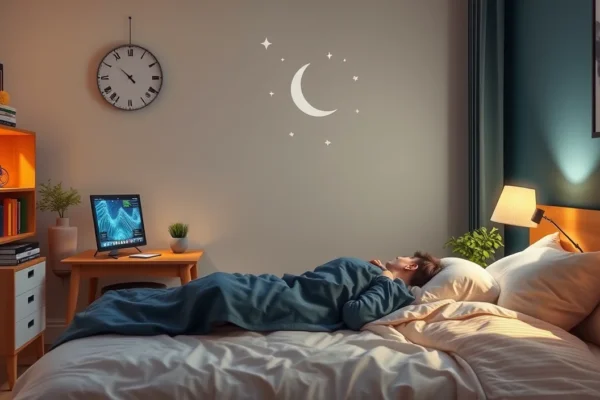
The best temperature for deep sleep is 18°C (64.4°F). The functional range for most adults is 15.6°C to 19.4°C (60°F to 67°F). Sleeping within this window supports the core body temperature drop your brain needs to enter and sustain Stage 3 deep sleep and full REM cycles.
Why Cold Is Your Most Powerful Sleep Tool
Who lies awake at night feeling restless, wakes up exhausted despite a full eight hours, or notices heavy grogginess every morning that takes an hour to shake off, there is a strong chance your bedroom is too warm. Not by much. Even two or three degrees above the optimal range is enough to fragment your sleep architecture, suppress your deepest recovery stages, and leave you feeling like you barely slept at all.
I have spent years working alongside sleep medicine professionals, reviewing peer reviewed research from institutions including the National Institutes of Health and the Sleep Foundation, and applying this science to real world sleeping environments across different climates and housing types. The single most underestimated, zero cost, drug free sleep performance lever available to any person is bedroom temperature.
Most people in North America and Europe sleep in rooms that are too warm. They assume that warmth equals comfort and that comfort equals better sleep. The biology tells a completely different story. Your brain cannot fully enter deep sleep unless your core body temperature drops. If your bedroom is too warm, your body cannot complete that drop. The result is lighter, more fragmented sleep that leaves you depleted regardless of how many hours you spend in bed.
This guide covers the complete science behind the golden sleep temperature, how it works at the biological level, what the right range looks like for different ages and body types, and five practical methods to reach and maintain that temperature in your bedroom tonight, whether you live in Phoenix, Toronto, or Vienna.
Why Core Temperature Controls Deep Sleep Quality
Your brain cannot initiate deep sleep unless your core body temperature drops by 1 to 2 degrees Celsius. This cooling process begins about two hours before you fall asleep and continues throughout the night. A bedroom that is too warm blocks this essential drop, pushing you into lighter sleep stages and increasing nighttime waking.
Sleep begins once your core temperature is reduced by approximately 1.3°C (about 2°F) and the skin temperature of your hands and feet equalizes with the skin temperature of your abdomen and forehead. Melatonin production starts once it is dark outside and its increase runs parallel with a reduction in your core body temperature. Maceoo
This is one of the most important and least understood facts in sleep science. Melatonin is not just a darkness signal. It is directly tied to your thermoregulatory system. The two processes, melatonin release and core temperature decline, happen together and depend on each other. Disrupt one and you disrupt both.
How the Circadian Rhythm Drives the Cooling Cycle
Your core body temperature generally hovers around 98.6°F (37°C) but fluctuates by about 2°F throughout the night. The drop in temperature starts about two hours before you go to sleep, coinciding with the release of the sleep hormone melatonin. During sleep, body temperature continues to fall, reaching a low point in the early morning and then gradually warming up as the morning progresses. Biker Universe
Circadian rhythm governs a predictable daily cycle in core temperature, with a peak in the late afternoon and a gradual decline beginning about 1 to 2 hours before bedtime. This built-in temperature drop signals the body to prepare for sleep, aligning thermoregulatory responses with melatonin release and supporting seamless entry into deeper sleep stages. J.D. Power
The Role of Vasodilation in Starting Sleep
Near the onset of sleep, arteries and veins dilate in the hands and feet, allowing more heat from the core to flow to your extremities. Some of this heat is then lost to the environment through capillaries and skin. Maceoo
This process, called distal vasodilation, is the biological mechanism that makes your hands and feet feel warm just before you fall asleep. It is not a sign that your body is heating up. It is your body’s radiator system actively venting heat from your core. The warmer your extremities get, the more heat is escaping, and the lower your core temperature drops.
Heat exposure causes more frequent wakefulness and reduces both deep sleep and REM sleep stages. REM sleep is most frequently cut short due to overheating. Maceoo
This is why sleeping cold is genuinely one of the most effective natural performance enhancers available. A cooler bedroom accelerates the core temperature drop, speeds up sleep onset, and helps maintain the deep NREM and REM stages where memory consolidation, physical repair, and hormonal restoration all occur.
Here is how core temperature relates to each sleep stage:
| Sleep Stage | What Happens to Core Temp | Effect of Room Being Too Warm |
|---|---|---|
| Stage 1 (Light NREM) | Begins to decline | Minimal disruption |
| Stage 2 (Light NREM) | Continues declining | Moderate disruption, longer time in Stage 2 |
| Stage 3 (Deep NREM) | Reaches lowest point | Severe disruption, micro-awakenings, less time in Stage 3 |
| REM | Thermoregulation partially suppressed | Most vulnerable stage, cut short by heat |
| Morning waking | Temperature rises naturally | Room heat can accelerate early waking |
Why 18°C (64.4°F) Is the Golden Sleep Temperature
The 18°C (64.4°F) target is supported by the largest body of sleep science research available. It falls at the center of the proven 15.6°C to 19.4°C (60°F to 67°F) range that enables most adults to fall asleep faster, stay asleep longer, and spend more time in Stage 3 deep sleep and REM.
The best room temperature for sleep is approximately 65°F (18.3°C). This may vary by a few degrees from person to person, but most doctors recommend keeping the thermostat set between 60°F to 68°F (15.6°C to 20°C) for the most comfortable sleep. Biker Universe
Studies suggest that an ideal bedroom temperature for sleep falls between 60°F and 67°F (15°C to 19°C). One large-scale study involving over 34,000 participants found that sleep quality tends to decline as bedroom temperatures exceed 77°F (25°C). Wardler
Deep Sleep vs. REM: Why Each Stage Needs the Cold
Deep sleep (Stage 3, also called slow wave sleep) is where your body does its most important repair work. Growth hormone is released. Immune function is restored. Physical tissue repairs from the day’s exercise and stress. Between 60°F and 67°F is the proven optimal range for promoting melatonin release and deep sleep. Anything higher can cause sweating and nighttime disruptions. Lower temperatures boost thermoregulation and help maintain uninterrupted sleep cycles. Maher Leathers
REM sleep requires different conditions. REM sleep requires a narrower temperature window, around 65°F to 70°F (18.3°C to 21.1°C), because thermoregulatory responses are partially suppressed during REM and the body relies more heavily on environmental conditions. Deviations above or below this range can truncate REM cycles, impairing memory consolidation and emotional processing. J.D. Power
The Goldilocks Zone by Sleeper Type
Not every person sleeps optimally at exactly 18°C. Age, body composition, activity level, and health status all shift the ideal temperature slightly within the broader range.
| Sleeper Type | Optimal Range | Reason |
|---|---|---|
| Most healthy adults | 17°C to 19°C (63°F to 66°F) | Supports core cooling and melatonin release |
| Infants (0 to 12 months) | 20°C to 22°C (68°F to 72°F) | Smaller body mass, less developed thermoregulation |
| Young children (1 to 10 years) | 19°C to 21°C (66°F to 70°F) | Still developing temperature regulation |
| Seniors (65 and older) | 19°C to 21°C (66°F to 70°F) | Thinner skin, reduced circulation, higher cold sensitivity |
| Athletes in recovery | 16°C to 18°C (61°F to 64°F) | Cooler temps support muscle repair and reduce inflammation |
| People with night sweats | 16°C to 18°C (61°F to 64°F) | Proactive cooling prevents sweat triggered awakenings |
| Menopausal women | 16°C to 18°C (61°F to 64°F) | Reduces frequency and intensity of hot flashes |
Infants may benefit from a bedroom that is one or two degrees warmer, up to 69°F (20.5°C). As their bodies are smaller and still developing, they are more sensitive to changes in ambient temperature. Biker Universe
For athletes, the case for sleeping cooler is particularly strong. Regulating temperature through cooling materials or smart systems helps you enter and stay in deep sleep longer, with studies showing up to a 20% increase in deep sleep time when sleep surface temperature is actively managed. Maher Leathers
Thermal Comfort vs. Core Temperature: A Critical Difference
Feeling warm and comfortable in bed is not the same as having the right core body temperature for sleep. You can feel perfectly cozy under blankets in a room at 18°C while your core temperature drops exactly as it should. The goal is to keep your sleep environment cool while your bedding provides surface warmth.
Maintaining skin temperatures within 33.5°C to 35.5°C during sleep is crucial, as deviations outside of this range increase sleep disturbances, decrease deep sleep, and reduce total sleep time. Wardler
This distinction explains why the bedroom thermostat setting matters so much. Your blankets and duvet create a microclimate around your body. But they cannot compensate for a room that is too warm, because a warm room prevents the heat your core is trying to shed from dissipating into the surrounding air.
The Sock Paradox: Why Warm Feet Help Cool Your Core
This is one of sleep science’s most counterintuitive findings. Wearing socks to bed triggers a process called distal vasodilation. Your body naturally works to lower its core temperature at night as part of your circadian rhythm. If your feet are too cold, your core temperature may actually increase because your body sends more blood flow and the heat that comes with it to your core areas. Wearing socks warms the feet, which relaxes and widens blood vessels that constricted while cold, and this improved circulation helps release more heat through the skin. RICHA USA
A 2018 physiology study found that sleeping with socks increased total sleep time by about 32 minutes, reduced nighttime wake-ups, and improved sleep efficiency. Loose-fitting socks made from breathable natural fibers like cotton, merino wool, or bamboo work best for overnight comfort. Dainese
The 2018 study found that when participants wore bed socks, their foot temperature was about 1.3°C higher than without socks. The distal proximal skin temperature gradient (DPG) was also higher for those wearing socks, indicating increased heat loss from the core to the extremities.
The practical takeaway: if you struggle with cold feet that keep you awake, wearing a pair of loose, breathable cotton or merino wool socks is a scientifically supported strategy that accelerates the core cooling your body needs to initiate sleep, rather than working against it.
Breathable Bedding Materials and Why They Matter
The materials your sheets, pillowcases, and sleep clothing are made from determine how well your body’s own thermoregulatory system can function during the night.
Bamboo and Tencel (Lyocell) are the highest performing natural materials for sleep thermoregulation. Both materials are highly moisture wicking, meaning they pull sweat away from your skin surface and allow it to evaporate quickly. This evaporative cooling is the same mechanism your body uses when it sweats to reduce core temperature. A bamboo or Tencel sheet set actively supports this process rather than trapping heat and moisture against the skin.
Cotton is the most commonly available breathable option and performs well for most sleepers in the 18°C to 20°C range. Higher thread count cotton can actually reduce breathability by creating a denser weave that traps heat, so mid range thread counts (200 to 400) typically outperform premium 800 thread count cotton for sleep temperature management.
Polyester and synthetic blends are the most common materials in budget bedding and one of the most common contributors to overheating during sleep. Synthetic fibers do not wick moisture effectively. They trap heat against the body, which prevents the natural thermoregulatory process from functioning correctly. If you consistently wake up hot and sweaty despite a cool room, your bedding material is often the primary cause.
| Material | Breathability | Moisture Wicking | Best For |
|---|---|---|---|
| Bamboo | Excellent | Excellent | Hot sleepers, night sweats |
| Tencel (Lyocell) | Excellent | Very good | Hot and sensitive skin sleepers |
| Linen | Very good | Very good | Summer, warm climates |
| Cotton (200 to 400 TC) | Good | Good | Most adult sleepers |
| Merino wool | Good | Very good | Cold climates and winter |
| Polyester | Poor | Poor | Not recommended for sleep |
5 Ways to Cool Your Bedroom Without Cranking the AC
You do not need a new air conditioning unit or an expensive smart home system to reach 18°C (64.4°F) at night. Strategic ventilation, behavioral timing tricks, blackout curtain use during the day, and modern bedding technology can reduce bedroom temperature by 3°C to 6°C without touching your energy bill significantly.
Method 1: Strategic Cross-Ventilation and the Heat Chimney Effect
Hot air rises. This basic physics principle, combined with strategic window positioning, creates what ventilation specialists call a “heat chimney” effect that moves warm air out of your bedroom passively and efficiently.
The technique works best in homes with windows on more than one wall of the bedroom, which applies to most detached homes and many apartment layouts in North America and Austria:
- Open a lower window on the cooler side of your home (typically the north or shaded side) to allow cool air entry
- Open a higher window or a rooftop/attic vent on the warmer side to allow hot air to escape upward
- Position a box fan facing outward in the upper window to actively pull hot air out of the room
- Run this setup during cooler evening hours (after sunset) to flush out the heat accumulated during the day
In Austrian alpine areas and Canadian mountain regions where nighttime temperatures drop significantly even in summer, this cross-ventilation approach alone can reduce bedroom temperature by 5°C to 8°C within 45 minutes of deployment.
Method 2: The Warm Shower Hack Before Bed
This approach works on exactly the same principle as the sock paradox but more powerfully. Taking a warm bath an hour before bed works paradoxically by increasing blood flow to extremities, which helps dissipate heat quickly afterward. Eagle Leather
A warm (not hot) shower or bath taken 60 to 90 minutes before your target bedtime heats the skin surface and triggers aggressive distal vasodilation throughout the body. When you step out of the shower, your body begins rapidly venting the absorbed heat through your now-dilated skin blood vessels. Core temperature drops faster than it would through passive cooling alone.
Research published in multiple sleep medicine journals confirms that this post-shower cooldown effect reduces sleep onset latency (the time it takes to fall asleep) by an average of 10 minutes, which is meaningful on a cumulative basis for people who struggle with slow sleep onset.
The water temperature should be warm and comfortable, roughly 40°C to 42°C (104°F to 108°F), not scalding hot. A hot shower at 45°C or above raises core temperature enough that the cooldown takes longer and may not complete before your target bedtime.
Method 3: Cooling Mattress Technology
The sleep surface you lie on is in direct contact with your body throughout the entire night. A mattress that retains heat creates a microclimate between your body and the sleep surface that can be 2°C to 4°C warmer than the surrounding room, effectively canceling out the benefit of a cool bedroom setting.
Modern cooling mattress toppers and smart mattress systems address this directly. Products in the “cooling pad” and “temperature controlled mattress cover” category use actively circulated water or thermoelectric cooling to maintain a specific surface temperature throughout the night, independently of room temperature.
A published study in Bioengineering (2024) examined how sleeping for one week with an active temperature-controlled mattress cover affected sleep metrics and cardiovascular recovery in 54 subjects. All components of the Pittsburgh Sleep Quality Index significantly improved when the cooling system was active, including perceived sleep onset latency. Wardler
For riders on a tighter budget, gel-infused memory foam toppers, phase change material mattress pads, and open cell foam constructions all provide passive cooling that meaningfully reduces sleep surface temperature compared to standard memory foam. Open cell foams enhance airflow and resist heat retention, gel-infused layers pull heat away from the body for sustained coolness, and phase change materials adapt to body temperature dynamically. Maher Leathers
Method 4: Blackout Curtains as a Thermal Shield
Most people think of blackout curtains as a darkness tool for better melatonin production. They are that, but they serve an equally important thermal function that is rarely discussed.
During daylight hours, particularly in south or west facing bedrooms in the U.S. Southwest, in summer in southern Austria, and during the long summer days across Canada, direct sunlight entering through windows heats the room’s surfaces, walls, floors, furniture, and ceiling, creating a stored heat load that the room then releases slowly throughout the evening and overnight.
A bedroom that has absorbed six to eight hours of direct sunlight typically runs 3°C to 6°C warmer at 10 PM than a room that was shielded from direct sun during the day. Closing thermal blackout curtains on sun-exposed windows by 9 or 10 AM and keeping them closed throughout the day dramatically reduces this thermal load, making your target 18°C far easier to achieve by bedtime without relying on air conditioning.
Combined with the cross-ventilation strategy described above, this approach creates what sleep environment designers refer to as a “sleep cave,” a room that is cool, dark, and insulated from external temperature fluctuations by the time your sleep window begins.
Method 5: Smart Thermostat Programming
A programmable or smart thermostat allows you to schedule temperature drops to begin 30 to 60 minutes before your target bedtime automatically. This creates the pre-sleep cooling environment without requiring manual adjustments each night.
The most effective programming pattern for deep sleep optimization across different seasons:
- Set cooling to begin at 8 PM to 9 PM to reach your target temperature by 10 PM
- Maintain target temperature through 5 AM to 6 AM to preserve deep sleep and REM cycles throughout the night
- Allow temperature to rise naturally in the morning as your body’s natural warming signal helps you wake
- In winter in Canada and Austria, set a slightly warmer lower limit of 17°C to prevent cold stress from waking you in the early morning hours
Signs Your Room Is Too Hot for Good Sleep
Red Flags That Tell You Your Bedroom Is Too Warm
Your body communicates temperature related sleep disruption through very specific symptoms. If any of the following sound familiar, your bedroom temperature is likely above the threshold where deep sleep and REM can occur reliably.
Night sweats or damp sheets in the morning. This is the most obvious indicator. When your core cannot shed heat through the thermoregulatory process, your body escalates to active sweating to force the drop. Waking up with damp clothing or sheets means your sleep environment was warm enough to trigger this escalation.
Frequent tossing and turning throughout the night. Repositioning during sleep is a behavioral thermoregulatory response. When your body cannot cool your core sufficiently in one position, it shifts to expose more skin surface area to cooler air. Even modest temperature swings can fragment sleep architecture. Excessive heat triggers sweat and micro-arousals, cutting deep sleep short. J.D. Power
Vivid or stressful dreams that feel unusually intense. Heat suppresses the deepest stages of NREM sleep and forces more time into lighter stages including REM. REM sleep is where dreaming occurs, so spending more time than normal in REM due to heat disruption often produces a subjective experience of unusually vivid, emotionally charged, or stressful dreams.
Waking with a heavy, foggy head in the morning. This particular symptom, characterized by a sensation of mental heaviness or grogginess that persists for an hour or more after waking, is often associated with sleep inertia caused by fragmented deep sleep. When Stage 3 deep sleep is repeatedly interrupted by micro-awakenings throughout the night, you may never complete enough full deep sleep cycles, leaving you feeling unrested despite a full night in bed.
Waking between 2 AM and 4 AM and struggling to return to sleep. Core body temperature reaches its lowest point in the early morning hours, around 4 AM for most adults, and then begins rising toward waking temperature. In a warm bedroom, this rewarming happens faster and more aggressively, which can trigger early waking before your full sleep need has been met.
Feeling thirsty immediately upon waking. Nighttime sweating leads to mild dehydration that manifests as morning thirst. If you consistently wake thirsty without having exercised vigorously the previous day, your bedroom temperature is likely causing overnight sweating that you are not fully aware of.
Here is a quick diagnostic table for common morning symptoms and their temperature related causes:
| Morning Symptom | Likely Temperature Cause | Solution |
|---|---|---|
| Soaked or damp sheets | Room above 22°C, moisture trapping bedding | Lower thermostat, switch to bamboo or Tencel sheets |
| Groggy for over 60 minutes | Deep sleep fragmentation from heat | Target 18°C, use cooling mattress topper |
| Vivid or stressful dreams | Excess time in REM due to heat | Drop room temperature by 2°C to 3°C |
| Waking at 2 AM to 4 AM | Early rewarming triggers alertness | Maintain cool temperature through early morning |
| Immediate morning thirst | Overnight mild dehydration from sweating | Cool room plus moisture wicking bedding |
| Stiff neck or shoulders | Muscle tension from disrupted sleep | Optimize temperature plus pillow loft |
Regional Temperature Guidance for USA, Canada and Austria
Sleep temperature management is not one-size-fits-all across geography. The climate where you live determines how much effort is required to reach and maintain 18°C and which specific strategies will be most effective.
| Region | Summer Challenge | Winter Challenge | Best Strategy |
|---|---|---|---|
| U.S. Southwest (AZ, NV, NM) | Extreme heat, rooms reach 28°C+ | Mild winters, minimal cold stress | Blackout curtains daily, AC set to 18°C, cooling mattress topper |
| U.S. Southeast (FL, GA, LA) | High heat plus humidity | Mild winters | Dehumidifier plus cooling, bamboo bedding essential |
| U.S. Pacific Northwest (OR, WA) | Mild, cross-ventilation often sufficient | Cool, risk of cold stress below 15°C | Cross-ventilation in summer, minimum thermostat setting in winter |
| U.S. Midwest (IL, MN, OH) | Hot humid summers | Very cold winters, risk of over-heating from central heating | Thermostat programming critical in both seasons |
| Canadian Prairies (AB, SK, MB) | Short hot summers | Extreme cold, indoor overheating from forced air heating | Thermostat drop at bedtime essential in winter |
| British Columbia | Mild with occasional heat waves | Wet and cool | Cross-ventilation in summer, 18°C thermostat in winter |
| Eastern Canada (ON, QC) | Humid summer heat | Cold with indoor overheating risk | Cooling bedding in summer, thermostat management in winter |
| Austrian Alpine Regions | Cool to warm summer nights | Cold winters, but often well-insulated homes | Natural cross-ventilation often sufficient in summer |
| Austrian Lowlands | Warm to hot summers | Moderate winters | Blackout curtains plus ventilation, thermostat use in winter |
The 7-Day Temperature Optimization Plan
Days 1 to 3: Establish Your Baseline
Before optimizing, measure what you are actually sleeping in. Place a digital indoor thermometer in your bedroom at mattress level, not near the ceiling where readings run 2°C to 3°C warmer. Record the temperature at the time you go to bed and at the time you wake up for three consecutive nights.
Compare your readings against the 18°C target. Most people discover their bedroom is running 20°C to 24°C, which is significantly above the optimal threshold.
Days 4 to 7: Apply the Cooling Stack
Implement all relevant strategies from this guide simultaneously for the maximum compounding effect:
- Set thermostat or open windows to reach 18°C by your target bedtime
- Close blackout curtains on sun-exposed windows by 10 AM each day
- Switch to bamboo or cotton moisture wicking bedding if currently using synthetic
- Take a warm shower 60 to 90 minutes before bed
- Wear loose breathable socks if your feet tend to feel cold at night
- Note subjective sleep quality and any symptom changes each morning
The Sleep Foundation provides additional research-backed guidance on optimizing your sleep environment, and the American Academy of Sleep Medicine offers clinical resources for anyone dealing with persistent sleep disruption beyond what environmental optimization resolves.
Final Thoughts: Sleep Cold, Recover Fully, Wake Ready
Temperature is not a secondary sleep variable. It is the primary biological signal your brain uses to initiate and sustain the deepest, most restorative stages of sleep. Getting it right costs almost nothing but produces compounding returns on energy, mood, cognition, athletic recovery, and long term health that no supplement or sleep gadget can replicate.
The number to remember is 18°C (64.4°F). The range to stay within is 15.6°C to 19.4°C (60°F to 67°F). The strategies to get there are all in this guide, from the simple act of closing your curtains in the morning to the scientifically verified warm shower hack that accelerates core cooling before you even lie down.
Your body already knows how to sleep deeply. Give it the temperature conditions it needs to do so, and every night becomes a genuine recovery session rather than just hours spent in bed.