Window safety is a critical concern for every parent, yet it is often overshadowed by more visible hazards like electrical outlets or sharp corners. According to pediatric safety data, window falls are a leading cause of injury and hospitalization for children under the age of five.
As toddlers begin to explore their environment, their natural curiosity combined with a lack of fear and a high center of gravity makes open windows a significant risk. This guide provides a deep dive into preventing toddler falls from windows, offering actionable strategies to transform your home into a fortress of safety.
The Reality of Window Falls in Children
Every year, thousands of children are treated in emergency rooms due to falls from windows. These incidents aren’t just limited to high-rise apartments; a fall from a first-story window onto a hard surface can be just as devastating.
Understanding how to prevent children from falling starts with recognizing that a standard window screen is not a safety device. Screens are designed to keep bugs out, not to keep children in. They pop out with very little pressure, often leading to a false sense of security for parents.
1. Physical Barriers: Window Safety Hardware
The most effective way to prevent falling windows is to install hardware specifically designed to withstand the weight and persistence of a curious child.
Window Guards
Window guards are metal or high-impact plastic bars that are screwed into the window frame. They are spaced no more than 4 inches apart to ensure a child’s head cannot fit through.
-
Best for: Lower floors or bedrooms where windows stay open for ventilation.
-
Pro Tip: Ensure you purchase “quick-release” models for bedrooms to allow for emergency egress in case of a fire.
Window Stops and Wedges
If you want to allow fresh air in without opening the window wide enough for a child to crawl through, window stops are your best friend.
-
How they work: These devices clip or screw into the track, preventing the window from opening more than 4 inches.
-
Versatility: They work on both vertical sliding (single/double-hung) and horizontal sliding windows.
Safety Nets and Mesh
For a less “industrial” look, heavy-duty safety netting can be installed. This is particularly useful for window safety for children in modern homes with large glass panes.
2. Furniture Placement and Environment Control
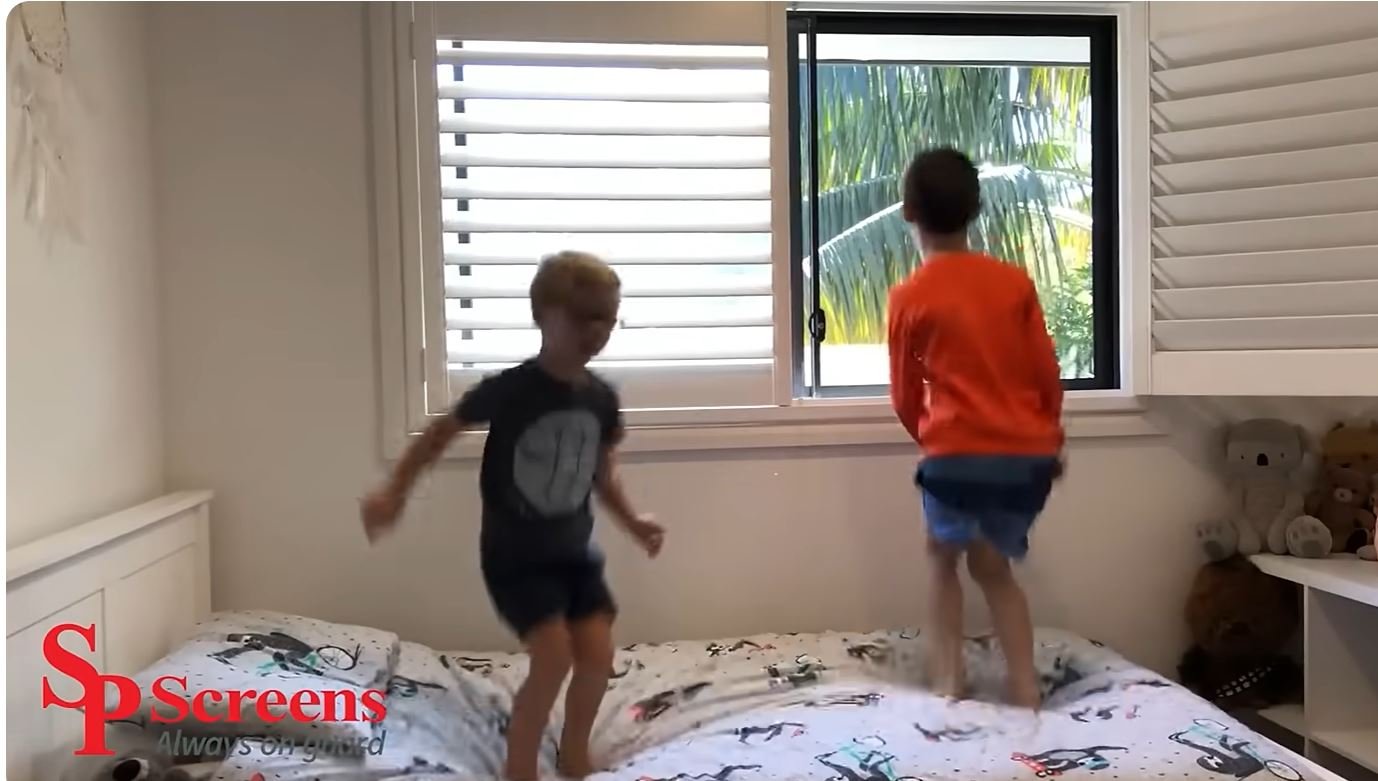
Fall prevention for toddlers isn’t just about the window itself; it’s about the “launchpad” leading up to it.
-
Move the Furniture: Never place cribs, beds, chairs, or bookshelves under or near a window. A toddler can easily climb onto a chair and reach a latch that was previously “out of reach.”
-
Create a Buffer Zone: Keep the area around windows clear of toys. If a favorite toy is near a window, the child is more likely to spend time in that high-risk zone.
-
Conditioning: Consistently teach children that windows are for looking, not for leaning or playing. While supervision is paramount, verbal boundaries help build long-term safety habits.
3. Comparison of Window Safety Devices
Choosing the right hardware depends on your window type and your specific needs (e.g., rental-friendly vs. permanent).
| Device Type | Best For | Pros | Cons |
| Window Guards | High-risk areas | Extremely sturdy; visual deterrent | Can look “prison-like”; requires drilling |
| Window Stops | Sliding windows | Inexpensive; easy to install | Limits airflow; can be bypassed by older kids |
| Charley Bars | Horizontal sliders | Very secure; prevents intruders too | Visible hardware on the frame |
| Toughened Mesh | Aesthetics | Nearly invisible; high impact resistance | Professional installation usually required |
4. Specific Strategies for Different Window Types
Not all windows are created equal. Your strategy for window fall prevention for kids must adapt to the architecture of your home.
Double-Hung Windows
If you have windows that open from both the top and the bottom, open the top sash only. This keeps the opening well above a toddler’s height while still allowing heat to escape and fresh air to enter.
Casement Windows (Crank-out)
These are often safer because they are harder for a child to operate. However, if the crank is easy to turn, consider removing the handle and keeping it in a nearby drawer where only adults can reach it.
Balcony and Floor-to-Ceiling Windows
In modern apartments, glass walls are common. Ensure the glass is tempered or has a safety film applied. If there is a balcony, the railing must be “toddler-proof”—no horizontal slats that can be used as a ladder.
5. Fall Prevention for Babies vs. Toddlers
The risks shift as your child grows. Fall prevention for babies focuses on the “unintentional” fall—a baby rolling off a changing table or a bed near a window.
As they transition to the toddler stage, the risk becomes “intentional exploration.” Fall prevention for kids requires a multi-layered approach:
-
Passive Protection: Hardware (guards/stops).
-
Active Supervision: Never leaving a child alone in a room with an accessible, open window.
-
Education: Teaching the “feet on the floor” rule near windows.
6. The “Screen Myth” and Other Common Misconceptions
One of the biggest hurdles in preventing falls for toddlers is the belief that a screen is a barrier.
Important Note: Standard window screens are designed to fail under pressure to avoid tearing the window frame. They will not hold the weight of even a small infant.
Another misconception is that “I’ll hear them.” Window falls happen in seconds and are often completely silent until the point of impact. Relying on your ears is not a substitute for physical locks and guards.
7. Maintenance and Household Audits
Safety isn’t a “one and done” task. Perform a monthly safety audit of your home:
-
Check the Latches: Are they loose? Do they still lock securely?
-
Test the Stops: Ensure your window stops haven’t slipped or been loosened by vibration.
-
Inspect the Glass: Look for hairline cracks that could compromise the integrity of the window during an accidental bump.
Frequently Asked Questions (FAQ)
1. Are window screens enough to keep my child safe?
No. Standard insect screens are designed to keep bugs out and provide no structural support. They pop out easily under the weight of a leaning child. Always use window guards or stops.
2. At what height is a window fall dangerous?
Falls from as little as 6 feet can cause serious injury or death depending on the landing surface. Any window that is more than 3 feet off the ground should be considered a potential hazard.
3. Can I use window film to prevent falls?
Safety film strengthens the glass and prevents it from shattering into dangerous shards, but it does not prevent the window from being opened or a child from falling through an open pane.
4. What is the “4-inch rule”?
The 4-inch rule is the safety standard for window openings and guard spacing. It ensures that the opening is too small for a child’s head to pass through, effectively preventing the rest of the body from following.
5. Are there window guards for renters that don’t require drilling?
Yes. There are pressure-mounted window guards and removable window wedges that use high-strength adhesive or tension. However, always verify they meet ASTM safety standards before relying on them.
Final Thoughts on Window Safety
Securing your home is a dynamic process. As your child gains strength and problem-solving skills, they will test the boundaries you’ve put in place. By combining high-quality hardware with smart furniture placement and consistent education, you can significantly reduce the risk of a life-altering accident.

- Safe Storage for Cleaning Supplies: The Complete Guide - March 3, 2026
- Guide to Baby Gate for Stairs Installation: Safety and Solutions - March 3, 2026
- Preventing Toddler Falls from Windows: Parent’s Guide - March 3, 2026