
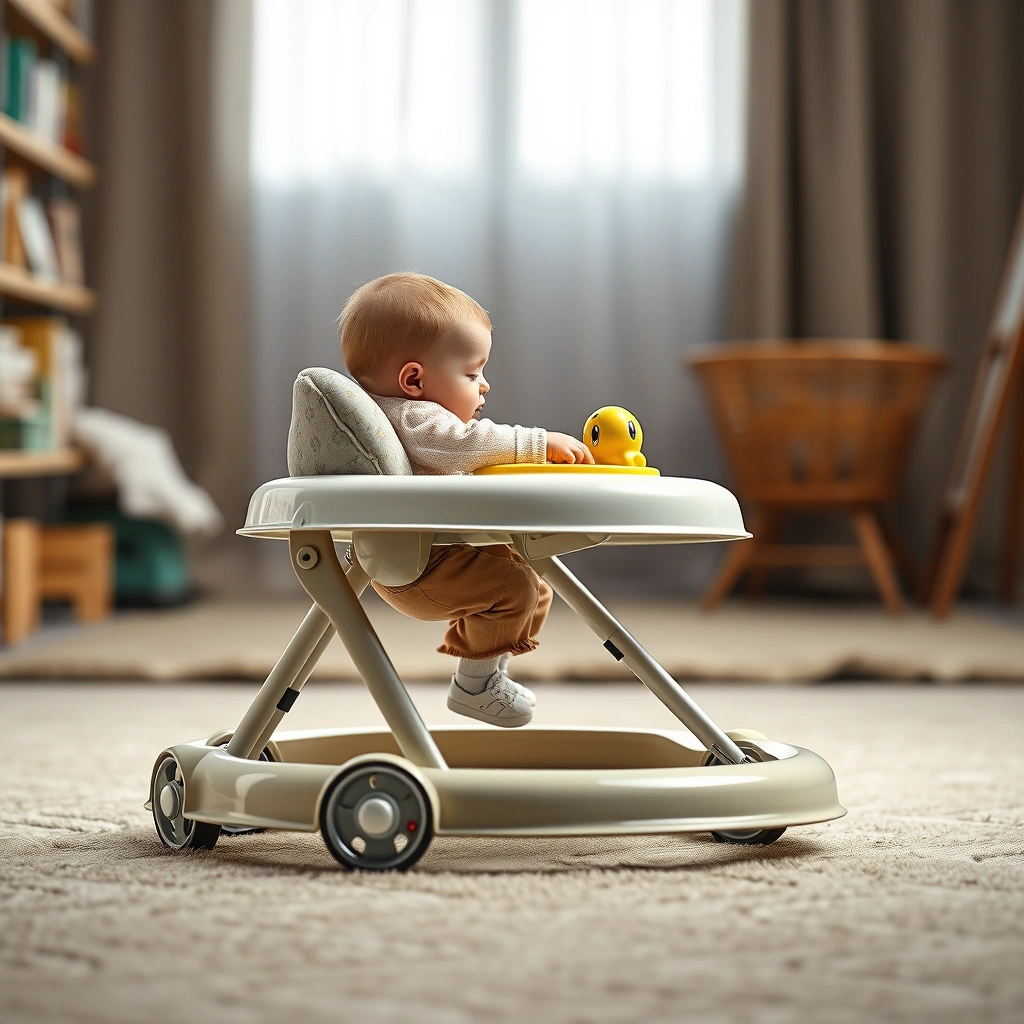
When Can Babies Use a Walker? (Safe Age + Pediatric Advice 2026)
As a new parent, you might find yourself constantly wondering what tools or devices are safe and suitable for your baby. One common question revolves around the use of baby walkers, a popular item that promises to aid your child’s mobility.
Babies can start using a walker around 6 to 8 months old, when they can sit up independently and have good head control. Always supervise their use and ensure the walker is used on a flat, safe surface.
Understanding Baby Walkers

What Are Baby Walkers?
Baby walkers are devices designed to support infants who are not yet able to walk independently. These walkers typically consist of a seat on wheels and a tray for the baby to hold onto.

They allow babies to sit upright and move around using their feet.
Benefits and Risks
While baby walkers might seem like a fun way for your little one to explore, it’s important to weigh the potential benefits against the risks.
- Benefits:
- Entertainment: Walkers can keep babies entertained with toys and activities on the tray.
- Mobility: They provide a way for babies to move around before they can walk on their own.
- Risks:
- Safety Concerns: Walkers can tip over or allow babies to reach dangerous items.
- Developmental Delays: Over-reliance on walkers may delay motor skill development as babies may miss out on important crawling stages.
Experts often recommend limiting the use of baby walkers and ensuring that any use is under strict supervision. Instead, consider safer alternatives like stationary activity centers that provide similar benefits without the mobility risks.
Developmental Milestones Before Using a Walker
Physical Development
Before introducing a walker, your baby should have developed certain physical abilities. These include:
- Sitting up independently: Your baby should be able to sit without support. This indicates strength and balance, which are essential for using a walker safely.
- Crawling: Crawling helps strengthen muscles and improves coordination, both of which are important for walking.
- Pulling to stand: Babies should be able to pull themselves up to a standing position. This shows they have the leg strength required for a walker.
Tip: Observe your baby’s ability to transition between these positions smoothly. This indicates readiness for the next step.
Cognitive Readiness
Cognitive development is just as important as physical readiness. Key cognitive skills include:
- Curiosity and exploration: A baby who shows interest in their environment is more likely to benefit from a walker.
- Understanding cause and effect: Babies need to understand that their movements cause the walker to move. This basic cognitive skill is necessary for safely navigating while in a walker.
Ensuring your baby meets these developmental stages can help provide a smoother transition to using a walker. Always supervise their use and consult with your pediatrician if you have concerns about your baby’s readiness.
Optimal Age Range for Walkers

Choosing the right time for your baby to use a walker can be a thoughtful decision. Babies typically start using walkers between 6 to 10 months of age. At this stage, many babies have developed enough neck and head control and can sit up with minimal support.
When considering a walker for your baby, ensure they meet the following milestones:
- Neck and Head Control: Baby can hold their head up confidently.
- Ability to Sit: Baby can sit up without too much assistance.
- Interest in Movement: Baby is eager to explore and shows interest in moving around.
It’s essential to remember that not all babies develop at the same pace. Some might be ready a bit earlier or later than the typical range. Observing your baby’s development cues is key. Safety should also be a priority. Use walkers on flat, smooth surfaces away from stairs and other hazards.
Tip: “Always supervise your baby while in a walker to ensure their safety and prevent any accidents.”

Trust your instincts as a parent and consult with your pediatrician if you have concerns or questions about your baby’s readiness for a walker. They can offer guidance tailored to your child’s specific needs and development.
Safety Considerations
Supervision
When your baby starts using a walker, constant supervision is essential. Babies in walkers can move quickly, so it’s important to keep an eye on them at all times to prevent accidents. Consider setting up a designated play area where you can easily monitor their activities.
Home Safety Adjustments
Before introducing a walker, make adjustments around your home to ensure a safe environment:
- Stairs and Steps: Install safety gates at the top and bottom of stairs to prevent falls. Walkers should never be used on or near stairs.
- Sharp Edges and Breakables: Cover sharp furniture edges and move breakable items out of reach to avoid injuries.
- Electrical Outlets and Cords: Use outlet covers and secure cords to prevent your baby from pulling on them.
- Small Objects: Keep small objects off the floor, as babies can easily pick them up and put them in their mouths.
Tip: Consider using a playpen as a safer alternative to a walker, providing a secure space for your baby to explore.
Alternatives to Walkers

Stationary Activity Centers
Stationary activity centers are a fantastic alternative to traditional walkers. These play stations allow your baby to sit or stand while engaging with toys and activities that encourage motor skill development. Unlike walkers, they stay in one place, reducing the risk of accidents. Many parents find that these centers provide a safe environment for exploration and learning. They also help in strengthening your baby’s muscles as they stand and play.
Push Toys
Push toys offer another excellent option for babies who are eager to move. These toys are designed to be pushed along, helping your child develop balance and coordination as they take their first steps. Look for push toys with a sturdy base and a handle that is easy for your baby to grip. Some models even come with fun features like built-in activities or music to keep your child entertained. As your baby grows more confident, these toys can be adjusted to offer more challenges.
Both of these alternatives support your baby’s natural progression toward walking without the risks associated with traditional walkers. They encourage physical activity, balance, and coordination in a safe and controlled manner, making them excellent choices for parents looking to support their baby’s development.
Pediatric Recommendations
Professional Guidelines
Pediatric experts generally advise against the use of baby walkers due to safety concerns and potential developmental delays. Walkers can be hazardous as they make it easier for babies to reach dangerous areas, posing risks for falls or access to harmful objects. Furthermore, walkers might encourage babies to use their toes, potentially affecting normal leg muscle development.
The American Academy of Pediatrics (AAP) strongly recommends using stationary activity centers instead. These provide a safe environment for babies to play while promoting natural motor skills development. If you choose to use a walker, ensure strict supervision and a safe environment free from stairs and sharp objects.
Parental Advice
Many parents wonder about the right time to introduce walkers. While some may consider it around 6 to 8 months when babies begin to sit and crawl, experts suggest focusing on floor play to support muscle development and coordination. Encouraging supervised belly time and play on the floor reinforces natural growth patterns.
Tip: Keep your baby’s play area safe and spacious to allow free movement. Use gates to block stairs and ensure the room is free from hazards.
Instead of walkers, consider these alternatives:
- Activity centers: These are stationary and allow babies to bounce or swivel, helping develop motor skills safely.
- Push toys: Great for babies who are starting to walk, these toys offer support without the risks associated with walkers.
In conclusion, while walkers might seem appealing, prioritizing safety and developmental support through other means is recommended. Always consult with your pediatrician if you have concerns about your baby’s mobility and development.
Recognizing Readiness in Your Baby
Understanding when your baby is ready to start using a walker can help ensure their safety and support their development. Here are some signs to look for:
Signs of Physical Readiness
Babies need to meet certain physical milestones before using a walker. These include:
- Head Control: Your baby should have strong and steady head control, as a weak neck could lead to injury.
- Sitting Up: They should be able to sit up unassisted, indicating that their back muscles are strong enough to support them in a walker.
- Weight Bearing: Your baby should show an interest in standing and be able to bear some weight on their legs when supported.
Signs of Emotional Readiness
Beyond physical readiness, emotional cues are essential too:
- Curiosity: A desire to explore their surroundings is a good sign that a walker might engage them positively.
- Confidence: Your baby should show confidence and not be overly fearful when placed in new situations.
Always supervise your baby closely when they are in a walker, and ensure the environment is safe from hazards. Remember, walkers should only be used for short periods and never as a substitute for floor play, where babies can practice crawling and other important skills.
Long-term Effects of Walker Use
Impact on Walking Development
Using a walker can create a false sense of support for your baby, which may delay independent walking skills. Babies often rely on the walker for balance and movement, which can prevent them from developing the strength and coordination needed to walk on their own. Instead of using a walker, encourage floor play and tummy time, which promote natural muscle development.
Postural Considerations
Walkers can impact your baby’s posture by causing them to lean forward unnaturally. This position can put strain on their lower back and hips. Ensuring your baby has plenty of time on the floor to roll, sit, and crawl can help them build proper postural muscles. If you want to support your baby’s upright play, consider stationary activity centers that allow movement without wheels.
Quick Summary
- Babies typically start using walkers between 6 to 8 months of age, when they can sit without support and have some control over their head and neck movements.
- It’s important to ensure the baby’s environment is safe from hazards such as stairs, sharp objects, and unsteady furniture before introducing a walker.
- Walkers should be used for short periods under supervision to prevent accidents and over-reliance, which can delay walking independently.
- Opt for walkers with safety features like brakes, wide bases, and sturdy construction to provide stability and reduce the risk of tipping over.
- Pediatricians often recommend alternatives like stationary activity centers or push toys that encourage standing and walking skills without the risks associated with walkers.
- Regularly checking the walker for any damages or wear and tear is essential to maintain safety while in use.
- Consulting with a pediatrician can provide personalized guidance based on the baby’s physical development and readiness to use a walker.
Frequently Asked Questions
At what age can my baby start using a walker?
Babies can typically start using a walker around 6 to 8 months of age, once they have good head control and can sit up independently. However, it’s important to assess your baby’s developmental readiness and consult with your pediatrician before introducing a walker.
Are baby walkers safe for my child?
While baby walkers can be fun, they pose safety risks such as falls and access to dangerous areas. It’s vital to always supervise your baby while using one and ensure your home is baby-proofed.
What are the alternatives to baby walkers for my baby’s development?
Consider using stationary activity centers or play mats that encourage your baby to explore and strengthen muscles safely. Tummy time and supervised floor play are excellent for development.
How long should my baby use a walker each day?
Limit walker use to short periods, ideally no more than 15-20 minutes at a time. This ensures your baby gets varied forms of play and isn’t overly reliant on the walker.
What should I look for when choosing a baby walker?
Choose a walker with a wide base to prevent tipping and ensure it meets current safety standards. Look for models with brakes or locking mechanisms for added safety.

- Baby Health Monitoring Tools For Home: Essential Devices Parents 2026 - March 18, 2026
- Crib Safety Checklist for New Parents - March 18, 2026
- Ideal Room Temperature for Newborn Sleep (Doctor Advice) - March 18, 2026