
Why Do Babies Wake Up Crying: Causes And Soothing Tips

Babies in the United States often wake up crying because crying is their main way to signal a need. Hunger, a wet diaper, gas, temperature, poor sleep, illness, and the normal end of a sleep cycle can all cause it. Young babies may also cry when they need comfort after waking.
Most episodes are normal. Still, sudden or unusual crying can point to illness or injury. The safest approach is to check basic needs first, follow safe-sleep guidance from the American Academy of Pediatrics (AAP), and watch for warning signs.
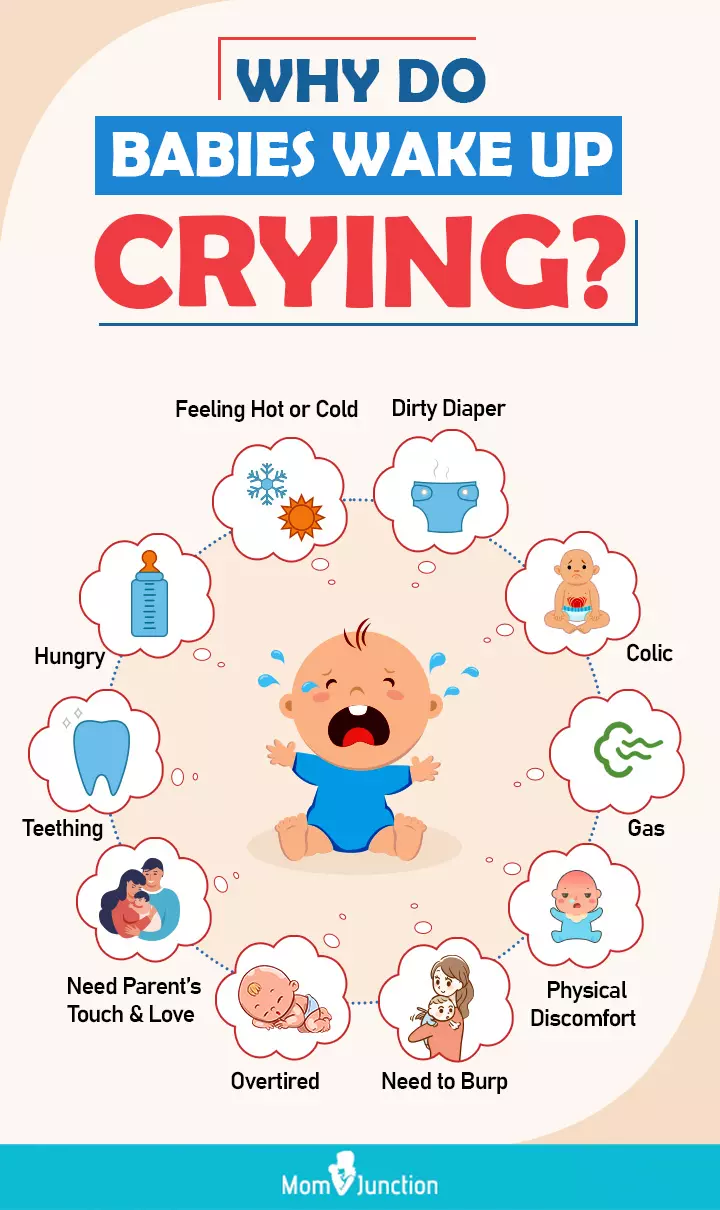
Why babies wake up crying
Babies have short sleep cycles and limited ways to communicate. When a cycle ends, a baby may wake briefly and cry instead of settling quietly. Newborns also wake often because their stomachs are small and they need frequent feeds.
Common reasons include:
- Hunger or a growth-related increase in feeding
- A wet or dirty diaper
- Gas, reflux, or stomach discomfort
- Being too hot or too cold
- A startle response
- Noise, light, or other changes in the room
- Overtiredness
- Needing physical contact
- Teething discomfort in older babies
- A blocked nose
- Illness, pain, or injury
Crying does not mean a baby is being difficult or trying to control a parent. It is a biological signal. A baby may cry even when a caregiver has done everything right.
Normal sleep-cycle waking
Infant sleep is lighter and less regular than adult sleep. Babies may stir, grunt, move their arms, or cry as they shift between sleep stages. Some wake fully. Others return to sleep with little help.
This is especially common in the first months of life. The AAP notes that babies do not have regular sleep cycles until about 4 months of age. Sleep patterns also vary widely from one baby to another.
Normal crying peaks
Many healthy babies cry more during the first few months than they do later. Crying often rises around 6 to 8 weeks and then improves by about 3 to 4 months. This pattern can feel intense, but it does not always mean something is wrong.
If the crying is new, extreme, or paired with other symptoms, do not assume it is part of normal development.

The most common reasons a baby wakes up crying
The quickest way to understand the cause is to check basic needs in a steady order. Look for patterns, but do not rely on timing alone.
Hunger
Hunger is one of the most common causes of waking. Newborns often need to feed every 2 to 3 hours, though some feed more often. Breastfed babies may feed 8 to 12 times in 24 hours during the early weeks; formula-fed babies may follow a different pattern.
Early hunger cues include:
- Turning the head toward a touch
- Opening the mouth
- Bringing hands to the mouth
- Sucking on fingers
- Becoming more alert
Crying is a later hunger cue. If a baby wakes crying soon after a feed, check whether the baby took a full feed, needs to burp, or is going through a growth spurt.
Do not force a baby to finish a bottle. Follow the baby’s signs of fullness, such as turning away, closing the mouth, or relaxing the hands.
A wet or dirty diaper
Some babies cry as soon as a diaper is wet. Others sleep through it. Check the diaper when the baby wakes, especially if the crying began suddenly.
If the skin looks red or sore, gently clean and dry the area. A barrier cream may help protect irritated skin. Contact a pediatrician if a rash spreads, blisters, bleeds, or does not improve.
Gas or stomach discomfort
Babies may cry after waking if they swallowed air during a feed. They may pull up their legs, clench their fists, arch their back, or pass gas.
Try holding the baby upright against your chest and gently patting or rubbing the back. Keep the movement slow. Avoid vigorous bouncing or pressing on the belly.
Gas is common, but persistent vomiting, green vomit, blood in the stool, a swollen belly, or severe pain needs prompt medical advice.
Reflux
Many babies spit up small amounts because the muscle between the esophagus and stomach is still developing. Normal spit-up usually does not cause major distress or affect growth.
Reflux may need medical review when a baby has repeated painful feeds, refuses to eat, has poor weight gain, vomits forcefully, or seems to struggle to breathe. Do not place a baby to sleep on the stomach or raise the head of the crib. The AAP recommends a flat, firm sleep surface, even for babies who spit up.
Being too hot, cold, or uncomfortable
Babies can wake from discomfort caused by:
- Too many layers
- A tight waistband or swaddle
- A scratchy fabric
- A hair wrapped around a toe or finger
- A room that is too warm
- Bright light or sudden noise
Feel the baby’s chest or back rather than relying only on hands and feet. Hands and feet may feel cool even when the baby is comfortable.
The AAP advises dressing a baby in no more than one extra layer compared with an adult in the same room. Sweating, flushed skin, or a hot chest may signal overheating.
The startle reflex
The Moro, or startle, reflex can wake a young baby. A sudden sound or movement may cause the baby to throw out the arms, cry, and then pull the arms back in.
Swaddling can reduce startle-related waking for some newborns, but it must be done safely. Always place a swaddled baby on the back. Stop swaddling as soon as the baby shows signs of trying to roll. Never use weighted swaddles, weighted blankets, or loose blankets.
Overtiredness
A baby who stays awake too long may become harder to settle. Signs can include:
- Rubbing the eyes
- Looking away
- Fussing
- Jerky movements
- Becoming unusually quiet or hard to engage
Crying from overtiredness can look like hunger or pain. A calm, dim room and a short, familiar routine may help. Watch the baby’s cues instead of forcing a fixed schedule.
Needing comfort
Babies often wake because they want closeness. Holding, rocking, feeding, or a calm voice may help them feel safe. Responding to a young baby does not “spoil” the baby.
As babies grow, they may also cry from separation anxiety. This commonly becomes more noticeable during the second half of the first year. A consistent bedtime routine can help, but crying at wake-up can still occur.
Teething
Teething may cause sore gums, drooling, and a desire to chew. It should not usually cause a high fever, breathing trouble, severe diarrhea, or extreme sleepiness.
Offer a clean, firm teething ring that is chilled in the refrigerator, not frozen solid. Do not use amber teething necklaces or bracelets. They can pose choking and strangulation risks.
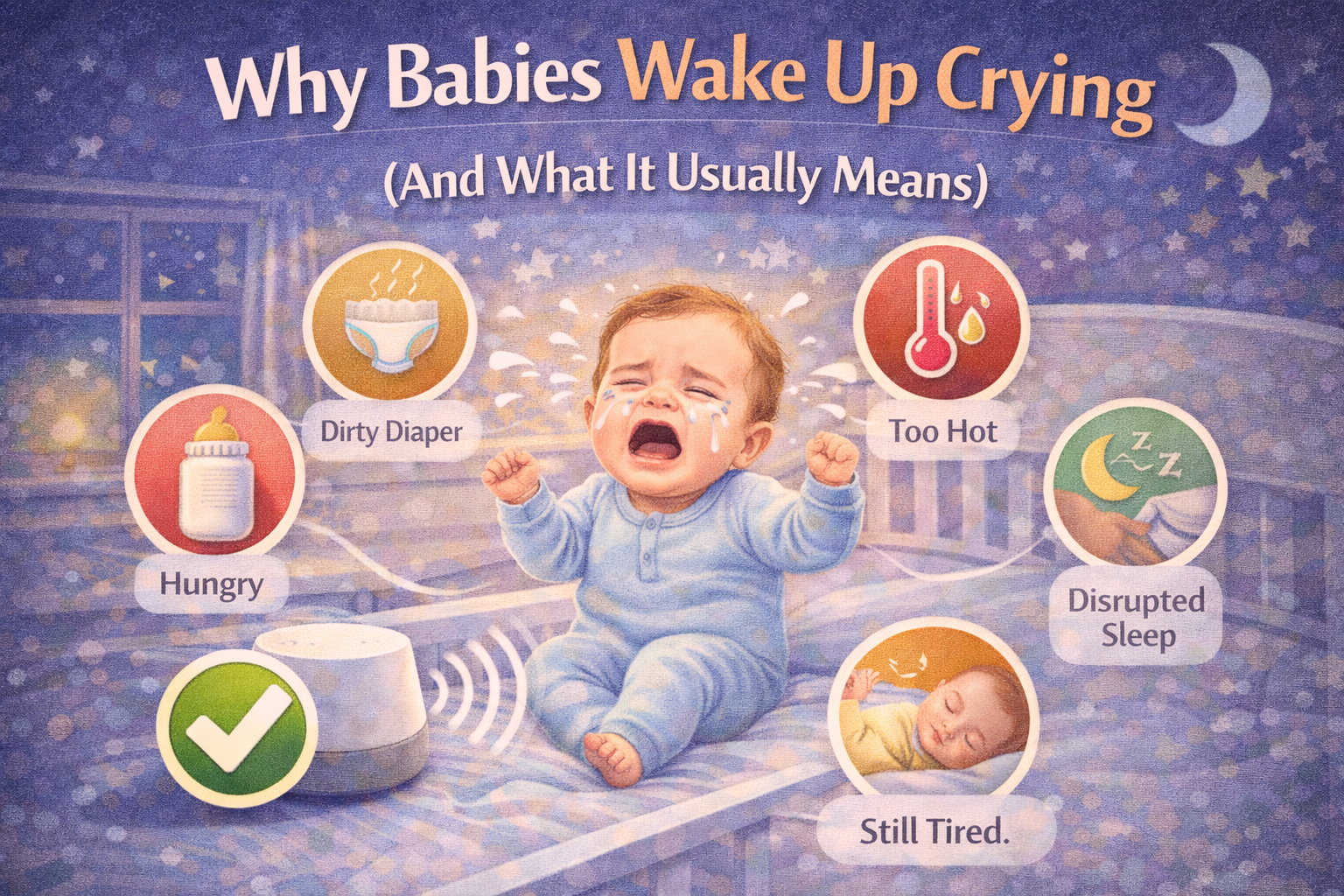
What to do when your baby wakes up crying
Use a simple check before trying a more complex explanation. Move from basic needs to comfort, then assess for illness.
A five-step check
-
Look at the baby.
Check breathing, skin color, movement, and whether the baby seems alert. -
Check feeding needs.
Consider when the baby last fed and whether hunger cues are present. -
Check the diaper and clothing.
Look for wetness, stool, tight clothing, skin irritation, or a hair wrapped around a toe or finger. -
Reduce discomfort.
Hold the baby upright after feeding, adjust clothing, lower bright lights, and reduce noise. -
Offer calm comfort.
Use a quiet voice, gentle holding, or slow rocking. Put the baby down on a safe sleep surface when the baby is ready to sleep.
If the baby settles and acts normally, continue to observe. If the crying repeats, note the time, feeding, diaper changes, sleep, and symptoms. This record can help a pediatrician find a pattern.
Use safe sleep every time
When you put a baby down to sleep:
- Place the baby on the back.
- Use a firm, flat mattress in a crib, bassinet, or play yard.
- Keep the sleep area free of pillows, blankets, bumpers, and stuffed toys.
- Keep the baby’s sleep space in the same room as you, ideally for at least the first 6 months.
- Avoid bed sharing, especially on a couch, recliner, or adult bed.
- Move a sleeping baby from a car seat, swing, or inclined product to a firm, flat sleep surface as soon as practical.
A baby may cry when placed in the crib. Comfort the baby, but do not use an unsafe sleep position to stop the crying.
If the crying is overwhelming
Place the baby on the back in a safe crib and step away for a few minutes if you feel angry, panicked, or unable to cope. Call someone you trust for help. Never shake, hit, throw, or roughly handle a baby.
In the United States, call 911 for an immediate emergency. If you are in emotional crisis or fear you may harm yourself or someone else, call or text 988 for the Suicide & Crisis Lifeline.
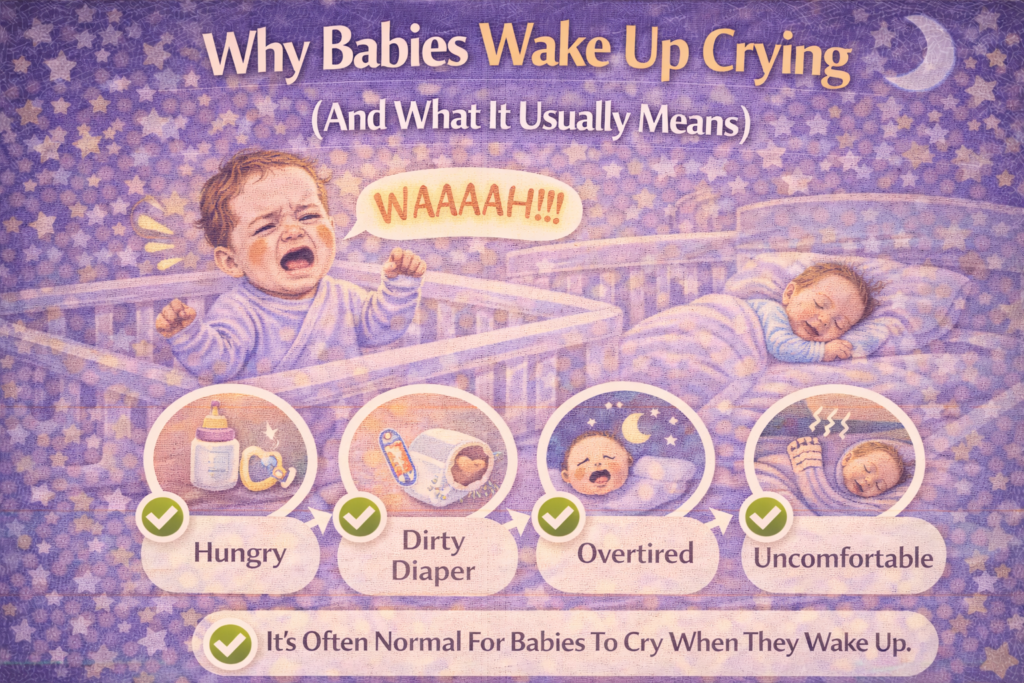
What changes by age?
The likely cause depends partly on the baby’s age, feeding pattern, and development. The table below gives a starting point, not a diagnosis.
| Baby’s age | Common reasons for waking and crying | What to check |
|---|---|---|
| Newborn to 3 months | Hunger, diaper needs, gas, startle reflex, temperature, normal frequent waking | Feeding cues, wet diapers, breathing, temperature, safe sleep |
| About 3 to 6 months | Sleep-cycle changes, hunger, reflux, overtiredness, developing routines | Last feed, nap timing, room conditions, signs of illness |
| About 6 to 12 months | Separation anxiety, teething, new movement skills, schedule changes, illness | Gum discomfort, congestion, routine changes, injury |
| Over 12 months | Night fears, illness, nightmares, habit changes, discomfort | Pain, fever, breathing, stress, sleep environment |
These age ranges overlap. A baby can have more than one cause at the same time. For example, a baby may be both overtired and hungry.

When should you call a pediatrician?
Call your child’s doctor when crying is persistent, unusual, or linked with other symptoms. A pediatrician can assess feeding, growth, reflux, infection, injury, and sleep concerns.
Seek prompt medical care for:
- A rectal temperature of 100.4°F (38°C) or higher in a baby younger than 3 months
- Trouble breathing, grunting, pauses in breathing, or blue, gray, or very pale skin
- Extreme sleepiness, weakness, limpness, or difficulty waking
- Repeated vomiting, green vomit, or forceful vomiting
- A swollen or hard belly
- Blood in vomit or stool
- Refusing several feeds
- Much fewer wet diapers than usual
- A seizure
- A new rash with fever or a purple, bruise-like appearance
- Crying after a fall or other possible injury
- A cry that is very high-pitched, weak, or unlike the baby’s usual cry
For babies under 3 months, use a rectal thermometer if possible because it gives the most accurate temperature at that age. Do not give fever medicine to a young infant without guidance from a health professional.
Call 911 when the baby has severe breathing trouble, turns blue or gray, is unresponsive, has a seizure lasting more than 5 minutes, or has another immediate emergency.

How to tell normal crying from a possible problem
No single sign proves that crying is harmless or dangerous. Look at the whole picture.
| More reassuring signs | Reasons to seek medical advice |
|---|---|
| Baby feeds normally | Baby refuses feeds |
| Normal skin color and breathing | Breathing changes or blue, gray, or pale skin |
| Baby has usual wet diapers | A clear drop in wet diapers |
| Baby calms with feeding or comfort | Baby cannot be consoled for a long period |
| Baby is alert when awake | Baby is hard to wake or unusually weak |
| No fever or concerning symptoms | Fever, repeated vomiting, rash, or injury |
Trust your observations. A caregiver may notice that a baby “does not seem right” before a clear symptom develops. If you are worried, call the pediatrician’s office and describe what changed.
Common mistakes to avoid
Assuming every cry means hunger
Offering more milk may not help if the problem is gas, overheating, or illness. Check hunger cues and the time of the last feed before feeding again.
Using unsafe sleep products
Inclined sleepers, positioners, crib bumpers, weighted sleepwear, and loose blankets can raise the risk of suffocation or sleep-related death. A product that stops crying is not automatically safe for sleep.
Treating fever without checking the baby’s age
A fever in a newborn needs prompt medical guidance. Do not rely on touch alone, and do not give medication based only on a package label when the baby is very young.
Blaming every symptom on teething
Teething can cause gum discomfort, but it should not explain breathing problems, high fever, repeated vomiting, or severe diarrhea.
Shaking the baby
Shaking can cause brain injury or death, even when a caregiver intends only to stop the crying. Put the baby down safely and ask for help if you feel overwhelmed.

Key takeaways
- Babies wake crying mainly because they need food, comfort, a diaper change, or relief from discomfort.
- Short sleep cycles and normal infant development also cause frequent waking.
- Check breathing, feeding, diaper needs, clothing, temperature, and comfort in that order.
- Always return a sleeping baby to a firm, flat surface on the back.
- A fever of 100.4°F (38°C) or higher in a baby under 3 months needs prompt medical advice.
- Never shake a baby. Step away briefly and get help if crying feels overwhelming.
Frequently asked questions
Why does my baby wake up crying but seem fine a few minutes later?
A baby may wake during a normal sleep-cycle change, startle, or brief discomfort. If the baby quickly calms, feeds normally, breathes normally, and has no other symptoms, the episode is often not a sign of illness.
Why does my baby cry when I put them down?
Your baby may prefer contact, feel a change in temperature or motion, or wake during the transfer. Try holding the baby until calm, then place the baby on the back in a safe crib or bassinet. Avoid falling asleep with the baby on a couch or chair.
Why does my baby wake crying at the same time every night?
A repeated pattern may relate to hunger, a nap schedule, bedtime timing, or a sleep association. Keep a short log for several days. If the pattern includes pain, vomiting, breathing changes, or poor feeding, contact the pediatrician.
Can reflux make a baby wake up crying?
Reflux can cause discomfort in some babies, but normal spit-up is common and may not require treatment. Talk with a pediatrician if the baby has painful feeds, poor weight gain, repeated forceful vomiting, blood, breathing symptoms, or feeding refusal.
Should I let my baby cry when they wake up?
There is no single response that fits every family or every age. First check for hunger, illness, pain, and safety. Young babies often need prompt comfort, while older babies may sometimes pause briefly and resettle. Never ignore signs of illness or leave a baby in an unsafe sleep position.
When do babies stop waking up crying?
There is no exact age. Many babies wake less often as feeding needs change and sleep becomes more organized, but night waking can continue through the first year. Teething, illness, travel, developmental changes, and separation anxiety can cause temporary setbacks.
Conclusion
Babies wake up crying because crying is their main signal for hunger, discomfort, fear, tiredness, or closeness. Most episodes improve after a basic check and calm comfort. Safe sleep remains essential even when a baby cries in the crib.
If the cry is unusual or comes with fever, breathing trouble, poor feeding, vomiting, injury, or unusual sleepiness, contact a pediatrician or seek emergency care. When the crying becomes too much, place the baby safely on the back, step away, and get support.