Why Is My Baby’s Eyes Red: Causes And Care

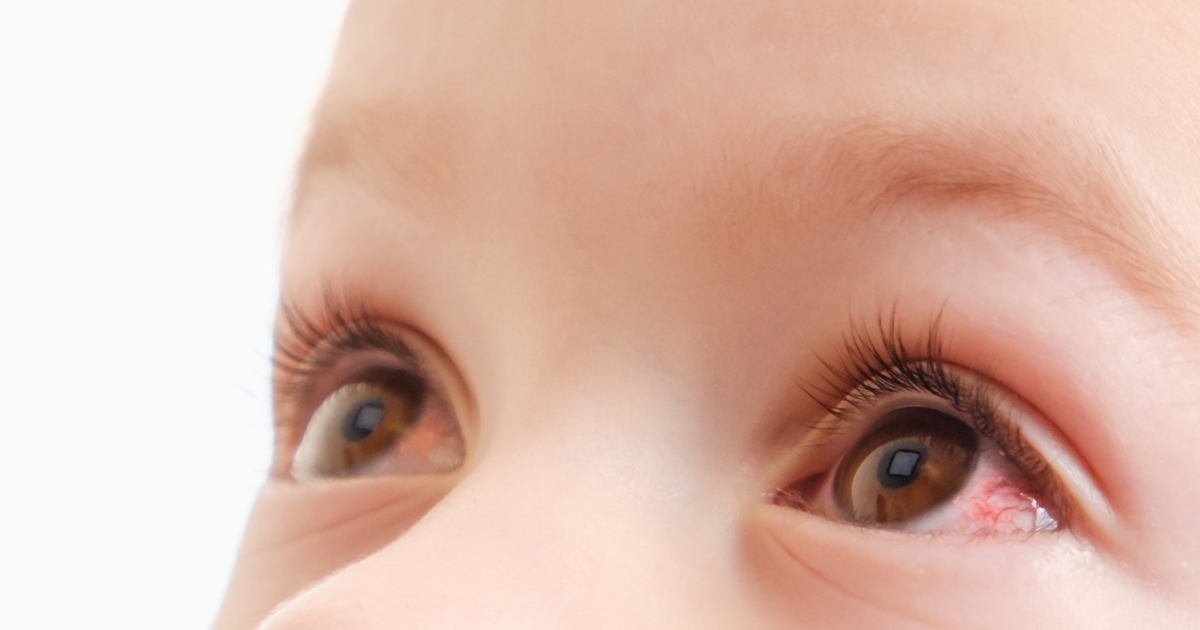
A red eye in a baby can come from a blocked tear duct, mild irritation, a small burst blood vessel, or conjunctivitis (“pink eye”). Some causes are mild, but a newborn with eye redness, swelling, or discharge needs prompt medical advice. Serious infections can harm the eye quickly.
This guide applies to babies in the United States. It explains common causes, safe home care, and when to call your child’s doctor, pediatric urgent care, or 911.

When a Baby’s Red Eye Needs Urgent Care
Call your pediatrician the same day if your baby has a red eye with thick discharge, swollen eyelids, worsening symptoms, or trouble opening the eye. If your baby is less than 28 days old, do not wait to see if the redness clears.
Seek emergency care now if your baby has:
- A fever of 100.4°F (38°C) or higher, especially if younger than 3 months
- Severe eyelid swelling or swelling around the eye
- A bulging eye
- Severe pain or nonstop crying when the eye moves
- Strong sensitivity to light
- A cloudy-looking cornea, the clear front part of the eye
- Trouble seeing or tracking objects
- An eye injury, chemical exposure, or a possible scratch
- A red eye after something entered the eye
- A baby who looks very ill, is hard to wake, or is feeding poorly
Call 911 for serious breathing trouble, extreme weakness, blue or gray skin, or a severe injury.
A newborn’s eye infection can worsen fast. The American Academy of Pediatrics and the Centers for Disease Control and Prevention advise prompt evaluation for newborn eye drainage, redness, or swelling. Some infections require prescription medicine and should not be treated at home.

Common Reasons a Baby’s Eye Looks Red
The location, timing, and other symptoms can help show what may be happening. Still, only a health professional can diagnose an eye problem in a baby.
| Possible cause | What it may look like | Usual level of concern |
|---|---|---|
| Blocked tear duct | Watery eye, sticky discharge, mild redness near the inner corner | Often mild, but needs care if swelling or fever develops |
| Conjunctivitis | Red or pink eye, discharge, crusted lashes, swollen lids | Needs medical advice, especially in newborns |
| Irritation | Mild redness after dust, smoke, soap, or rubbing | Often improves after the irritant is removed |
| Small burst blood vessel | Bright red patch on the white of the eye | Often harmless if the baby acts well |
| Eyelid or skin infection | Red, warm, tender, swollen skin around the eye | Needs prompt medical care |
| Injury or foreign body | Sudden redness, tearing, blinking, or light sensitivity | Urgent evaluation may be needed |
| Less common eye disease | Persistent redness, cloudy cornea, unusual pupil, or poor visual response | Needs prompt eye assessment |
Blocked tear duct
A blocked tear duct is common in infants. Tears normally drain through a small channel near the inner corner of the eye. If the channel is narrow or blocked, tears and mucus can collect.
Your baby may have:
- One watery eye
- A small amount of white or yellow mucus
- crusting after sleep
- Mild redness from rubbing or wiping
A blocked tear duct usually does not cause marked swelling, severe pain, fever, or a very red eye. If those signs appear, contact your child’s doctor.
Conjunctivitis or pink eye
Conjunctivitis means inflammation of the thin tissue over the white of the eye and inner eyelid. It may result from a virus, bacteria, allergy, or irritation.
Viral conjunctivitis often causes watery discharge and may occur with a cold. Bacterial conjunctivitis often causes thicker yellow or green discharge and lashes that stick together. Allergic conjunctivitis is less common in very young babies and often causes itching and watery eyes in both eyes.
Newborn conjunctivitis can have a different cause. It may result from bacteria passed during birth, including organisms that need urgent treatment. Do not assume that newborn eye discharge is a simple blocked tear duct.
A small broken blood vessel
A bright red spot on the white of the eye may be a subconjunctival hemorrhage. It can happen after pressure during birth, coughing, sneezing, or rubbing.
The spot may look alarming, but it often does not hurt and may fade over one to two weeks. Have a clinician check it if it follows an injury, gets larger, keeps returning, or appears with swelling, discharge, pain, or behavior changes.
Irritation or rubbing
Soap, shampoo, smoke, dust, dry air, or a loose eyelash can irritate an eye. Babies may rub the eye, blink often, or produce extra tears.
Move the irritant away. If a chemical entered the eye, rinse it with clean, lukewarm running water for at least 15 minutes and seek urgent medical advice. Do not wait for redness to fade after a chemical exposure.

How to Tell What May Be Causing the Redness
Start by checking the eye in good light without forcing the eyelids open. Look at the white of the eye, the eyelids, the skin around the eye, and the type of discharge.
Redness in one eye or both eyes
One red eye may point to:
- A blocked tear duct
- A scratch or foreign object
- Local irritation
- An early infection
Both red eyes may occur with a virus, an irritant, or, less often, an allergy. This pattern is only a clue. It does not rule out a serious problem.
Watery tears or thick discharge
Clear tears often occur with irritation, a blocked tear duct, or a viral illness. Thick yellow or green discharge is more likely to need a medical examination, especially in a newborn.
Do not use the color alone to decide whether an infection is bacterial. A clinician may need to examine the eye and consider your baby’s age, symptoms, and recent exposures.
Red eye versus red skin
Sometimes the eye itself is not red. The skin of the eyelid or the area around the eye may be red instead. Red, warm, painful, or fast-growing swelling around the eye can be cellulitis, a bacterial skin infection. This needs prompt medical care because infection can spread into deeper tissues.
Changes in the clear front of the eye
The cornea should look clear. A cloudy, gray, or blue-white area is not typical of simple pink eye. Treat it as urgent, particularly if your baby also squints, tears, avoids light, or seems unable to see.

What to Do at Home While You Wait for Advice
Home care can reduce discomfort, but it does not replace an examination when a baby has significant redness or discharge.
- Wash your hands. Clean your hands before and after touching your baby’s face or eye.
- Gently clean discharge. Use a clean cotton pad or soft washcloth dampened with clean, warm water. Wipe from the inner corner outward. Use a fresh part of the cloth for each wipe.
- Use a separate towel. Do not share washcloths, towels, pillows, or eye supplies with other children.
- Limit rubbing. Keep your baby’s fingernails short and clean. Wash hands more often if a contagious infection is possible.
- Remove irritants. Keep smoke, fragrance sprays, dust, and harsh cleaners away from your baby.
- Watch feeding and behavior. Note whether your baby feeds normally, has normal wet diapers, and responds as usual.
- Record changes. A photo in good light can help show whether redness or swelling is spreading.
If your clinician recommends treatment, use the medicine exactly as directed. Ask how to give eye drops or ointment if you are unsure.
What not to put in a baby’s eye
Do not use:
- Leftover antibiotic eye drops
- Someone else’s prescription medicine
- Over-the-counter “redness relief” drops
- Breast milk or saliva
- Homemade salt water
- Essential oils or herbal products
- Contact-lens solution unless a clinician specifically tells you to use it
Some drops can irritate an infant’s eye or hide symptoms. Antibiotics also do not treat viral infections and should be used only when prescribed or advised by a qualified clinician.

How Doctors Evaluate a Baby’s Red Eye
A clinician will ask when the redness began, whether it is getting worse, and whether the baby had a cold, injury, chemical exposure, or contact with someone who has pink eye.
The examination may include:
- Looking at the eyelids and surrounding skin
- Checking the pupils and eye movements
- Looking for discharge or a foreign object
- Assessing the cornea
- Checking whether the baby can fix on and follow a face or object
- Checking temperature and general health
- Taking a swab when a newborn infection or a specific bacteria is suspected
Treatment depends on the cause. A blocked tear duct may need observation and cleaning. Bacterial conjunctivitis may need prescription antibiotic treatment. A viral infection may need supportive care and close monitoring. A scratch, corneal problem, or deeper infection may require an eye specialist.
Do not try to open a tightly swollen eye by force. Do not delay care because the baby has no fever. Infants may have an important eye problem before they develop a fever.
Red Eye in a Newborn: Why Age Matters
Eye redness or discharge during the first month of life deserves special attention. Newborn conjunctivitis can be linked to bacteria acquired during delivery. In rare cases, gonococcal infection can damage the cornea and threaten vision.
Contact the baby’s doctor promptly if a newborn has:
- Redness in the white of the eye
- Eyelid swelling
- Pus or heavy discharge
- Trouble opening the eye
- Increasing symptoms over hours
- Fever or a change in feeding or alertness
Do not wait for a routine well-child visit. Tell the clinician the baby’s age, when symptoms began, whether the baby received newborn eye medicine, and whether the birth parent had any diagnosed infection during pregnancy or delivery.
A blocked tear duct can also cause discharge in a newborn, but it should not be assumed without considering the full set of symptoms.

How Long Does a Baby’s Red Eye Take to Heal?
The time depends on the cause. Mild irritation may improve after the irritant is removed. A small broken blood vessel may take days or weeks to fade. A blocked tear duct may come and go for months as the drainage channel develops.
Redness that worsens, spreads, or does not begin to improve after medical advice needs reassessment. Seek care sooner if new discharge, swelling, pain, light sensitivity, fever, or behavior changes appear.
Do not use time alone as proof that an eye problem is harmless. A young baby can need treatment even when the symptoms look mild.

Key Takeaways
- A baby’s red eye may come from irritation, a blocked tear duct, conjunctivitis, or a small broken blood vessel.
- Newborn eye redness, swelling, or discharge needs prompt medical advice.
- Fever of 100.4°F (38°C) or higher in a baby younger than 3 months is urgent.
- Thick discharge, marked swelling, pain, light sensitivity, a cloudy cornea, or an injury needs prompt evaluation.
- Clean discharge gently with warm water and clean hands.
- Do not use leftover eye drops, breast milk, redness-relief drops, or homemade remedies.
Frequently Asked Questions
Is a red eye in a baby always pink eye?
No. A blocked tear duct, irritation, rubbing, a small broken blood vessel, or an injury can also cause redness. Discharge and swelling make infection more likely, but an examination may be needed to tell the causes apart.
Can a blocked tear duct make a baby’s eye red?
Yes. A blocked tear duct can cause watering, mucus, crusting, and mild redness near the inner corner. It usually does not cause severe swelling, fever, intense pain, or a very red eye. Those signs need medical advice.
Should I take my baby to the doctor for eye discharge?
Yes, call your pediatrician for guidance, especially if your baby is a newborn, the discharge is thick or green, the eyelids are swollen, or the eye is clearly red. Newborn eye discharge should not be treated as a routine blocked tear duct without medical advice.
Can I use breast milk for my baby’s red eye?
No. Breast milk is not a proven treatment for infant eye redness and can introduce germs or delay proper care. Use only treatments recommended by your baby’s clinician.
Is a bright red spot on my baby’s eye dangerous?
A small bright red spot on the white of the eye may be a broken blood vessel and often clears on its own. Have it assessed if it follows an injury, grows, returns, or occurs with pain, swelling, discharge, a cloudy eye, or changes in your baby’s behavior.
What to Do Next
If your baby is younger than 28 days, or has redness with discharge, swelling, fever, pain, light sensitivity, or a cloudy eye, call the pediatrician or seek urgent care now. If the redness is mild and your baby otherwise acts well, clean the eye gently, avoid irritants, and monitor closely.
For general guidance, consult the American Academy of Pediatrics, the Centers for Disease Control and Prevention guidance on conjunctivitis, and the American Academy of Ophthalmology. These resources do not replace an examination by your baby’s health care professional.