
Why Is My Baby Shaking: Causes And When To Worry

A baby may shake from a normal startle, a developing nervous system, cold, hunger, or sleep movements. But shaking can also signal a seizure, low blood sugar, infection, or another medical problem. If the shaking is new, repeated, lasts more than a few seconds, or comes with breathing trouble, color change, poor feeding, fever, or unusual sleepiness, seek medical care now.
For a baby younger than 3 months, a rectal temperature of 100.4°F (38°C) or higher needs urgent medical assessment. Call 911 in the United States if your baby has trouble breathing, turns blue or gray, becomes limp or unresponsive, has a seizure that lasts 5 minutes or more, or has repeated seizures without waking between them.
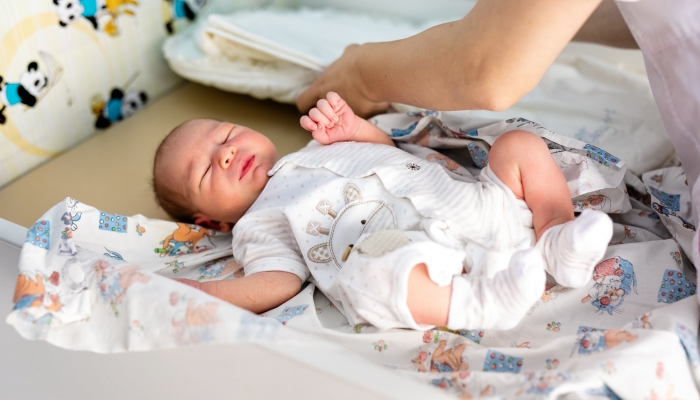
First, check whether your baby is safe
Move your baby to a safe, flat place. Watch the movement closely and note:
- When it began
- How long it lasted
- Whether it stopped when you gently held the arm or leg
- Whether your baby stayed alert
- Whether the eyes moved or stared
- Whether the face, lips, or skin changed color
- Whether your baby was breathing normally
- Whether your baby had a fever, poor feeding, vomiting, or unusual sleepiness
If it is safe, record a short video. A video can help a pediatrician tell the difference between a normal movement, jitteriness, and a seizure.
Do not shake your baby to wake them. Do not put anything in your baby’s mouth. Do not hold the arms or legs down during a possible seizure. Instead, move hard or sharp objects away and place your baby on their side if possible.
Call 911 now if your baby:
- Is not breathing normally
- Turns blue, gray, or very pale
- Is limp, unresponsive, or difficult to wake
- Has a seizure lasting 5 minutes or longer
- Has one seizure after another
- Has serious trouble breathing
- Has a head injury followed by shaking
- Chokes or cannot clear their airway
If your baby is under 3 months old and has a temperature of 100.4°F (38°C) or higher, call a health care professional right away or go to an emergency department. Do not wait for the fever to go away.

Common reasons babies shake
The most common causes are brief and harmless. The pattern, timing, and other symptoms help show which cause is more likely.
Startle reflex
A newborn may suddenly spread their arms, stiffen, tremble, or cry after a loud sound, quick movement, or loss of support. This is the Moro reflex, also called the startle reflex.
The movement often lasts only a few seconds. Both sides of the body usually move in a similar way. It tends to fade as the nervous system matures, often by about 4 to 6 months.
Normal newborn jitteriness
Young babies can have brief trembling in the hands, feet, chin, or legs. Their nervous systems are still developing, so small movements may look stronger than they do in older children.
Normal jitteriness often happens when a baby cries, is hungry, or is startled. It may stop when the baby relaxes or when you gently steady the limb. Repeated or worsening jitteriness still deserves a call to the pediatrician, especially in a newborn.
Shaking during sleep
Some babies twitch, jerk, or briefly shake their arms or legs while falling asleep or during light sleep. This may be a normal sleep movement.
Sleep-related movements usually stop when the baby wakes. They should not cause a change in breathing, skin color, awareness, or feeding. A video can help a clinician assess movements that are hard to describe.
Cold or low body temperature
A baby may tremble when cold. Check the room, clothing, and skin temperature. Warm your baby with normal layers and skin-to-skin contact while staying awake and alert.
Do not use a heating pad, hot water bottle, electric blanket, or very hot bath. If your baby remains cold, looks ill, feeds poorly, or has a low temperature, seek medical advice.
Hunger, crying, or overstimulation
A hungry or upset baby may tremble around the mouth or chin. Fast breathing during crying can also make the body appear shaky.
The shaking should improve when the baby calms and feeds. If your baby cannot feed, vomits repeatedly, becomes weak, or remains shaky after calming, contact a health care professional.

When shaking may be a seizure
A seizure is a burst of abnormal electrical activity in the brain. In babies, it may look different from the strong jerking many people expect.
Possible signs include:
- Repeated jerking that follows a steady pattern
- Stiffening of the whole body
- One arm or leg moving more than the other
- Eyes rolling up, pulling to one side, or staring
- Repeated lip smacking, chewing, or sucking
- Sudden pauses in breathing
- A change to blue, gray, or very pale skin
- A sudden loss of awareness
- Rhythmic movements that do not stop when you touch or hold the limb
- A baby who is very sleepy or confused after the event
Not every seizure causes shaking. Some seizures cause brief staring, sudden stiffening, pauses in movement, or repeated small movements.
Infantile spasms need fast care
Infantile spasms are a serious type of seizure. They often begin between 2 and 12 months of age, though timing can vary. A spasm may look like a sudden crunch, head drop, arm raise, body stiffening, or brief cluster of movements.
Spasms often happen in groups, with one movement every few seconds. They commonly occur soon after waking. A baby may seem well between groups.
Call your pediatrician urgently if you see repeated clusters of these movements. Early assessment matters because infantile spasms can affect development, and treatment should not be delayed.
Jitteriness versus a possible seizure
| Feature | More consistent with jitteriness | More concerning for a seizure |
|---|---|---|
| Trigger | Crying, hunger, sound, or touch | May start without a clear trigger |
| Pattern | Fast, brief, and irregular | Repeated, rhythmic, or patterned |
| When gently held | May stop or lessen | Often continues |
| Awareness | Baby remains alert | Baby may stare, stop responding, or become sleepy |
| Body movement | Often affects both sides | May affect one side or the whole body |
| Breathing and color | Usually normal | May include pauses, blue color, or pallor |
| After the event | Baby returns to normal quickly | Baby may be unusually tired or hard to wake |
This table cannot diagnose a seizure. A young baby with a first unusual episode should be assessed by a medical professional.
Medical conditions that can cause shaking
Some causes need prompt testing and treatment. A baby may look fairly well at first, so do not rely only on appearance.
Low blood sugar
Low blood sugar, or hypoglycemia, can cause jitteriness, shaking, weak feeding, sleepiness, poor muscle tone, sweating, or breathing changes. It is more likely in some newborns, including babies who are premature, small or large for their gestational age, or born to a parent with diabetes.
A health professional must check blood glucose to confirm this cause. Do not give sugar water, honey, juice, or medicine unless a clinician tells you to do so. Honey is unsafe for babies younger than 12 months because of the risk of botulism.
Low calcium or other mineral changes
Low calcium and other electrolyte problems can cause twitching, tremors, stiffness, or seizures. These problems may follow illness, feeding problems, or certain medical conditions.
They cannot be confirmed by watching the movement. A clinician may need blood tests and an examination.
Fever or infection
A fever can make an older child shiver. In young babies, fever may be the first sign of a serious infection. Infection can also cause poor feeding, unusual sleepiness, weak crying, vomiting, breathing changes, or a change in body temperature.
Do not give fever medicine to a young baby without medical advice. Acetaminophen dosing depends on age and weight. Ibuprofen is not used in babies younger than 6 months unless a clinician specifically directs it.
Medicine or substance exposure
Shaking can follow exposure to some prescription medicines, illegal drugs, nicotine, alcohol, or other substances during pregnancy or after birth. Newborn withdrawal may cause tremors, irritability, poor feeding, vomiting, diarrhea, or trouble sleeping.
If you think your baby swallowed or touched a harmful product, call Poison Control in the United States at 1-800-222-1222. Call 911 for breathing problems, loss of consciousness, or a severe reaction.
Nervous system or developmental conditions
Less commonly, shaking may relate to a brain, nerve, muscle, or developmental condition. One episode does not prove that a baby has a long-term disorder. A pediatrician may refer the baby to a pediatric neurologist if the episodes repeat or the examination raises concern.

What to do during a possible seizure
Use simple seizure first aid:
- Stay with your baby and start a timer.
- Place your baby on a safe, flat surface.
- Turn your baby onto the side if possible.
- Move nearby objects away.
- Loosen tight clothing around the neck.
- Watch breathing and skin color.
- Call 911 if the seizure lasts 5 minutes, breathing is abnormal, your baby is injured, or another seizure begins.
- Afterward, contact your pediatrician, even if the event stops.
Never put a finger, spoon, pacifier, food, or medicine in your baby’s mouth during a seizure. Do not restrain the movement. Do not give food or liquid until your baby is fully awake and able to swallow.
If your baby has a prescribed rescue medicine, use it only as directed by the prescribing clinician.

When to call a pediatrician
Call your baby’s pediatrician the same day if:
- The shaking is new or unexplained
- It happens more than once
- It does not stop when your baby relaxes or you gently hold the limb
- Your baby feeds poorly
- Your baby is vomiting or has fewer wet diapers
- Your baby seems unusually sleepy, weak, irritable, or difficult to console
- The movements occur in clusters
- One side of the body moves differently from the other
- Your baby recently started a medicine or may have been exposed to a substance
- Your baby was premature or has a known medical condition
Seek urgent care for a baby under 3 months with a temperature of 100.4°F (38°C) or higher. Also seek prompt care for a low temperature, because very young babies with infection may not develop a fever.
A pediatrician may ask about pregnancy and birth history, feeding, medicines, temperature, movement pattern, and development. Tests may include blood glucose, electrolytes, infection testing, or an electroencephalogram (EEG), which records brain activity. The correct tests depend on the examination and the event.

How to describe the shaking to a doctor
A clear description can speed up the assessment. Write down:
- Your baby’s age
- The date and time of each episode
- How long it lasted
- What your baby was doing before it began
- Whether your baby was awake or asleep
- Whether both sides moved
- Whether the movement stopped with gentle touch
- Eye, mouth, breathing, and color changes
- Feeding and wet diapers
- Temperature and how you measured it
- Any recent illness, fall, medicine, or possible exposure
A video is useful, but do not delay emergency care to record one. Safety comes first.
Mistakes to avoid
Do not assume every shake is a seizure
Newborns often have normal tremors and startle movements. Calling a clinician is still reasonable when the pattern is new, strong, repeated, or unclear.
Do not assume every shake is harmless
A baby cannot explain symptoms. A seizure, low blood sugar, infection, or exposure may look like a small tremor at first.
Do not use home remedies
Do not give water, sugar water, honey, herbal products, or leftover medicine. These can be unsafe and may delay needed care.
Do not use unsafe heat
Do not warm a cold baby with a heating pad or hot water. Use normal clothing and seek advice if the baby stays cold or seems ill.
Do not rely on a home monitor
Consumer breathing or heart monitors cannot diagnose seizures and may create false alarms. Use them only as directed by your clinician. They should not replace watching your baby or seeking care.
Key takeaways
- Brief shaking can be normal, especially during startle, crying, or sleep.
- Shaking that continues when the limb is gently held, repeats in a pattern, or comes with color or breathing changes is more concerning.
- A baby under 3 months with a temperature of 100.4°F (38°C) or higher needs urgent medical assessment.
- Call 911 for breathing trouble, blue or gray skin, unresponsiveness, or a seizure lasting 5 minutes or more.
- Record a video when safe, but never delay emergency care.
Frequently asked questions
Is it normal for a newborn’s chin to shake?
Brief chin trembling can be normal when a newborn cries, feeds, or feels startled. It should lessen as the baby calms. Contact the pediatrician if it happens often, occurs when the baby is calm, continues for a long time, or comes with poor feeding, stiffness, sleepiness, or color change.
Why does my baby shake while sleeping?
Brief jerks or twitches during light sleep are often normal. They should stop when the baby wakes and should not affect breathing or skin color. Movements that occur in repeated clusters, continue after waking, or come with staring or stiffening need medical review.
Can teething cause a baby to shake?
Teething may cause fussiness and trouble sleeping, but it should not cause repeated rhythmic shaking, loss of awareness, breathing changes, or a high fever. Do not blame those signs on teething. Have your baby assessed.
Can reflux cause shaking?
Reflux may cause arching, gagging, coughing, or discomfort after feeds. It does not explain every shaking episode. If the movement is rhythmic, occurs away from feeds, affects one side, or comes with poor awareness, ask a clinician to assess it.
Should I wake my baby if they are shaking?
If the shaking is brief and clearly linked to sleep, gently rouse your baby and check breathing, color, and response. If your baby is hard to wake, has abnormal breathing, turns blue or gray, or keeps shaking, call 911.
Conclusion
A shaking baby may have a normal startle or sleep movement, but the same broad symptom can also point to a seizure, low blood sugar, infection, or another condition. Look at the full pattern: when it happens, whether it stops with gentle touch, and whether your baby stays alert and breathes normally.
If you are unsure, call your pediatrician. For breathing trouble, color change, unresponsiveness, prolonged seizure activity, or a fever in a baby under 3 months, seek emergency care in the United States.


