Which Peanut Butter Is Best for Babies? Complete Feeding Guide

You finally got your baby sitting up, showing interest in your food, and opening their mouth like a little bird every time your fork moves. Solids time. And somewhere in the middle of reading about purees and iron-rich foods, you hit the peanut butter question. Is it safe? Which one do you buy? What if they react?
Take a breath. Peanut butter is actually one of the most beneficial foods you can introduce early. The hard part is knowing which jar to grab off the shelf, because most supermarket options are not appropriate for babies. This guide walks you through exactly which peanut butters are good for babies, what makes them safe, and how to introduce them without stress.
Why Peanut Butter Is Actually Good for Babies
If you grew up hearing that peanuts should be avoided until a child is at least two or three years old, you were given outdated advice. The science shifted completely after the Learning Early About Peanut Allergy (LEAP) study published in 2015. That study found that babies who were introduced to peanut products between 4 and 11 months of age had an 81 percent lower rate of peanut allergy by age five compared to babies who avoided peanuts entirely. That is not a small difference. That is enormous. In response, the American Academy of Pediatrics reversed its long-standing delay recommendation. The Australasian Society of Clinical Immunology and Allergy updated its guidelines too. Today, most major pediatric bodies around the world agree: introduce peanut butter early, introduce it consistently, and do not avoid it out of fear unless your baby has a specific high-risk condition. Beyond allergy prevention, peanut butter gives babies something genuinely nutritious. It is dense with healthy fats that support brain development, protein for growth, iron, zinc, and fibre. A tiny serving goes a long way nutritionally for a baby eating small amounts of food each day.
What Makes a Peanut Butter Safe for Babies

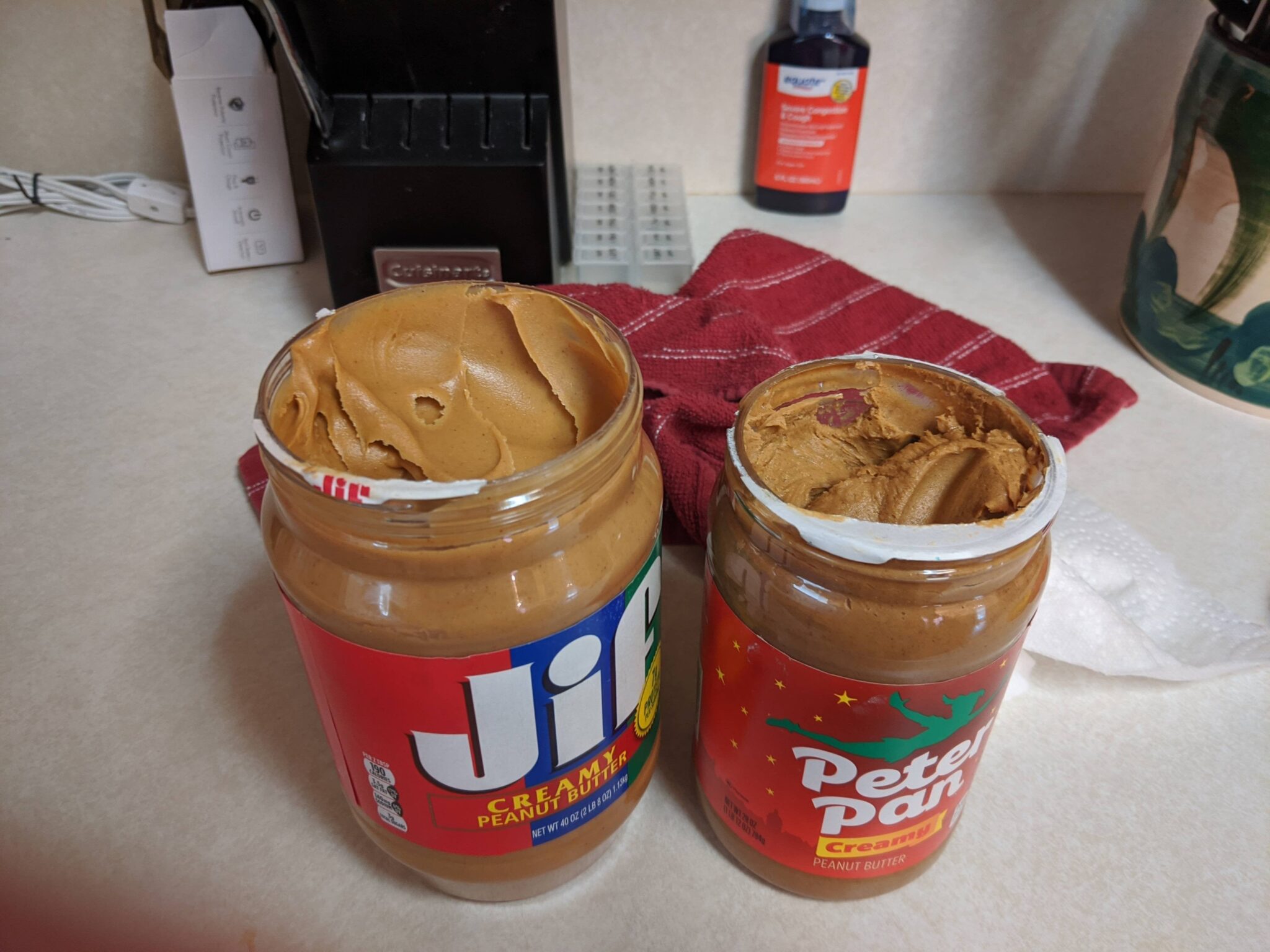
Here is the honest truth. Most of the peanut butter brands you recognise from childhood, the ones in the big plastic jars with the colourful labels, are not good choices for babies. They were not designed with infants in mind. They were designed to be shelf-stable, sweet, and cheap. For an adult, the occasional jar is fine. For a baby under 12 months, the additives matter more. Before you buy any peanut butter for your baby, flip the jar around and read the ingredients. You are looking for a very short list. Here is what to look for and what to skip.
What to Look For
- Smooth texture only. Chunky, crunchy, and super-chunk varieties are choking hazards for babies under 12 months and should not be offered at all until much later.
- Peanuts as the only ingredient, or peanuts with a minimal amount of salt. That is the entire list you want.
- Natural oil separation. If the oil sits on top of the jar, that is a good sign. It means no hydrogenated oils or stabilisers have been used to keep it emulsified.
- No added sugar. Babies under 24 months do not need any added sugar in their diet, and introducing sweet flavours early can make it harder for them to accept other foods later on.
What to Avoid
- Added sugar, glucose syrup, molasses, or honey. None of these belong in a baby’s peanut butter. Honey specifically is off-limits under 12 months due to the risk of botulism.
- Hydrogenated or partially hydrogenated vegetable oil. These are trans fats. They are used to prevent separation but have no place in infant feeding.
- Palm oil. It prevents separation like hydrogenated oil and is less nutritious than the peanut’s natural oils. Worth avoiding where you can.
- Maltodextrin or starch fillers. These are common in light or reduced-fat peanut butter products and add no nutritional value for babies.
- High sodium. Babies under 12 months should have less than 400mg of sodium per day from all food sources combined. Peanut butters with over 400mg of sodium per 100g eat into that budget quickly.
| Label Check | Baby Safe | Avoid |
|---|---|---|
| Ingredients | Peanuts only, or peanuts + salt | Sugar, oil, maltodextrin, honey |
| Texture | Smooth only | Chunky, crunchy, super-chunk |
| Sodium per 100g | Under 200mg ideally | Over 400mg |
| Added sugar | Zero | Any amount under 24 months |
| Oil separation | Present (natural sign) | Fully emulsified (stabilisers added) |
Which Peanut Butter Is Good for Babies: Top Picks
These are the peanut butter brands that consistently come up when dietitians, paediatric feeding specialists, and experienced parents talk about baby-safe options. They all share the same basic qualities: minimal ingredients, smooth texture, no added sugar, and no synthetic additives. None of them will win a contest for shelf life. But that is exactly the point.
1. Smucker’s Natural Creamy Peanut Butter — Best Everyday Pick
Smucker’s Natural Creamy sits at the top of most paediatric dietitian recommendation lists for one simple reason: two ingredients, peanuts and a small amount of salt, nothing else. It is widely available at most major supermarkets, it is affordable at around $4 to $5 per jar, and the texture is consistently smooth. It stirs easily into oatmeal, banana puree, or yoghurt without leaving lumps. The sodium content is low enough that it fits comfortably within a baby’s daily allowance with room to spare. It does separate, so give it a good stir before each use. Storing it upside down between uses makes the stir much easier. This is the jar most parents reach for first, and there is a good reason for that.
2. Once Again Organic Creamy Peanut Butter (No Salt Added) — Best for Low-Sodium Diets
If you want to keep sodium as close to zero as possible during early introduction, Once Again Organic No Salt Added is the answer. It contains one ingredient: dry-roasted organic peanuts. No salt, no oil, no anything else. The flavour is pure roasted peanut without any of the edge that salt usually brings. Some babies take to this more easily because the flavour is milder. It is a little harder to find in standard supermarkets but widely available online and at health food stores. The texture is slightly thicker than Smucker’s so you will need to thin it more when mixing into baby food. Worth having in the pantry as your go-to once peanut butter becomes a regular part of your baby’s weekly routine.
3. Santa Cruz Organic Creamy Peanut Butter — Best Organic Option
Santa Cruz Organic uses USDA-certified organic peanuts and just a touch of salt. No hydrogenated oils. No sugar. The creamy (not the no-stir) version is the one you want for babies, since the no-stir variety contains palm oil to prevent separation. Stick to the standard creamy jar where organic roasted peanuts and salt are the only two ingredients on the label. The dark roast variety gives a more intense peanut flavour that some older babies respond to enthusiastically once they have already been introduced to peanut butter. For first introduction, the standard creamy organic works well. Available at Whole Foods, Target, and online retailers at around $7 to $8 per jar.
4. Teddie All Natural Smooth Peanut Butter — Best Value Natural Option
Teddie is a regional favourite in the northeastern United States but has earned a national reputation among natural food fans for its straightforward ingredient list: roasted peanuts and salt. That is it. No palm oil, no sugar, no fillers. It consistently ranks among the top natural peanut butters in blind taste tests and is priced around $4.50 for a 36-ounce jar, which is exceptional value for a completely clean product. The smooth version mixes well into baby foods. It separates naturally in the jar like all good natural peanut butters do. Teddie is also the rare brand that has maintained this simple formulation for decades without quietly adding stabilisers or other ingredients during reformulations.
5. 365 by Whole Foods Organic Creamy Peanut Butter — Best One-Ingredient Pick
If you want the absolute cleanest label possible, 365 by Whole Foods has just one ingredient: organic dry roasted peanuts. No salt, no oil, no sugar, nothing else. It earned near-universal praise in The Kitchn’s 2025 tasting panel, with testers describing it as surprisingly flavorful for something so simple. For babies, the total absence of salt means you can offer it without any concern about sodium load. The flavour is naturally a little less pronounced than salted versions, but most babies do not notice or care. It is only available at Whole Foods stores or through the Amazon Fresh service, priced around $5 to $6 per jar. For parents who shop at Whole Foods regularly, this is the default choice.
6. Adam’s 100% Natural Creamy Peanut Butter — Best for Pacific Northwest Families
Adam’s has been making natural peanut butter since 1922 and the recipe has not changed. Peanuts and 1 percent or less salt. That is the full ingredient list. It is a staple brand in the Pacific Northwest and available in most supermarkets in that region, with broader availability online. Food Republic ranked it among the healthiest peanut butter brands specifically for its commitment to no added oils, no sugar, and no stabilisers across its entire product range. The creamy version is smooth enough to mix into purees and oatmeal without much effort. A solid, trustworthy option for parents who want something proven and simple. Price is approximately $5 to $6 per jar depending on retailer.
| Brand | Ingredients | Sodium per 100g | Organic | Price (approx) | Baby Safe |
|---|---|---|---|---|---|
| Smucker’s Natural Creamy | Peanuts, salt | Low | No | $4–$5 | Yes |
| Once Again Organic (No Salt) | Organic peanuts only | ~0mg | Yes | $7–$8 | Yes |
| Santa Cruz Organic Creamy | Organic peanuts, salt | Low | Yes | $7–$8 | Yes |
| Teddie All Natural Smooth | Roasted peanuts, salt | Low | No | $4.50 | Yes |
| 365 Whole Foods Organic Creamy | Organic peanuts only | ~0mg | Yes | $5–$6 | Yes |
| Adam’s 100% Natural Creamy | Peanuts, salt (<1%) | Low | No | $5–$6 | Yes |
| Jif Creamy (standard) | Peanuts, sugar, oil, salt | High | No | $4 | No |
| Skippy Creamy (standard) | Peanuts, sugar, oils, salt | High | No | $4 | No |
How to Give Baby Peanut Butter Safely
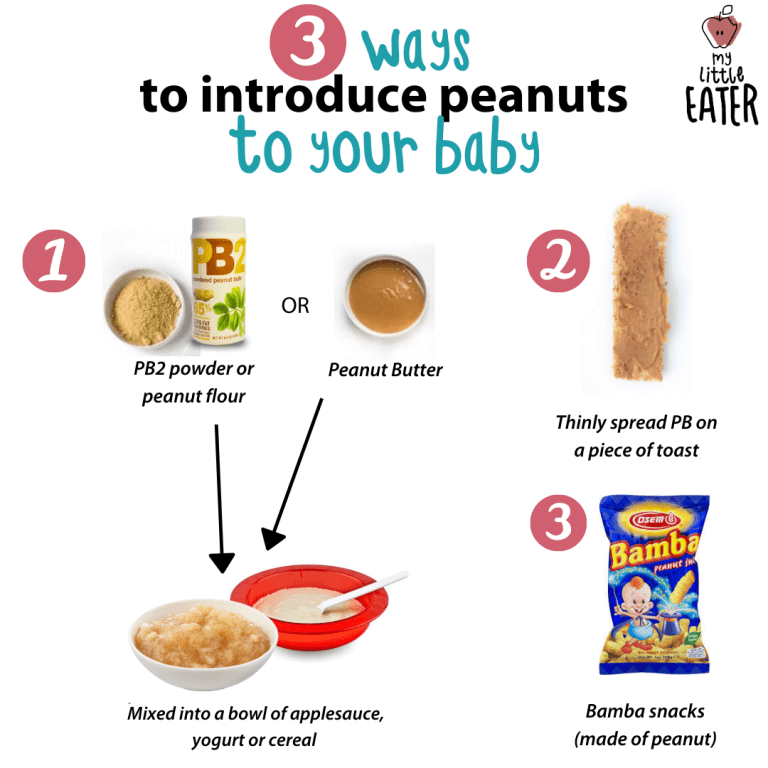
Even the best peanut butter in the world is a choking hazard if you hand it to a baby on a spoon straight from the jar. The texture is too thick and too sticky for an infant’s swallowing reflex. You must thin it down every single time for babies under 12 months. Here is how to do that safely at each age and stage.
First Introduction (Around 6 Months)
Texas Children’s Hospital dietitian Dr. Sara Anvari recommends mixing one to two teaspoons of peanut butter with two to three teaspoons of water, breast milk, or formula to create a thin, runny paste. On the first day, start even smaller. Offer just half a teaspoon of the thinned mixture. Wait 10 minutes and watch your baby closely. If nothing happens, offer the rest. Choose a morning on a healthy day when your baby has no cold or skin flare-up. Stay home for at least two hours after and keep your baby where you can see them. Do not put them down for a nap immediately after the first taste. Most allergic reactions happen within 30 minutes but can occur up to two hours later.
Ongoing Serving by Age
| Age | Serving Size | Best Preparation Method | Frequency |
|---|---|---|---|
| 6 months (first intro) | ¼ to ½ tsp thinned | Mix with breastmilk, formula, or water into puree | Once, then build to weekly |
| 6 to 8 months | 1 tsp | Stir into oatmeal or fruit puree | At least once per week |
| 8 to 10 months | 1 to 2 tsp | Mixed into yoghurt, oatmeal, or soft vegetable puree | 2 to 3 times per week |
| 10 to 12 months | 1 to 2 tsp | Very thin spread on soft toast, stirred into soft foods | 3 or more times per week |
| 12 months and up | 1 to 2 tbsp | On toast, in snacks, in meals normally | Daily if tolerated |
Signs of an Allergic Reaction

This is the part that makes most parents nervous. Here is what you actually need to watch for and what to do.
Mild Reactions
A small rash or redness around the mouth alone is often just a contact reaction from the food’s texture or acidity. Wipe the area clean and watch. If the rash stays only around the mouth and fades quickly, it is likely not a true allergy. If you see hives spreading to the body, swelling of the lips, or your baby seems uncomfortable and unsettled, call your doctor and note everything you observed. Do not reintroduce peanut butter until you have spoken to a professional.
Severe Reactions: Call 000 or 911 Immediately
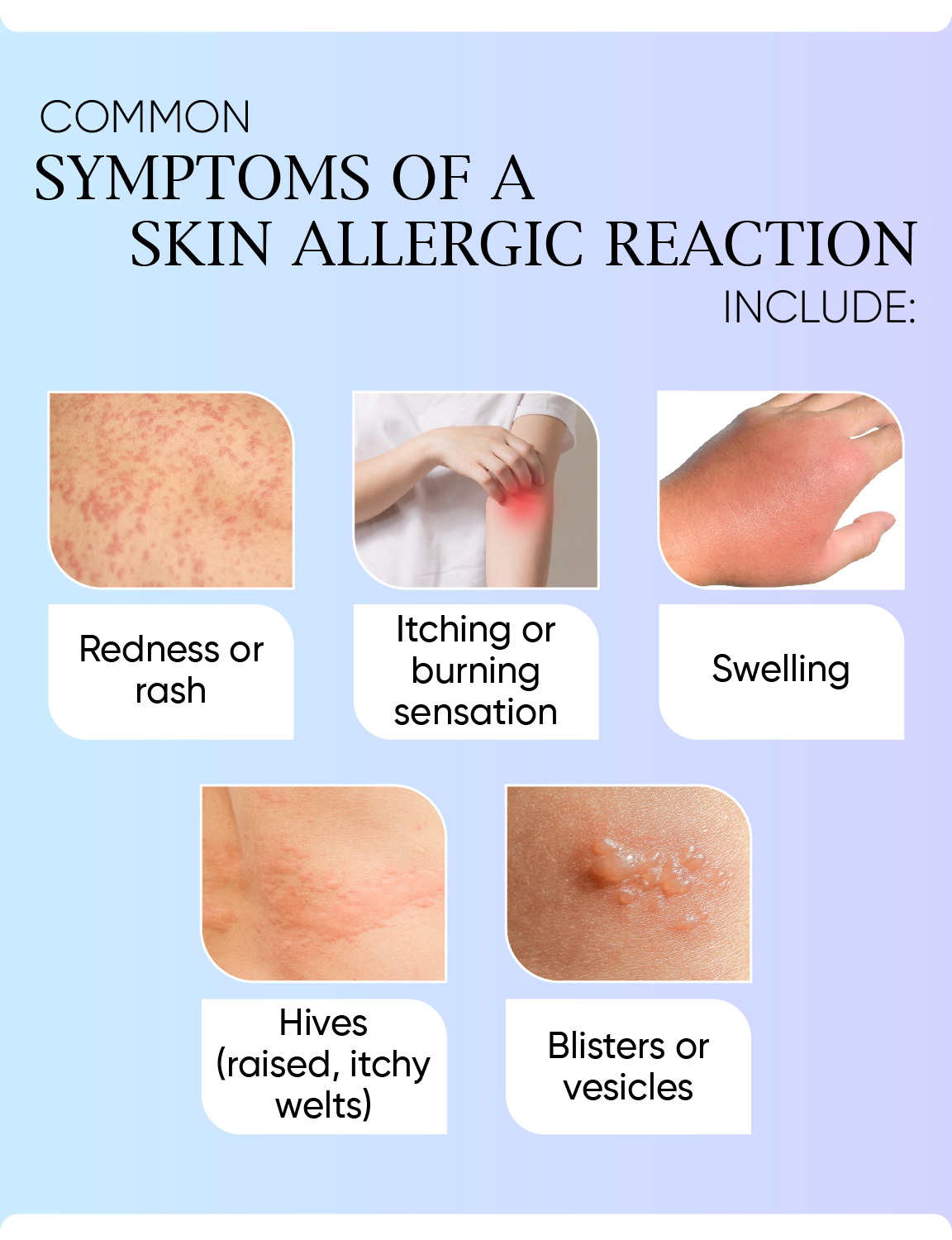
Anaphylaxis is rare but serious. Signs include difficulty breathing, throat swelling, vomiting repeatedly, sudden paleness or limpness, or loss of consciousness. If you see any of these, call emergency services immediately. Do not wait to see if it improves. Use an epinephrine auto-injector if one has been prescribed and still call for emergency help right after using it. Anaphylaxis moves fast and needs immediate medical attention.
| Symptom | Likely Cause | What to Do |
|---|---|---|
| Small rash around mouth only | Contact reaction | Wipe clean, monitor closely |
| Hives on body | Mild allergic reaction | Call your doctor today |
| Lip or face swelling | Moderate reaction | Call doctor immediately or go to urgent care |
| Breathing difficulty | Severe (anaphylaxis) | Call 000 or 911 immediately |
| Vomiting, limpness, paleness | Severe (anaphylaxis) | Call 000 or 911 immediately |
Frequently Asked Questions
Can I give my baby Jif or Skippy?
Standard Jif and Skippy contain added sugar, partially hydrogenated or fully hydrogenated vegetable oils, and sodium levels that are too high for babies under 12 months. They are not appropriate for infant feeding. Both brands do have natural varieties with cleaner ingredient lists, so check the label carefully if that is what is available to you. The standard creamy versions in the large jars are not the right choice.
Is reduced-fat peanut butter okay for babies?
No, and this one surprises a lot of parents. Reduced-fat peanut butters like Bega Light in Australia or some store-brand light versions replace the removed fat with maltodextrin, starch, or sugar. Babies need fat. Healthy fats from peanuts support brain development and energy. Removing fat and replacing it with fillers makes a worse product for babies, not a better one. Always choose full-fat natural peanut butter for infants.
Can I use peanut powder instead of peanut butter?
Yes. Peanut powder like PB2 or similar products can be a practical alternative. Mix it into purees or oatmeal. Check the label and choose a no-added-sugar version. Peanut powder was actually the format used in much of the original LEAP study research, so there is solid evidence behind it as an effective way to introduce peanut protein. It is easier to measure accurately and disperses more evenly into baby food than paste-style peanut butter.
My baby already had peanut butter once and was fine. Do I need to keep giving it?
Yes, absolutely. One successful feeding does not build lasting tolerance. The protection comes from consistent, repeated exposure over months. Research supports offering peanut products at least three times per week after introduction to maintain the immune tolerance your baby is building. A long gap after a successful first feeding can reduce that tolerance and increase risk. Build it into your weekly meal routine and keep it there.
Conclusion
The best peanut butter for your baby is whichever clean, smooth, no-added-sugar product you can find consistently at your local store and afford to buy regularly. You do not need to spend a lot of money. You just need to read the label. Peanuts only, or peanuts and a small amount of salt. Smooth texture every time. No sugar, no hydrogenated oils, no palm oil if you can help it.
Start around 6 months when your baby shows signs of readiness for solids. Thin it down into purees and oatmeal. Give it at least three times per week once it is tolerated. Watch your baby for two hours after the first taste. And then stop worrying about it and just keep it in the rotation. The science is firmly on your side here. Early, consistent peanut butter introduction is one of the simplest things you can do to set your baby up for a healthier relationship with food for the rest of their life.
| Key Takeaway | What to Remember |
|---|---|
| Best overall brand | Smucker’s Natural Creamy (peanuts + salt, widely available) |
| Best zero-sodium option | Once Again Organic No Salt or 365 Whole Foods Organic |
| Best organic pick | Santa Cruz Organic Creamy (not the no-stir version) |
| Best value natural | Teddie All Natural Smooth |
| Brands to avoid for babies | Standard Jif, Skippy, any reduced-fat or light versions |
| Start age | Around 6 months, when baby shows solids readiness |
| How to serve | Always thinned with water, breast milk, or formula under 12 months |
| How often to give | At least 3 times per week after successful introduction |
| What to watch for | Reactions within 2 hours, call 000 or 911 for severe symptoms |

- 10 Best Yarn For Baby Blankets Soft, Safe, And Stylish Selections For Babies 2026 - September 10, 2026
- Baby Monitor Long Range Review Exceptional Choices For Modern Parents 2026 - September 10, 2026
- 10 Best Yarn For A Baby Blanket Choosing Soft, Safe, And Easy Care Options 2026 - September 9, 2026