Why Do Babies Babble: Meaning And Milestones

Introduction
Babies babble because they are learning how to use their voices, listen to sounds, and connect with people. In the United States, most babies begin making repeated speech-like sounds between about 6 and 9 months, although normal timing can vary.
Babbling is more than random noise. It helps a baby practice the mouth movements, breath control, rhythm, and turn-taking skills needed for later speech. It also gives parents and caregivers a chance to respond, which helps build early language and social skills.
This guide explains why babies babble, what different types of babbling mean, when babbling usually starts, and when a parent should ask a pediatrician about a possible hearing or communication concern.

What Is Babbling?
Babbling is the stage when a baby makes repeated or changing speech-like sounds that are not yet real words. Common examples include:
- “Ba-ba-ba”
- “Ma-ma-ma”
- “Da-da-da”
- “Ga-ga”
- “Aaa-baa”
- “Ba-da-ga”
Babies may also squeal, growl, blow raspberries, click their tongues, or make vowel sounds. These early sounds are part of communication development, even when they do not have a clear meaning.
Babbling is different from crying. Crying mainly signals a need, such as hunger, discomfort, or tiredness. Babbling often happens when a baby is calm, alert, playful, or interested in another person.
The American Speech-Language-Hearing Association describes babbling as an important step before first words. The Centers for Disease Control and Prevention also lists repeated sounds, such as “mamamama” and “babababa,” as a typical communication milestone around 9 months.
Why Do Babies Babble?
Babies babble for several connected reasons. They use babbling to practice speech, explore sound, interact with people, and learn that their voice can affect the world around them.
1. Babbling builds speech skills
Talking requires many small skills to work together. A child must control breathing, move the lips and tongue, open and close the jaw, and coordinate sound with movement.
Babbling gives a baby repeated practice. A “ba” sound, for example, requires the baby to close the lips, release air, and make a voice sound. Repeating that pattern helps build control of the muscles used for later speech.
Babbling does not mean a baby is saying a true word. However, it is an important form of vocal practice.
2. Babies explore cause and effect
A baby may make a sound, hear it, and then repeat it. This teaches a simple lesson: “When I move my mouth this way, I hear that sound.”
Babies often change their volume, pitch, and timing. They may make a loud squeal, then try a soft coo. They may discover that a certain sound brings a parent closer or causes a sibling to laugh.
This type of exploration helps a baby learn how the voice works.
3. Babbling supports social connection
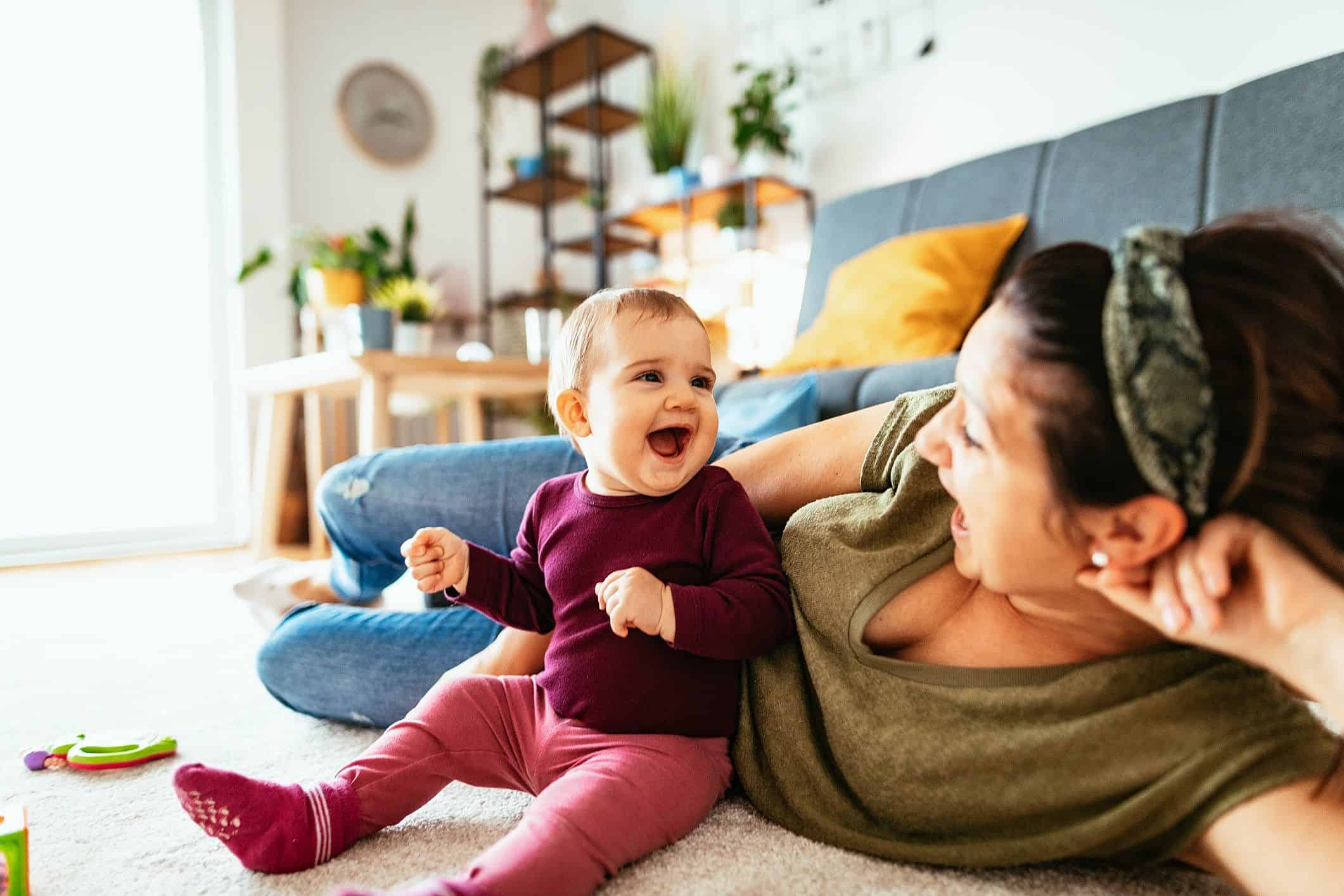
Babies often babble during face-to-face play. They may look at a caregiver, make a sound, pause, and then respond to the caregiver’s voice.
This back-and-forth pattern is sometimes called vocal turn-taking. It resembles the rhythm of conversation, even before a baby knows any words.
When an adult answers a baby’s babble, the baby learns that communication involves two people. The baby also begins to connect sounds with attention, smiles, touch, and shared enjoyment.
4. Babies learn from listening
Babies listen to the sounds around them and gradually learn which sounds belong to the language or languages they hear most often. Their babbling may begin with a wide range of sounds and later become more shaped by their speech environment.
For example, a baby who hears English may practice sound patterns common in English. A baby who hears Spanish, Mandarin, American Sign Language, or more than one spoken language may develop communication skills across those language systems.
Exposure to more than one language does not cause a speech delay. Multilingual babies may distribute their words and sounds across languages, so caregivers should consider the child’s total communication rather than counting only one language.
5. Babbling helps babies express interest and emotion
Babies use early sounds along with eye contact, facial expressions, body movement, and gestures. A happy baby may babble during play. A tired baby may use different sounds or stop responding.
Babbling is not only speech practice. It is also part of a baby’s growing ability to share attention, show pleasure, seek contact, and take part in daily routines.
When Do Babies Start Babbling?
Most babies begin with simpler sounds and then move toward repeated consonant sounds. The timeline below describes common patterns, not strict rules.
| Approximate age | Common vocal development |
|---|---|
| Birth to 2 months | Crying, brief sounds, and reflexive noises |
| 2 to 4 months | Cooing, laughter, vowel-like sounds, and vocal play |
| 4 to 6 months | Squeals, growls, raspberries, and changes in pitch |
| 6 to 9 months | Repeated sounds such as “ba-ba” or “da-da” |
| 9 to 12 months | Longer strings of sounds, varied babbling, gestures, and speech-like rhythm |
| Around 12 months and beyond | First meaningful words may appear, though timing varies |
Babies do not all follow the same schedule. Some babble often and loudly. Others are quieter but still communicate through eye contact, gestures, facial expressions, and sounds.
A baby may also pause or babble less when sick, tired, overwhelmed, or focused on a new physical skill, such as crawling. A short change does not always signal a problem. A lasting loss of communication skills deserves prompt medical attention.
What is canonical babbling?
Canonical babbling contains clear consonant-vowel patterns, such as:
- “Ba-ba”
- “Da-da”
- “Ma-ma”
- “Na-na”
These sounds are more speech-like than earlier coos and squeals. They show that a baby is combining consonants and vowels in a rhythmic way.
Canonical babbling often appears between about 6 and 10 months. The exact age can differ among children, including children born early. For premature babies, a pediatrician may consider adjusted age when reviewing development.
What Is the Difference Between Babbling and a First Word?
Babbling becomes a first word when a sound is used consistently and intentionally to refer to a person, object, action, or idea.
For example, “ba-ba” is usually babbling if a baby says it while playing and uses it in many situations. It may be an early word if the baby repeatedly says “ba-ba” while reaching for a bottle and uses it to mean that bottle.
A first word does not need to sound perfect. A baby may say “wa” for “water” or “ba” for “ball.” The key question is whether the sound has a stable meaning.
Some babies use “mama” or “dada” as babbling before using it to identify a parent. Caregivers should look at how the baby uses the sound, not just which sound the baby makes.
How Parents Can Encourage Babbling
Parents do not need special toys or formal lessons to support early speech. Simple, responsive interaction works well.
Respond to your baby’s sounds
When your baby babbles, answer with a similar sound or a short phrase. Pause afterward to give the baby a chance to respond.
Example:
- Baby: “Ba-ba.”
- Parent: “Ba-ba! You said ba-ba.”
- Pause and wait.
This teaches turn-taking and shows that the baby’s communication matters.
Copy, then expand
Copying a baby’s sound can keep the interaction going. You can then add a word.
- Baby: “Da-da.”
- Parent: “Da-da. Daddy is here.”
- Baby: “Ma.”
- Parent: “More? You want more.”
Do not pressure the baby to repeat the word. The goal is warm interaction, not a test.
Talk during daily routines
Use simple words during feeding, bathing, dressing, and play.
- “Here is your shirt.”
- “Up we go.”
- “Wash your hands.”
- “The ball rolls.”
- “You found the dog.”
Repeated words in real situations help babies connect sounds with meaning.
Read and sing together
Board books, songs, and nursery rhymes give babies a chance to hear repeated sounds and speech patterns. You do not need to read every word exactly as printed.
Point to pictures, name objects, pause for a response, and follow your baby’s interest. A short book shared often can be more useful than a long reading session that feels rushed.
Limit background noise
A television or phone playing in the background can make it harder for a baby to focus on a person’s voice. Face your baby when speaking and reduce competing noise when possible.
This does not mean a home must be silent. Normal household sounds are part of daily learning. The main goal is to create regular periods of clear, face-to-face interaction.
Use the languages your family knows best
Speak, sing, and read in the language or languages that feel natural to your family. Strong interaction in a home language supports communication and family connection.
There is no need to switch to English only because you worry that another language may confuse your baby. Research and professional guidance do not support the idea that learning multiple languages causes a communication disorder.

Is It Normal for a Baby to Babble Constantly?
Frequent babbling can be normal, especially when a baby is alert and enjoying social play. Some babies are naturally vocal and make sounds throughout the day.
Babbling may increase when a baby discovers a new sound. A baby can repeat “ba-ba-ba” for days or weeks before moving on to another pattern.
Babbling can also vary with mood and setting. A baby may be very vocal at home but quiet around unfamiliar people. This may reflect comfort level, tiredness, hunger, or the amount of stimulation in the room.
Contact a pediatrician if babbling comes with signs of illness, breathing trouble, pain, feeding problems, or a clear loss of skills.
When Should Parents Be Concerned About Babbling?
A missing milestone does not diagnose a delay. Still, it is worth discussing concerns with a child’s healthcare provider, because early evaluation can help identify hearing, developmental, or communication needs.
Consider calling the baby’s pediatrician if:
- Your baby does not make many sounds by about 6 months.
- Your baby is not babbling with repeated consonant sounds by about 9 months.
- Your baby rarely responds to voices or sounds.
- Your baby does not turn toward sounds or familiar voices.
- Your baby does not use gestures, facial expressions, or eye contact to communicate.
- Your baby stops babbling or loses another communication skill.
- You have concerns at any age.
The CDC advises parents to act early when a child is not meeting milestones, loses skills, or causes concern. A pediatrician may recommend a developmental screening or a hearing test.
Why hearing matters
Hearing affects how a baby learns the sounds of speech. A baby with hearing loss may still make sounds, but may babble less, respond inconsistently to voices, or stop developing new sound patterns.
Newborn hearing screening does not rule out every later hearing problem. Ear infections, fluid in the middle ear, genetic conditions, illness, and other factors can affect hearing after birth.
If you suspect a hearing issue, do not wait for the baby to “grow out of it.” Ask the pediatrician about a formal hearing evaluation by a qualified audiologist.
What about autism?
Babbling alone cannot diagnose autism. Some autistic babies babble, some babble in different ways, and some show early differences in social communication.
Parents should discuss a broader pattern with a pediatrician, such as limited response to name, reduced eye contact, few gestures, a lack of shared interest, or loss of skills. A healthcare professional must assess the whole child rather than relying on one behavior.
Babbling Milestones for Babies Born Prematurely
Premature babies may reach communication milestones later when age is counted from the date of birth. Healthcare professionals may use adjusted age, often until about 2 years, depending on the child and the clinical situation.
For example, a baby born 8 weeks early may be evaluated using an adjusted age that is 8 weeks younger than the actual age. Parents should ask the child’s pediatrician how to track milestones.
Prematurity does not make communication concerns unimportant. It simply changes how development may be measured. A pediatrician can help determine whether a baby’s sounds and social responses fit the child’s overall history.
Common Myths About Baby Babbling
Myth: Babbling is meaningless noise
Babbling has a function. It helps babies practice sound patterns and take part in social interaction, even when the sounds do not yet carry a clear meaning.
Myth: “Mama” always means the baby is calling for Mom
A baby may say “mama” as repeated babbling before using it as a name. Meaning depends on context and consistent use.
Myth: More babbling always means faster language development
Frequent babbling is encouraging, but speech development includes many skills. A child also needs to listen, respond, gesture, share attention, and gradually connect sounds with meaning.
Myth: A baby must babble in one exact order
Children vary. Some make “b” sounds first, while others use different consonants. Babies who hear more than one language may also show different sound patterns.
Myth: Screens can teach a baby to talk
Babies learn language best through responsive human interaction. Videos may expose a child to words, but they do not replace the back-and-forth exchange that supports early communication.
The American Academy of Pediatrics recommends limiting screen use for very young children and focusing on real-world interaction. Specific guidance can vary by age, so parents should review current recommendations with their pediatrician.
Frequently Asked Questions
Why do babies babble at night?
Babies may babble at night because they are awake, practicing a new sound, or seeking interaction. If nighttime vocalizing is frequent and affects sleep, check basic needs such as hunger, discomfort, temperature, and illness. Discuss ongoing sleep concerns with a pediatrician.
Do babies babble before they talk?
Yes. Babbling usually comes before meaningful words. It gives babies practice with sounds, rhythm, and mouth movements. Some babies use gestures and sounds together before they say clear words.
Do deaf babies babble?
Babies with hearing loss may babble, especially early in development. Without access to sound, some may babble less or show less variety over time. Babies who are deaf can develop strong communication through spoken language, sign language, or both with timely support.
Is babbling a sign of intelligence?
Babbling is a typical part of communication development, but it does not measure intelligence. Children develop speech, movement, social skills, and problem-solving at different rates.
How can I tell if my baby’s babbling is delayed?
Compare your baby’s overall communication with expected milestones, but do not rely on one sound or one date. If your baby has few sounds, does not respond to voices, is not babbling with repeated consonants around 9 months, or loses skills, contact the pediatrician.
Key Takeaways
- Babies babble to practice speech sounds and mouth movements.
- Babbling also supports social connection, turn-taking, and early learning.
- Repeated sounds such as “ba-ba” often appear between about 6 and 9 months.
- “Mama” or “dada” may begin as babbling before becoming a meaningful word.
- Talk, sing, read, and respond to your baby during everyday routines.
- Ask a pediatrician about limited babbling, poor response to sound, or lost communication skills.
- A hearing check may be important when a baby does not respond or stops developing new sounds.
Conclusion
Babbling is a baby’s first form of vocal practice and one of the earliest ways a child joins a conversation. Each coo, squeal, and repeated sound helps build control, listening skills, and social connection.
The best support is simple: listen, respond, copy your baby’s sounds, and talk during daily life. If your baby does not babble, does not respond to sound, or loses skills, contact a pediatrician in the United States for a developmental review and possible hearing evaluation.
Sources for further reading
- Centers for Disease Control and Prevention: Learn the Signs. Act Early.
- American Speech-Language-Hearing Association: Communication Milestones
- National Institute on Deafness and Other Communication Disorders: Your Baby’s Hearing and Communicative Development Checklist
- American Academy of Pediatrics: Media and Young Minds