Why Is My Baby’s Poop Hard: Causes And Safe Relief

Hard, dry, or pellet-like poop usually means your baby is constipated. In the United States, the most common causes are starting solid foods, not getting enough fluid, a change in formula, or holding poop because it hurts. A baby who strains, turns red, or grunts may not be constipated if the stool stays soft.
Most mild cases improve with simple changes. However, a young baby with hard stools, a baby who has not passed the first stool, or a baby with vomiting, a swollen belly, blood, fever, or poor feeding needs prompt medical advice.

What Hard Baby Poop Usually Means
Hard poop is not defined by how often your baby poops. It is defined mainly by stool texture and whether passing it causes pain.
A constipated baby may have:
- Dry, hard, or round stools
- Small stools that look like pebbles
- Pain or crying during a bowel movement
- A firm or bloated belly
- Less frequent stools than usual
- Streaks of bright red blood from a small tear near the anus
- Avoiding or holding poop after a painful bowel movement
A baby can poop every day and still be constipated if the stool is hard. Another baby may poop every few days and be healthy if the stool is soft and easy to pass.
Straining does not always mean constipation
Young babies often grunt, turn red, draw up their legs, and strain before passing soft poop. This can happen because their abdominal muscles and pelvic floor are still learning to work together. This pattern is often called infant dyschezia.
If the poop is soft, the baby is feeding well, and the baby seems comfortable between bowel movements, treatment may not be needed. Do not use rectal stimulation, suppositories, or laxatives unless your child’s clinician tells you to do so.
What normal poop can look like
Baby poop changes with age and diet:
- Breastfed babies: Poop is often yellow, loose, and soft. Some breastfed babies poop several times a day, while others may go several days between stools.
- Formula-fed babies: Poop is often thicker and more formed. It should still be soft, not dry or pellet-like.
- Babies eating solids: Poop often becomes darker, thicker, and more formed. Some foods can make it harder.
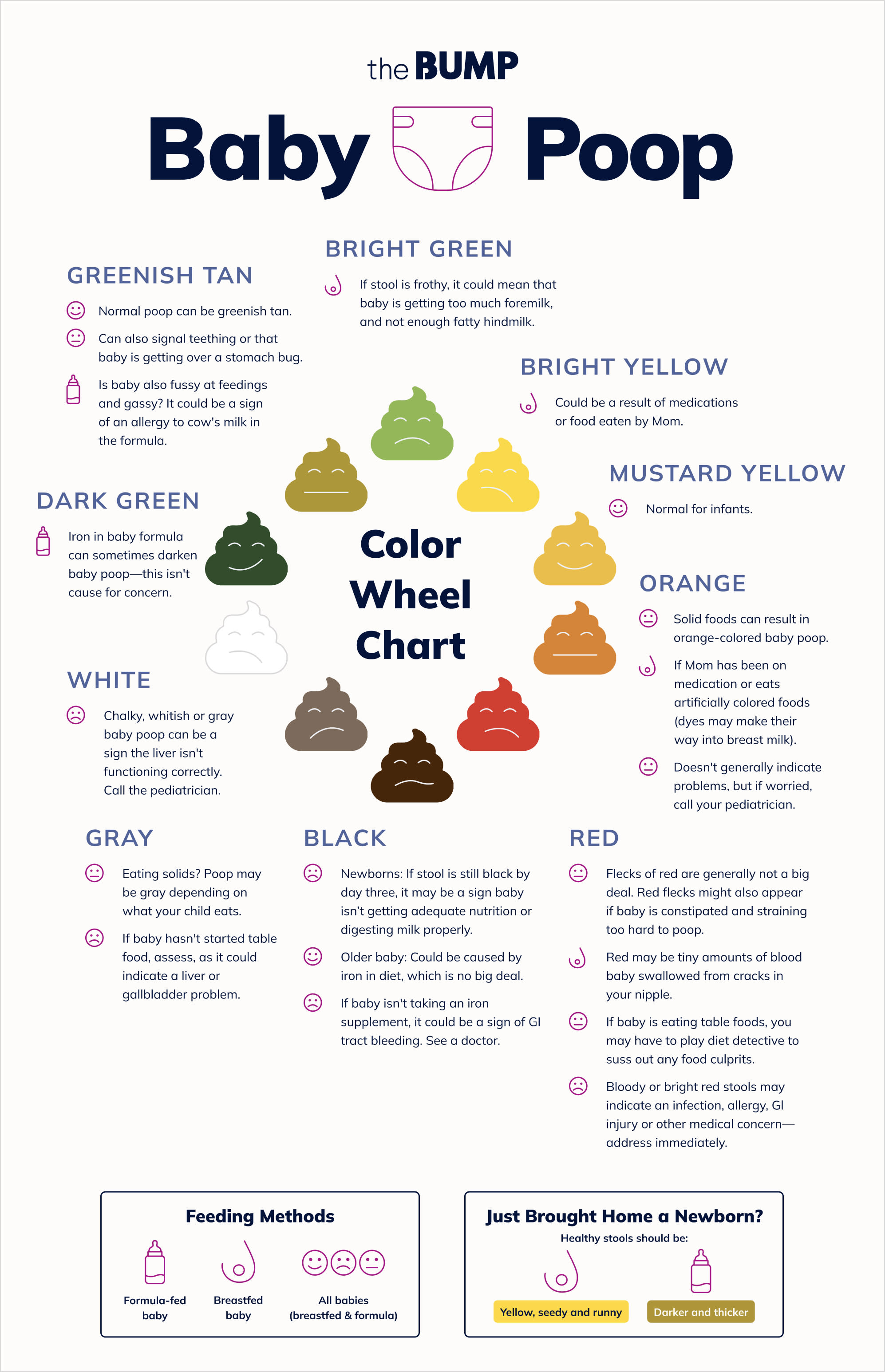
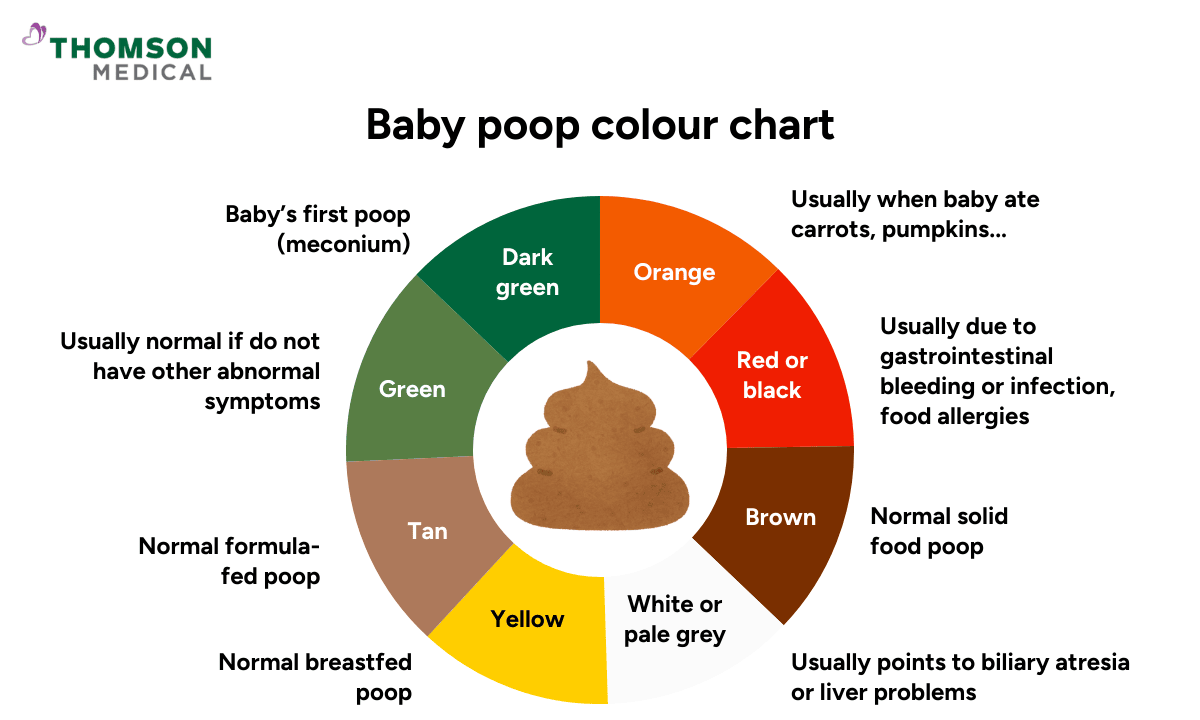
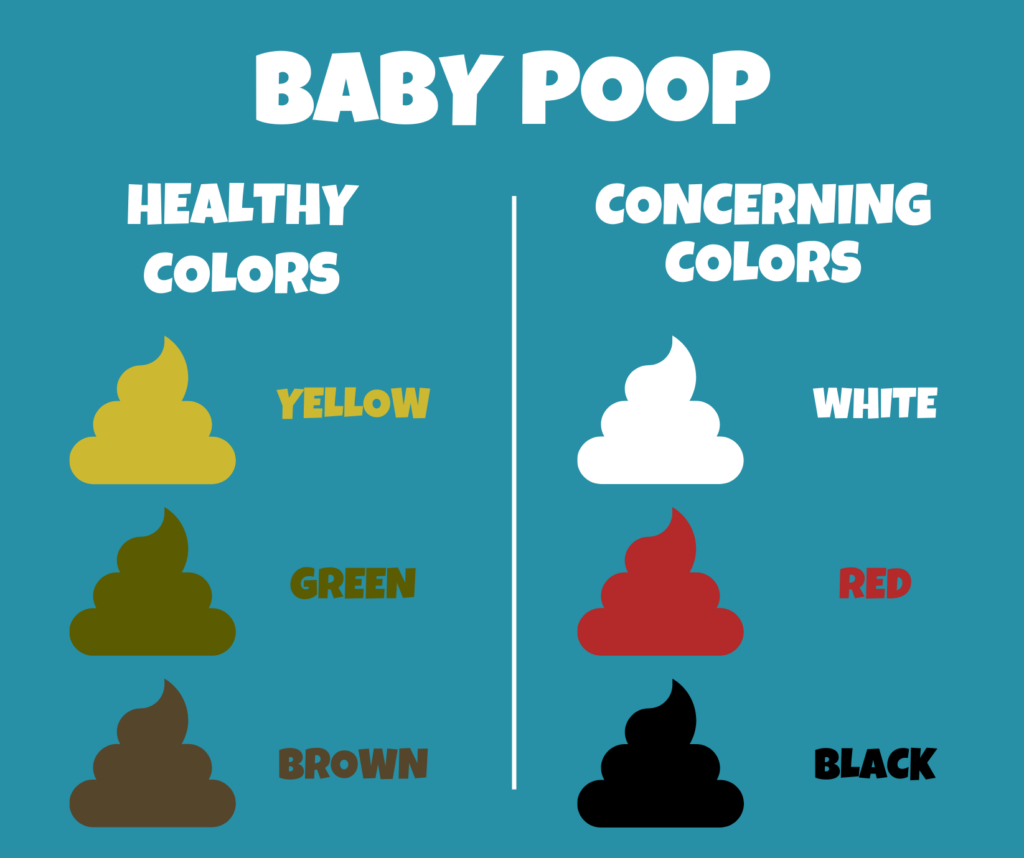
Color changes can be normal, but white, gray, red, or black stool should be discussed with a medical professional. Black stool can be normal during the first days after birth, but new black stool later is not usually normal.
Common Reasons a Baby’s Poop Becomes Hard
The cause often depends on your baby’s age, feeding method, and recent changes.
Starting solid foods
Starting cereals, grains, bananas, potatoes, or other low-fiber foods can make stools firmer. The digestive system is adjusting to foods that contain less water than breast milk or formula.
Some babies become constipated when they eat more solid food and drink less breast milk or formula. Breast milk or formula remains an important source of nutrition during the first year.
Not getting enough fluid
A baby may take in less fluid during illness, hot weather, a feeding problem, or a change in routine. Vomiting and diarrhea can also cause fluid loss.
Do not give extra water to a young infant unless the baby’s clinician recommends it. Too much plain water can upset an infant’s electrolyte balance and does not provide the calories a baby needs.
A change in formula
Switching formulas can change stool texture. Incorrect mixing can also cause problems. Always follow the exact water-to-powder directions on the formula label. Do not add extra powder, dilute formula, or change the recipe without medical guidance.
If hard poop begins after a formula change, ask your pediatrician before switching again. Frequent changes can make it harder to identify the cause.
Low-fiber solid foods
Some foods may make poop firmer, especially when they replace higher-fluid foods. Examples include:
- Large amounts of rice cereal
- Bananas, especially less-ripe bananas
- White bread or refined grains
- Potatoes without other fiber-rich foods
- Processed snack foods
This does not mean your baby must avoid these foods. Variety and balance matter more than removing one food forever.
Holding poop after a painful bowel movement
A painful stool can start a cycle. The baby holds the stool, the stool stays in the bowel longer, and more water is removed from it. The next stool becomes harder and may hurt again.
Older babies and toddlers may stiffen their body, hide, cross their legs, or resist sitting on the toilet. Comfort and early treatment can help break this cycle.
Less common medical causes
Constipation can sometimes result from a medical problem, such as an intestinal blockage, thyroid disorder, nerve or muscle problem, or a condition present from birth. These causes are less common but matter when constipation begins very early, keeps returning, or comes with poor growth or other symptoms.
What to Do for a Baby With Hard Poop
The safest step depends on your baby’s age and whether the baby eats solids.
If your baby is younger than 1 month
Call your baby’s pediatrician or health care professional about hard poop. Newborn constipation needs careful assessment, especially if the baby has not passed meconium within the first 24 to 48 hours after birth, has a swollen belly, vomits, feeds poorly, or seems very ill.
Do not give water, juice, herbal products, mineral oil, or laxatives unless the clinician specifically directs you.
If your baby is breastfed
Offer breastfeeds as usual. Check that your baby is feeding well and having the expected number of wet diapers for their age.
If the poop is truly hard or your baby seems in pain, contact the pediatrician. Hard stools are less typical in an exclusively breastfed infant, so the cause may need review.
If your baby drinks formula
Prepare formula exactly as directed on the container. Use the correct type of water and measuring scoop. Never make formula stronger or weaker to treat constipation.
If constipation started after a formula change, keep a record of the old and new formula and call the pediatrician. The clinician may suggest a different formula or check for another cause.
If your baby eats solid foods
For babies already eating solids, ask the clinician what foods and fluids fit your baby’s age. Depending on age and feeding pattern, helpful choices may include:
- Pears
- Prunes
- Peaches
- Plums
- Apricots
- Peas
- Beans
- Oatmeal
- Barley
- Soft vegetables
Offer age-appropriate textures to lower choking risk. Do not force food. Continue breast milk or formula as advised.
A clinician may recommend a small amount of prune or pear juice for some babies. Do not start juice on your own, and do not use juice as a daily substitute for breast milk, formula, or balanced food.
Gentle comfort measures
You can try gentle measures when your baby is otherwise well:
- Lay your baby on their back.
- Move the legs in a slow “bicycle” motion.
- Gently bring the knees toward the belly, then release.
- Give a gentle tummy massage if your baby likes it.
- Stop if your baby cries more or seems uncomfortable.
These steps may help gas and movement, but they do not treat a blockage. Do not insert a thermometer, cotton swab, soap, or other object into the rectum.

How to Tell Whether Your Baby Needs Medical Care
Call your child’s pediatrician if hard poop lasts more than a short time, keeps coming back, or does not improve after the clinician-approved feeding changes.
Contact a health care professional promptly if your baby:
- Is younger than 1 month and has hard stools
- Has blood mixed into the stool
- Has repeated painful bowel movements
- Has poor appetite or feeds less than usual
- Has fewer wet diapers
- Is not gaining weight as expected
- Has ongoing vomiting
- Has a swollen, firm, or painful belly
- Has constipation that began soon after birth
- Needs repeated suppositories or enemas
- Has a change in stool pattern that concerns you
Seek urgent medical care for a baby with green vomit, severe belly swelling, unusual sleepiness, trouble breathing, signs of dehydration, or severe pain. A baby who is difficult to wake or appears very ill should be evaluated right away.
Bright red blood on the outside of a hard stool may come from a small anal tear. Even so, tell the pediatrician, especially if the blood returns. Blood mixed throughout the stool, black stool, or pale white or gray stool needs prompt medical advice.

What Not to Give a Baby for Constipation
Do not treat infant constipation with adult products or home remedies unless a clinician gives clear instructions.
Avoid:
- Adult laxatives
- Enemas
- Mineral oil
- Herbal teas
- “Detox” products
- Baking soda
- Soap inserted into the rectum
- Repeated rectal stimulation
- Extra water for a young infant
- Honey for any child younger than 12 months
Honey can cause infant botulism. It is not a safe constipation remedy.
Do not use glycerin suppositories or other rectal medicines without medical advice. A clinician may sometimes recommend a product for a specific baby, but the dose and timing depend on age, weight, symptoms, and the suspected cause.
Do not stop breast milk or formula to make room for juice or solid foods. Babies need the nutrients and calories in breast milk or iron-fortified formula during the first year.

A Simple Decision Guide for Parents
Use stool texture, age, feeding, and symptoms together. No single sign proves constipation.
| What you notice | What it may mean | Safer next step |
|---|---|---|
| Soft poop but lots of grunting | Normal coordination learning | Comfort your baby; avoid rectal stimulation |
| Hard pellets after starting solids | Diet-related constipation is possible | Ask the clinician about fluids and high-fiber foods |
| Hard stool after formula changes | Formula or preparation may play a role | Check mixing instructions and call the pediatrician |
| Hard stool in a newborn | Needs assessment | Contact the baby’s clinician |
| Hard stool with vomiting or a swollen belly | Possible serious problem | Seek urgent medical care |
| Small bright red streak after hard poop | Possible anal tear | Tell the pediatrician, especially if it repeats |
| Fewer wet diapers and poor feeding | Possible dehydration or illness | Call promptly; seek urgent care if severe |
Keep a short record before calling. Write down your baby’s age, feeding method, recent food or formula changes, last soft stool, number of wet diapers, and any vomiting, fever, pain, or blood. This gives the clinician useful information quickly.
Key Takeaways
- Hard, dry, or pellet-like poop is more important than how often your baby poops.
- Straining with soft poop can be normal in young babies.
- Starting solids, diet changes, formula changes, and low fluid intake are common causes.
- Do not give water, juice, laxatives, suppositories, or home remedies without age-specific medical advice.
- Newborn constipation, blood, vomiting, a swollen belly, poor feeding, dehydration, or severe pain needs prompt medical care.
Frequently Asked Questions
Is hard poop normal for a newborn?
Hard poop is not something to ignore in a newborn. Contact the baby’s pediatrician, especially if the baby is under 1 month old, has not passed stool as expected, feeds poorly, vomits, or has a swollen belly.
Can teething cause hard poop?
Teething itself is not a proven direct cause of constipation. A teething baby may change eating or drinking habits, which can affect stool texture. Do not assume hard poop is from teething if it continues or causes pain.
Does formula cause constipation?
Formula does not automatically cause constipation, but formula-fed babies often have firmer stools than breastfed babies. A new formula, incorrect mixing, or a feeding problem may change stool texture. Follow the label and ask the pediatrician before changing formulas.
Can bananas make a baby constipated?
Bananas may make poop firmer for some babies, especially when they eat large amounts of less-ripe banana and few other fiber-rich foods. You do not need to avoid bananas completely. Offer a varied diet when your baby is ready for those foods.
How long can a baby go without pooping?
There is no single safe number for every baby. Some breastfed babies may go several days between soft stools. A baby who has hard poop, pain, vomiting, poor feeding, a swollen belly, or fewer wet diapers should be assessed rather than judged by the number of days alone.
Should I use a rectal thermometer to help my baby poop?
No. Do not use a thermometer or another object to stimulate a bowel movement unless a medical professional gives specific instructions. It can injure the rectum and may hide a problem that needs evaluation.
When to Call the Pediatrician
Call your baby’s pediatrician if the stool is hard, painful, recurrent, or paired with feeding or growth concerns. For urgent symptoms such as green vomit, severe swelling, marked sleepiness, severe pain, or dehydration, seek emergency care.
For general U.S. guidance, parents can also review information from the American Academy of Pediatrics’ HealthyChildren.org, the National Institute of Diabetes and Digestive and Kidney Diseases, and the American Academy of Family Physicians. These resources support the same central point: stool texture, age, feeding, and warning signs matter more than bowel movement frequency alone.
Conclusion
Your baby’s hard poop is often linked to solid foods, a feeding change, or stool that became painful to pass. Start with safe, age-appropriate feeding steps and avoid unapproved remedies. Because newborn constipation and serious symptoms can signal a larger problem, contact a pediatrician when your baby is very young, the problem persists, or warning signs appear.