Why Do Babies Get Colic: Causes And Soothing Tips

Colic is a common pattern of intense crying in otherwise healthy babies in the United States. It often starts around 2 to 3 weeks of age, peaks at about 6 weeks, and improves by 3 to 4 months. The exact cause is still not known. Researchers think colic may result from several factors, including an immature nervous system, feeding challenges, gut changes, and sensitivity to stimulation.
Colic can be exhausting for parents, but it is not caused by poor parenting. Most babies with colic continue to feed, grow, and develop normally. Still, a baby with sudden, severe, or unusual crying needs medical attention because some illnesses can look like colic.

What Is Colic?
Colic is repeated, prolonged crying in a baby who does not have an obvious illness or injury. Doctors often use the “rule of threes” to describe it:
- Crying for more than 3 hours a day
- Crying on more than 3 days a week
- Crying for at least 3 weeks
- Symptoms beginning and ending during the first 5 months of life
This rule helps describe the pattern, but parents do not need to count every minute before seeking help. A baby can need an evaluation even if the crying does not meet this exact definition.
Colic often follows a predictable pattern:
- Crying begins suddenly, often in the late afternoon or evening.
- The baby may clench their fists, draw up their legs, arch their back, or turn red.
- The baby may be hard to soothe.
- The crying may last for hours.
- The baby usually appears well between episodes.
Colic is different from normal fussiness because the crying is more intense, lasts longer, and is harder to stop. It is also different from a medical problem because a baby with colic usually has normal growth and no other signs of illness.

Why Do Babies Get Colic?
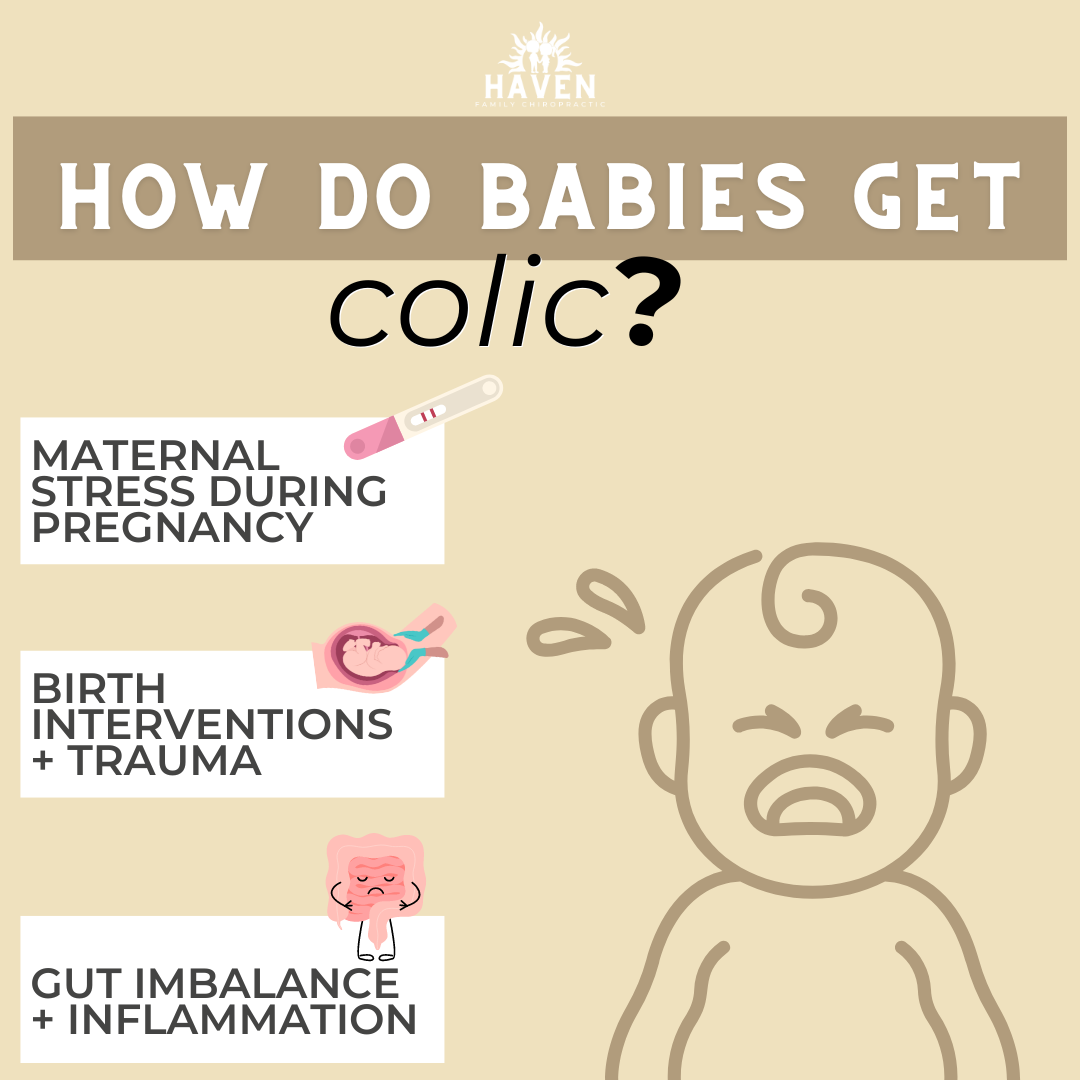
The short answer is that no single cause explains all cases of colic. Medical groups such as the American Academy of Pediatrics and research reviews describe colic as a multifactorial condition. This means that several small factors may combine to make a baby cry more and settle less easily.
An immature nervous system
Young babies are still learning how to control sleep, movement, attention, and emotions. Their brains can become overloaded by light, sound, handling, hunger, or tiredness.
A newborn may not yet have a reliable way to calm down after becoming upset. As the nervous system matures, many babies become better at self-soothing. This may help explain why colic often fades by 3 or 4 months.
Difficulty with feeding and digestion
Some babies swallow extra air while feeding or crying. This may cause burping, bloating, or discomfort. Fast milk flow, a poor latch, an incorrect bottle nipple, or feeding too quickly can also make a baby take in more air.
However, gas is not proven to be the main cause of most colic. Babies often swallow air because they are already crying. In that case, gas may be an effect of crying rather than the original trigger.
An immature gut
The digestive system changes rapidly during early infancy. Movement of food through the intestines, digestive enzymes, and the gut microbiome are still developing.
Some studies have found differences in gut bacteria between babies with and without colic. These findings are interesting, but they do not prove that one type of bacteria causes colic. Gut bacteria also vary with feeding method, age, birth history, medications, and many other factors.
Sensitivity to stimulation
Some infants react strongly to noise, movement, touch, or changes in their surroundings. A baby may become overtired after a busy day and then cry for a long time.
This does not mean the baby is “difficult.” It may mean the baby has a low threshold for stimulation. A quiet room, dim lights, and slow movement may help reduce the load on the baby’s senses.
Cow’s milk protein allergy or intolerance
A small number of babies who seem to have colic may have a reaction to cow’s milk protein. This can occur in breastfed babies if the mother eats dairy, or in formula-fed babies who receive standard cow’s-milk-based formula.
Possible clues include:
- Blood or mucus in the stool
- Eczema or hives
- Vomiting
- Wheezing or swelling
- Poor weight gain
- Persistent diarrhea
- Marked feeding distress
Most babies with colic do not have a cow’s milk protein allergy. Parents should not make major diet changes or switch formulas repeatedly without speaking with a pediatrician. Unplanned elimination diets can reduce nutrition for the parent or baby.
Reflux or gastroesophageal reflux disease
Normal infant reflux is common. Many babies spit up because the muscle between the esophagus and stomach is still developing. Spit-up alone does not prove that reflux is causing crying.
Reflux disease is less common. It may be considered when crying occurs with poor feeding, repeated vomiting, choking, breathing problems, poor weight gain, or significant pain. Acid-reducing medicine does not help most otherwise healthy babies with unexplained crying and should not be used without medical guidance.
Normal variation in infant crying
Some babies simply cry more than others. Infant crying normally rises during the first weeks of life, reaches a peak in the second month, and then declines.
Colic may represent the high end of this normal crying curve rather than one single disease. That is why tests often do not find a clear abnormality in a healthy, growing baby.

How Can You Tell If It Is Colic?
Colic is more likely when a baby is growing well, feeds normally, and has no warning signs. The baby may cry at roughly the same time each day and then return to a normal state.
A pediatrician may ask about:
- When the crying began
- How long each episode lasts
- Feeding method and feeding schedule
- Wet diapers and bowel movements
- Spitting up or vomiting
- Stool color and texture
- Sleep
- Fever or breathing changes
- Weight gain
- What helps or worsens the crying
Keep a simple crying and feeding log for two or three days if you can. Record feeds, naps, wet diapers, stool, spit-up, and crying periods. This can reveal patterns and gives the pediatrician useful information.
Colic usually does not require blood tests, scans, or other testing when the baby looks well and has a normal examination. Testing may be needed if the clinician finds signs of infection, allergy, injury, dehydration, or another condition.

What Can Parents Do to Soothe a Colicky Baby?
No single method works for every baby. Try one calm strategy at a time for several minutes. Too many changes at once can add more stimulation.
Check basic needs first
Offer a feed if the baby may be hungry. Check the diaper, clothing, temperature, and sleeping space. Look closely for a tight thread or hair wrapped around a toe, finger, or genital area.
If bottle-feeding, keep the bottle tilted so the nipple stays full of milk. Pause for burping when the baby shows signs of needing a break. Avoid forcing the baby to finish a bottle.
Reduce stimulation
Try a quiet, dim room. Hold the baby close, use slow movements, and lower background noise. Some babies settle with steady white noise played at a low volume and placed well away from the crib.
Do not place loud devices beside the baby’s head. The American Academy of Pediatrics advises keeping the sleep area free of loose items and placing babies on their backs for every sleep.
Use gentle movement
Walking slowly, rocking, or carrying the baby may help. A baby carrier can be useful when used according to its instructions and when the baby’s airway remains clear.
Never shake, jerk, or toss a baby. Even a brief episode of forceful shaking can cause life-threatening brain injury.
Try a safe swaddle when appropriate
A snug swaddle may calm some young babies. Always place a swaddled baby on their back on a firm, flat sleep surface. Stop swaddling when the baby shows signs of rolling, usually around the time the baby begins trying to roll.
Do not use weighted swaddles, weighted blankets, or loose blankets. These products can increase the risk of suffocation or overheating.
Take breaks
If you feel overwhelmed, place the baby on their back in an empty crib and step away for a few minutes. Call a trusted adult for help.
Crying can trigger fear, anger, and hopelessness. Those feelings are a safety concern when a caregiver is alone and exhausted. A short, safe break is better than trying to soothe a baby while losing control.
Do Gas Drops, Probiotics, or Formula Changes Help?
The evidence is mixed, and the best choice depends on the baby’s feeding method and symptoms.
Simethicone
Simethicone is sold in the United States as an over-the-counter gas medicine. Research has not shown consistent benefit for infant colic. Ask a pediatrician before giving it, especially to a newborn or a baby taking other medicines.
Probiotics
Some studies suggest that a specific strain, Lactobacillus reuteri DSM 17938, may reduce crying in some breastfed infants. The results are less consistent in formula-fed infants. Benefits may depend on the exact strain, dose, and baby population.
“Probiotic” is not one single treatment. Products can differ in strain, strength, storage needs, and quality. Discuss a product with the baby’s pediatrician before use.
Herbal remedies and gripe water
Gripe water and herbal products are not proven treatments for colic. Some may contain ingredients that are not well studied in young babies. Avoid products with alcohol, honey, or unsafe herbs. Honey must not be given to infants younger than 12 months because of the risk of botulism.
Changing formula
A pediatrician may suggest a limited trial of extensively hydrolyzed formula when cow’s milk protein allergy is suspected. Standard formula changes made at random often do not help and can make feeding harder.
For breastfeeding parents, removing dairy may help only when the baby has a true cow’s milk protein reaction. It should be done with professional guidance, especially if the diet becomes very limited.
Chiropractic care and other manual treatments
Spinal manipulation, forceful massage, and other physical treatments have not been proven safe or effective for colic. Never allow anyone to shake, thrust, or sharply move an infant’s neck or spine.

When Should You Call a Pediatrician?
Call your child’s pediatrician promptly if the crying is new, severe, worsening, or difficult to explain. A clinician can check for problems that may look like colic.
Seek urgent medical care for a baby with:
- A rectal temperature of 100.4°F (38°C) or higher if younger than 3 months
- Trouble breathing, blue lips, or pauses in breathing
- Repeated vomiting, green vomit, or vomit with blood
- Blood in the stool
- A swollen or hard belly
- Poor feeding or refusing several feeds
- Much fewer wet diapers
- Extreme sleepiness, weakness, or difficulty waking
- A seizure
- A bulging soft spot
- A new rash with fever
- A cry that sounds weak, high-pitched, or very different
- Possible injury or accidental shaking
Call 911 in the United States for severe breathing trouble, unresponsiveness, a seizure that does not stop, or another immediate emergency.
A baby who cries intensely after a fall or whose cry changes suddenly needs urgent evaluation. Do not assume that unusual crying is colic.

How Long Does Colic Last?
Colic often begins during the second or third week of life, becomes most intense near 6 weeks, and improves by 3 or 4 months. Some babies cry longer than this, but persistent or worsening symptoms deserve a medical review.
There is no reliable way to predict the exact end date. Improvement may happen slowly, with shorter episodes or longer calm periods. Track progress by looking at the whole day rather than expecting every crying episode to stop at once.
Colic does not usually cause long-term harm when the baby is healthy and receives safe care. The main risks involve caregiver exhaustion, unsafe sleep practices, unsafe remedies, and shaken baby injury. Supporting the caregiver is part of treating the problem.

Common Mistakes to Avoid
Avoid these responses because they can delay care or create new risks:
- Assuming every episode is “just gas”
- Giving medicine without checking the dose and ingredient
- Switching formulas repeatedly
- Starting a strict elimination diet without guidance
- Using loose blankets, pillows, sleep positioners, or weighted products
- Letting a baby sleep in a swing, car seat, or inclined device
- Ignoring poor feeding or fewer wet diapers
- Shaking, bouncing forcefully, or tossing the baby
- Waiting to ask for help until exhaustion becomes overwhelming
The safest approach is simple: check for illness, use gentle soothing, follow safe-sleep rules, and ask for help early.

Frequently Asked Questions About Baby Colic
Is colic caused by something the mother ate?
Usually, no. Most colic is not caused by a parent’s diet. A food reaction is more likely when crying occurs with blood or mucus in the stool, eczema, vomiting, wheezing, or poor growth. Speak with a pediatrician before removing major foods from a breastfeeding diet.
Do breastfed babies get colic?
Yes. Breastfed and formula-fed babies can both develop colic. Feeding method does not prevent colic, and colic does not mean breastfeeding is failing.
Does colic mean a baby is in pain?
Colic looks distressing, and some babies may have discomfort. However, crying alone cannot prove pain. A medical evaluation is needed when crying comes with fever, vomiting, poor feeding, injury, or other warning signs.
Can overfeeding cause colic?
Overfeeding may cause spit-up, discomfort, and fussiness in some babies. Feed based on hunger and fullness cues rather than forcing a baby to finish. A pediatrician or feeding specialist can help if feeds are very long, very frequent, or stressful.
Can you prevent colic?
There is no proven way to prevent all colic. Responsive feeding, burping when needed, limiting overstimulation, safe sleep, and caregiver support may make some episodes easier to manage.
Key Takeaways
- Colic is prolonged crying in an otherwise healthy infant.
- Its exact cause is unknown and may involve several factors.
- Common contributors include nervous-system immaturity, feeding difficulty, gut development, and overstimulation.
- Most colic improves by 3 to 4 months.
- Gas drops, probiotics, formula changes, and herbal products do not help every baby.
- Never shake a baby, even when crying feels impossible to stop.
- Seek medical care for fever, breathing trouble, poor feeding, dehydration, vomiting, blood in the stool, unusual sleepiness, injury, or a sudden change in the cry.
Conclusion
Babies get colic for reasons that are not fully understood. The pattern likely reflects a mix of early brain development, feeding and digestion, sensitivity to stimulation, and normal differences in infant crying.
For parents in the United States, the next step is to contact the baby’s pediatrician if the crying is severe, new, persistent, or paired with other symptoms. Use gentle soothing, protect safe sleep, and take breaks when needed. Colic usually passes, but caregivers should not have to manage it alone.