
Why Is My Baby Fussy: Common Causes And Soothing Tips

Introduction
Most fussy babies are not sick. Babies may cry because they are hungry, tired, too warm, wet, bored, or need to be held. Fussiness can also rise during growth spurts, teething, illness, or changes in sleep.
In the United States, the American Academy of Pediatrics (AAP) notes that crying often peaks when a baby is about 6 weeks old. It often eases by 3 to 4 months. Still, a sudden change in crying, a weak cry, or other symptoms may need medical care.
Start with basic needs. Check feeding, diapers, sleep, temperature, comfort, and signs of illness. If your baby seems very sick, has trouble breathing, is hard to wake, or is younger than 3 months with a fever of 100.4°F (38°C) or higher, seek prompt medical care.
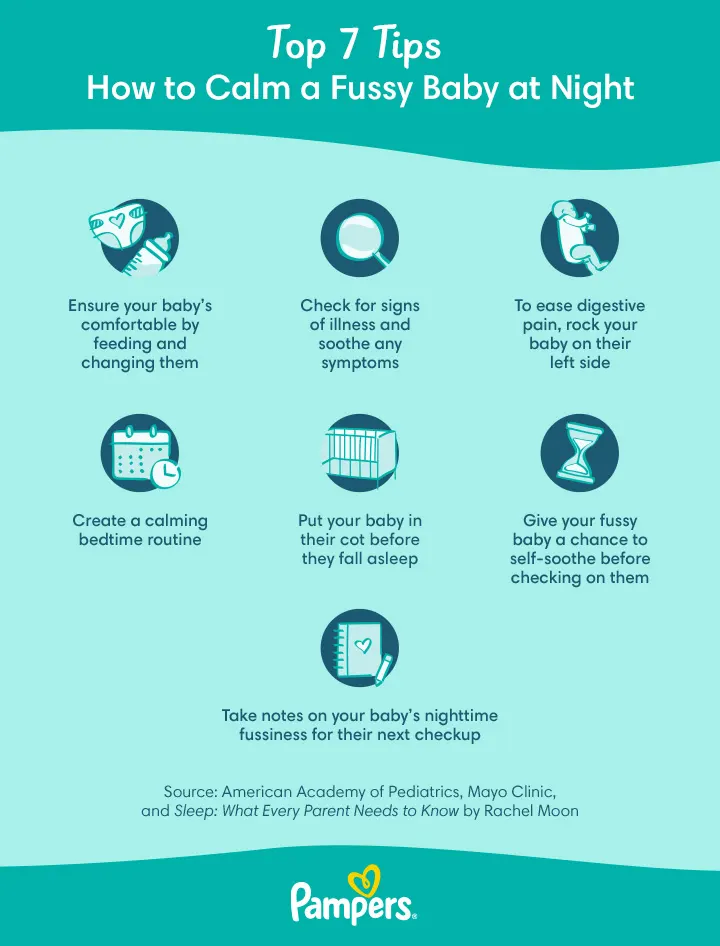
Common Reasons Your Baby May Be Fussy
The most common causes are simple needs or normal changes. Look for a pattern before assuming something is wrong.
Hunger
Hunger is a common cause of fussiness. Crying is a late hunger sign. Earlier signs may include:
- Turning the head toward your breast or bottle
- Opening the mouth
- Sucking on hands
- Smacking the lips
- Becoming more alert
- Rooting when the cheek is touched
Offer a feed if your baby shows these signs. Do not force a bottle or breast if your baby turns away, closes the mouth, or becomes relaxed.
A wet or dirty diaper
Some babies cry as soon as they feel wet. Others do not seem to mind. Check the diaper when your baby becomes fussy, even if it was changed recently.
A rash can also cause pain. Look for red, raw, cracked, or bleeding skin. Change diapers often, rinse gently, and let the skin dry before applying a barrier cream.
Tiredness
A tired baby may not look sleepy. Some babies become more active, clingy, or upset when they miss a nap. Common sleep cues include:
- Rubbing the eyes
- Looking away
- Yawning
- Decreased activity
- Red eyebrows or eyelids
- Fussing during feeding
- Difficulty staying calm
Try a quiet room, dim light, and a simple routine. Put your baby on their back in a clear, flat sleep space when it is time to sleep. The AAP recommends a firm sleep surface with no pillows, blankets, bumpers, or soft toys.
Too much stimulation
Bright lights, loud sounds, visitors, screens, and frequent handling can overwhelm a young baby. A baby may cry after a busy day even when nothing is medically wrong.
Move to a calm room. Lower the lights. Use a steady voice. Hold your baby close if they want contact, or give them a short break from touch if they seem tense.
Temperature or clothing
Babies can become uncomfortable when they are too hot, too cold, or dressed in tight layers. Feel your baby’s chest or back rather than relying only on hands and feet. Hands and feet may feel cool even when the body is at a comfortable temperature.
Use light layers. Avoid heavy blankets during sleep. The AAP advises avoiding overheating because excess warmth is linked with a higher risk of sleep-related infant death.
Need for contact
some babies calm when held, rocked, or carried. This is not a sign that you are “spoiling” your baby. Responding to your baby helps build trust and can lower distress.
You can try skin-to-skin contact, gentle rocking, slow walking, or a soft voice. If you feel overwhelmed, place your baby on their back in a safe crib and step away for a few minutes.
Gas or normal digestive changes
Babies may swallow air during feeds. They may then squirm, draw up their legs, or cry. Burping during and after a feed may help some babies.
Gas is common, but severe or repeated pain is not always “just gas.” Contact your baby’s clinician if fussiness comes with repeated vomiting, a swollen belly, bloody stool, poor feeding, or poor weight gain.
Reflux
Many babies spit up small amounts. This can be normal when the baby remains comfortable, feeds well, and gains weight. Reflux may be more concerning when it causes pain, poor feeding, choking, breathing problems, or poor growth.
Keep your baby upright while you are holding them after a feed. Do not place your baby to sleep on the stomach or use an inclined sleeper. Safe sleep rules still apply, even when reflux is present.
Teething
Teething may cause sore gums, drooling, and a strong need to chew. It does not usually cause a high fever, breathing trouble, repeated vomiting, or severe diarrhea.
Use a clean, chilled teething ring. Avoid numbing gels that contain benzocaine unless a clinician specifically directs you. Do not use amber teething necklaces. They can cause choking or strangulation.
Illness
Fussiness may be the first sign of an illness. Other signs can include:
- Fever
- Cough
- Runny nose
- Diarrhea
- Vomiting
- Rash
- Poor feeding
- Fewer wet diapers
- Sleepiness or weak movement
A baby may also cry because of an ear infection, urinary infection, constipation, injury, or another problem that is hard to see. A health professional can help find the cause.
Colic
Colic means long periods of crying in an otherwise healthy baby. A common pattern is crying for about 3 hours a day, on 3 or more days each week, for at least 3 weeks. The pattern often starts in the first weeks of life and improves by about 3 to 4 months.
The cause of colic is not clear. It is not caused by bad parenting. Colic can be exhausting, so ask someone you trust to help with care. Never shake, hit, or yell at a baby.

What to Do When Your Baby Is Fussy
Use a calm, safe check first. You do not need to try every soothing method at once.
1. Check urgent symptoms
Before trying to soothe your baby, look for signs of a serious problem. Check breathing, skin color, alertness, temperature, and movement.
Call 911 in the United States if your baby:
- Has severe trouble breathing
- Turns blue, gray, or very pale
- Is limp, unresponsive, or hard to wake
- Has a seizure
- Is choking and cannot breathe or cry
- Has severe bleeding
- Has a serious injury
For babies younger than 3 months, a rectal temperature of 100.4°F (38°C) or higher needs prompt medical advice. Call your pediatrician or seek urgent care based on the instructions you receive.
2. Check the basic needs
Work through this short list:
- Offer a feed if your baby shows hunger cues.
- Check and change the diaper.
- Check for tight clothing, hair, or thread around a toe, finger, or penis.
- Feel the chest or back for excess heat.
- Look for a rash, swelling, bruising, or injury.
- Consider whether your baby missed a nap.
- Move to a quiet, dim room.
A strand of hair wrapped around a toe or finger can reduce blood flow. Remove it if you can do so safely. Seek care if the area is swollen, dark, or painful.
3. Try one soothing method
Choose one method and give it a few minutes:
- Hold your baby close.
- Swaddle a young baby who is not rolling.
- Rock or walk slowly.
- Use a steady “shush” sound.
- Offer a pacifier if your baby uses one.
- Use a baby carrier according to its instructions.
- Take a short walk outside if the setting is safe.
- Give your baby a warm bath if baths usually calm them.
Stop swaddling when your baby shows signs of rolling. Never shake a baby, toss a baby into the air, or use a car ride as a way to calm a baby if you are too tired to drive safely.
4. Protect your own limits
Crying can cause intense stress. If you feel angry or close to losing control, place your baby on their back in an empty crib. Leave the room for a few minutes. Call a trusted adult, your pediatrician, or a crisis service for support.
A safe pause is better than trying to soothe a baby while you are overwhelmed. A baby may continue to cry for a short time, but a safe sleep space protects them.

When Fussiness May Need a Doctor
Call your baby’s pediatrician when fussiness is new, severe, persistent, or linked with other symptoms. The doctor may ask about feeding, wet diapers, stool, sleep, fever, vomiting, and the sound or timing of the crying.
Contact the pediatrician promptly if your baby:
- Cries for a long time and cannot be comforted
- Has a cry that sounds weak, high-pitched, or unusual
- Eats much less than usual
- Has fewer wet diapers
- Vomits repeatedly or has green or bloody vomit
- Has blood in the stool
- Has a swollen or firm belly
- Has a rash with fever or looks very ill
- Is less alert than usual
- Has pain when you touch or move an area
- Is not gaining weight as expected
- Has a fever, especially if younger than 3 months
The number of wet diapers varies with age, feeding, and health. A clear drop from your baby’s normal pattern can be a warning sign of dehydration. Dry lips, no tears when crying, unusual sleepiness, and very dark urine also need medical attention.
Keep a short log before the visit. Write down:
- When the crying starts
- How long it lasts
- Feeding times and amounts
- Wet and dirty diapers
- Sleep periods
- Temperature and how it was measured
- Vomiting, stool changes, rash, or cough
- What helps or makes it worse
This record can reveal a pattern and help the clinician make a better decision.
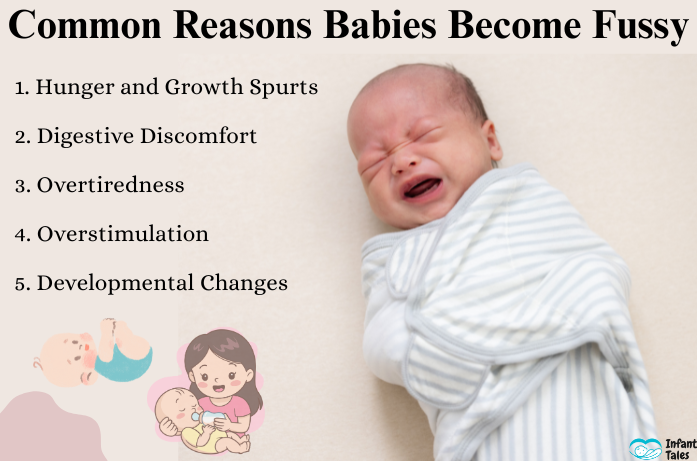
How Age and Timing Change the Answer
The likely cause depends on your baby’s age and when the fussiness occurs.
| Pattern | Possible reason | Useful next step |
|---|---|---|
| Crying before most feeds | Hunger or feeding difficulty | Offer a feed; ask about latch, flow, or formula preparation if feeds are hard |
| Crying after feeds | Swallowed air, overfeeding, reflux, or allergy | Check feeding pace and burping; call the pediatrician for pain, vomiting, blood, or poor growth |
| Crying near bedtime | Overtiredness or overstimulation | Start a quiet routine earlier and reduce light and noise |
| Crying mostly in the evening | Normal early crying pattern or colic | Track the pattern and ask for help with care |
| Crying with a fever | Infection or illness | Contact a clinician; use urgent guidance for babies under 3 months |
| Crying with fewer wet diapers | Dehydration or poor intake | Call the pediatrician promptly |
| Crying after a new food or formula | Feeding intolerance, allergy, or unrelated timing | Ask the pediatrician before changing feeds |
| Sudden crying during movement | Injury or pain | Check the body gently and seek medical care if pain continues |
This table can guide your next step, but it cannot diagnose the cause. Babies can have more than one reason for crying at the same time.

Feeding and Formula Questions
Fussiness during feeds may point to a feeding problem rather than simple hunger. Watch how your baby feeds, not only how much they take.
Possible signs of a feeding issue include coughing, choking, clicking, arching, falling asleep soon after starting, very long feeds, or refusing the breast or bottle. A lactation consultant, pediatrician, or feeding specialist can check positioning, milk flow, bottle nipple flow, and swallowing.
Use infant formula exactly as the label directs. Do not dilute formula or add extra powder. Incorrect mixing can cause serious health problems. Do not switch formulas repeatedly without medical guidance, especially if your baby has vomiting, blood in the stool, eczema, or poor weight gain.
Do not give honey to a baby younger than 12 months. Honey can cause infant botulism. Do not give water, herbal products, gripe water, or medicine for fussiness unless your baby’s clinician recommends it.

Common Mistakes to Avoid
Some popular fixes can create new risks.
- Do not shake your baby. Shaking can cause severe brain injury or death.
- Do not use loose bedding. Pillows, quilts, and stuffed toys can block breathing.
- Do not use inclined sleep products for routine sleep. They can allow a baby’s head to fall forward.
- Do not give medicine based only on age. Ask about the right medicine, dose, and timing.
- Do not assume every cry is colic. Illness, injury, dehydration, and feeding problems can look similar.
- Do not stop a prescribed treatment without advice.
- Do not ignore your own distress. Ask another adult to take over when possible.
Avoiding unsafe sleep products and unsafe soothing methods matters more than finding a perfect way to stop every cry. The goal is a safe baby and a supported caregiver.

Key takeaways
- Hunger, tiredness, wet diapers, heat, overstimulation, gas, and the need for contact are common causes.
- Crying often peaks around 6 weeks and improves by 3 to 4 months.
- Check urgent symptoms first, then basic needs, then try one calm soothing method.
- A fever of 100.4°F (38°C) or higher in a baby younger than 3 months needs prompt medical advice.
- Never shake a baby. Place your baby safely in a crib and step away if you feel overwhelmed.
Frequently Asked Questions
Why is my baby fussy but not crying?
A baby may show fussiness through grunting, squirming, arching, rooting, kicking, or refusing to settle. These signs can mean hunger, tiredness, gas, overstimulation, or discomfort. Check basic needs and watch for symptoms such as fever, poor feeding, vomiting, or breathing trouble.
Why is my baby fussy at night?
Night fussiness may come from normal newborn sleep patterns, hunger, overtiredness, gas, or too much stimulation before bed. Keep nighttime feeds and changes quiet and dim. If your baby cries in pain, has trouble breathing, vomits repeatedly, or cannot feed, contact a clinician.
How long is it normal for a baby to be fussy?
There is no single normal time limit. Many babies have a daily fussy period, and crying often increases during the first 6 to 8 weeks. The pattern should gradually improve for many babies by 3 to 4 months. A sudden change or a baby who cannot be consoled needs medical advice.
Can breast milk or formula cause fussiness?
Feeding can sometimes be linked with fussiness, but crying alone does not prove an allergy or intolerance. Look for other signs, such as repeated vomiting, bloody stool, hives, eczema, wheezing, poor feeding, or poor weight gain. Speak with your pediatrician before changing formula or removing foods from your diet.
Should I call the doctor if my baby cries every day?
Call if the crying is severe, lasts for long periods, is getting worse, or comes with other symptoms. Also call if you are worried or cannot safely manage the crying. Your pediatrician can check feeding, growth, illness, reflux, injury, and other causes.
Conclusion
A fussy baby usually needs a basic need met, a quieter setting, rest, or close contact. Check for hunger, a wet diaper, tiredness, heat, overstimulation, and feeding discomfort. Then use one gentle soothing method and keep sleep safe.
Trust your concern when the cry feels different or your baby seems unwell. Seek urgent help for breathing problems, blue or gray skin, unresponsiveness, seizures, or other emergency signs. For a baby younger than 3 months, call promptly about a temperature of 100.4°F (38°C) or higher.
For ongoing fussiness, start a simple log and contact your child’s pediatrician. Your next step is not to find a perfect trick. It is to keep your baby safe, check the most likely needs, and get help when the pattern does not seem right.