Why Do Babies Shake Their Head: Causes And When To Worry

Introduction
For parents in the United States, seeing a baby shake their head can feel alarming. In many cases, head shaking is a normal part of movement, self-soothing, play, or early communication. Babies may shake their head when they are tired, excited, upset, or learning how their bodies work.
The meaning depends on the baby’s age, timing, body movements, and other symptoms. Occasional head shaking in an otherwise alert, happy baby is often harmless. Repeated or sudden movements with loss of awareness, breathing trouble, fever, pain, or developmental concerns need prompt medical advice.
Why do babies shake their head?
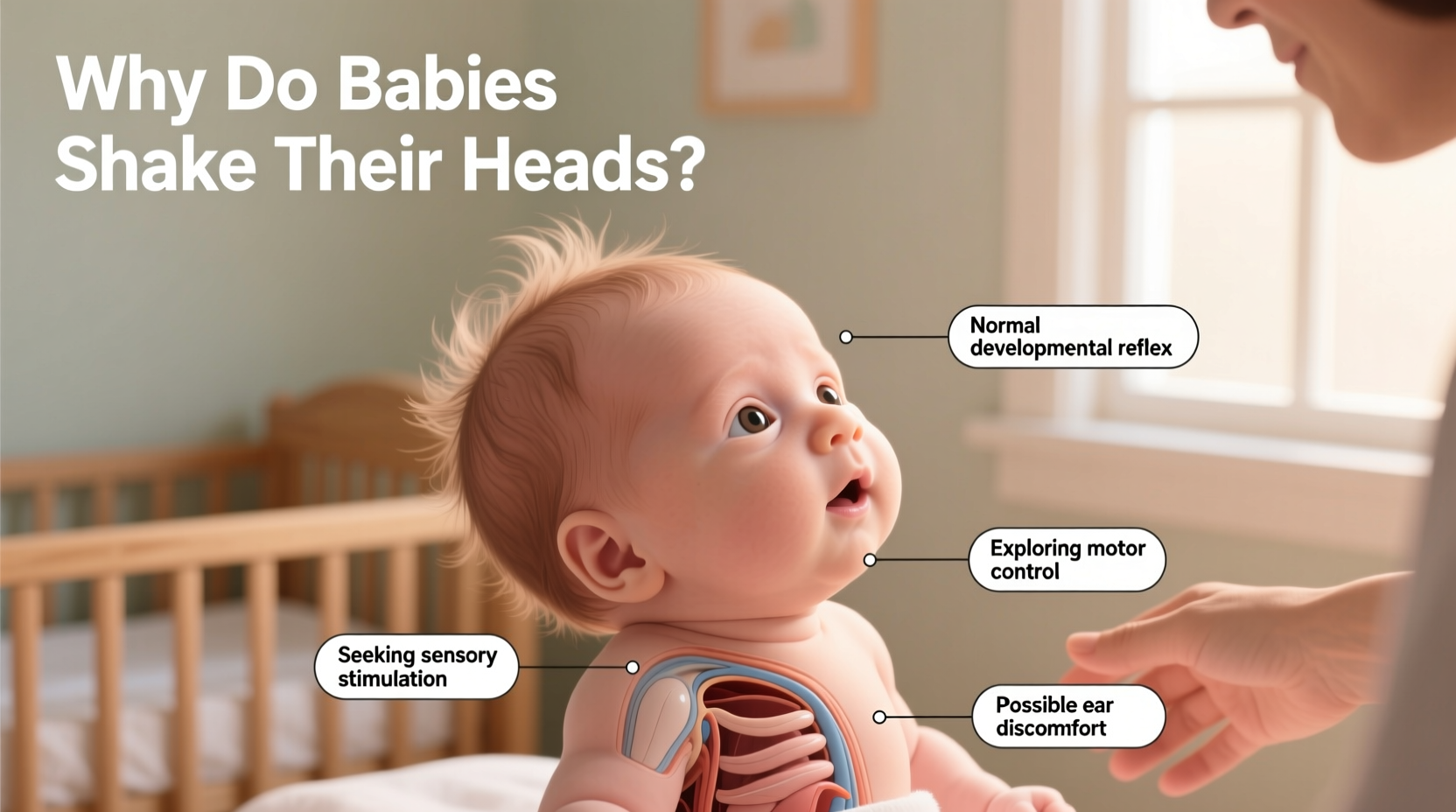
Babies shake their heads for several common reasons. The most likely cause often depends on when the movement happens.
Common explanations include:
- Normal motor development
- Tiredness or self-soothing
- Excitement or overstimulation
- Frustration or crying
- Play and imitation
- Ear discomfort or illness
- A need to turn away from food, touch, or noise
- Less commonly, a neurologic or developmental problem
Head shaking alone does not identify the cause. Look at the full pattern: what the baby is doing before the movement, how long it lasts, whether the baby responds to you, and whether other symptoms appear.
Normal motor development
Young babies have limited control over their neck and head. As neck muscles grow stronger, they may move their heads from side to side. These movements can look unsteady or repetitive, especially during the first year.
Some babies also repeat movements because repetition helps them learn. A baby may shake their head while practicing movement, watching a reflection, or reacting to a new sound.
This is usually less concerning when the baby:
- Stays alert and responsive
- Eats and sleeps as usual
- Uses both sides of the body
- Reaches expected developmental milestones
- Does not seem to be in pain
- Stops or changes the movement when distracted
Tiredness and self-soothing
Many babies shake, roll, or rock their heads when they are tired. The motion may help them settle, much like sucking a thumb or rubbing a blanket.
Head shaking may happen:
- Before a nap
- While falling asleep
- During light sleep
- After waking
- When the baby is trying to calm down
Sleep-related head movement can be normal. However, babies should always sleep on their backs on a firm, flat surface with no pillows, loose blankets, bumpers, or stuffed toys, as recommended by the American Academy of Pediatrics.
Do not restrain a baby’s head or add positioners to stop mild head movement. These products can create a suffocation or entrapment risk.
Excitement, play, or overstimulation
A baby may shake their head when excited by a person, toy, song, or new activity. Some babies use large body movements when they feel strong emotions. Head shaking may occur with arm waving, kicking, squealing, or smiling.
Overstimulation can look similar. Bright lights, loud sounds, crowds, or too much handling may cause a baby to turn away or shake their head. A quiet room, a slower pace, and a short break may help.
Frustration or communication
Babies cannot use words to say “no,” “stop,” or “I am tired.” They may turn or shake their head instead.
For example, a baby may shake their head:
- When they no longer want food
- When they want to stop an activity
– When they are frustrated by a toy - When they are upset but cannot explain why
- When they copy an adult’s “no” gesture
Watch for other communication signals, such as turning away, closing the mouth, fussing, or pushing an object away.
When head shaking may signal ear pain or illness
Head shaking can sometimes happen when a baby has ear discomfort. Babies with ear pain may tug at an ear, cry more than usual, sleep poorly, feed less, or seem uncomfortable when lying down.
An ear infection cannot be diagnosed from head shaking alone. A health care professional must examine the eardrum. Ear tugging also does not always mean an ear infection; babies may touch their ears while exploring their bodies or during teething.
Call your child’s pediatrician if head shaking occurs with:
- Fever
- Crying that is hard to soothe
- New trouble sleeping
- Reduced feeding
- Vomiting or diarrhea
- Fluid or pus from the ear
- A change in hearing or response to sound
- Recent cold symptoms
- Clear signs of pain
In the United States, do not give an infant over-the-counter cold medicine unless a pediatric clinician tells you to. Ask the child’s health care professional before giving pain medicine, especially to a young infant. Medicine dose depends on age, weight, and the exact product.
Teething
Teething can make a baby irritable and more likely to touch the face or ears. It may also change sleep and feeding habits. But teething should not be used to explain severe symptoms, a high fever, breathing problems, marked sleepiness, or repeated vomiting.
If the baby seems ill, seek medical advice rather than assuming teething is the cause.
Congestion and pressure
A cold can cause nasal congestion and discomfort. Some babies move their heads more when they are congested, feeding, or trying to settle. Congestion may also make sleep harder.
For a young infant, ask a pediatric clinician about safe ways to ease congestion. Never use adult products or place a baby to sleep on an incline unless a qualified clinician gives specific medical instructions.

When is baby head shaking a sign of a seizure?
A seizure is different from ordinary head shaking. During a seizure, a baby may not respond normally, may have unusual stiffening or jerking, or may show changes in breathing, skin color, or eye position.
Possible warning signs include:
- Sudden repeated head drops
- Stiffening of the arms, legs, or body
- Rhythmic jerking that the baby cannot stop
- Eyes rolling upward or staring without response
- A sudden loss of muscle tone
- Repeated movements in clusters
- Pauses in breathing or blue, gray, or pale skin
- Unusual sleepiness or confusion after the event
Infantile spasms are a rare but serious type of seizure that often begins during the first year of life. They may look like brief body crunches, head drops, arm movements, or sudden stiffening. They often occur in clusters, especially after waking.
Not every head movement is an infantile spasm. Still, a video can help a pediatric clinician assess a concerning event.
What to do during a possible seizure
If you think a baby is having a seizure:
- Place the baby on a safe, flat surface.
- Turn the baby gently onto their side if possible.
- Move nearby hard or sharp objects away.
- Do not put anything in the baby’s mouth.
- Do not hold the baby down.
- Watch the time and note what the body and eyes are doing.
- Call 911 if the seizure lasts more than five minutes, repeats without recovery, causes breathing trouble, or is the baby’s first known seizure.
Call 911 immediately for trouble breathing, blue or gray skin, serious injury, or a baby who does not return to normal awareness.
Could head shaking be related to autism?
Head shaking by itself does not mean a baby has autism. Repetitive movements can occur in many healthy babies, especially during excitement, tiredness, or play.
Developmental concerns become more meaningful when several signs occur together or when a child loses skills. Examples may include:
- Limited response to name at an age when response is expected
- Little eye contact or shared attention
- Few gestures, such as pointing or waving, when expected
- No babbling or reduced communication
- Limited interest in social interaction
- Loss of language, social, or motor skills
The Centers for Disease Control and Prevention recommends monitoring milestones and discussing concerns with a child’s health care professional. The American Academy of Pediatrics recommends routine developmental screening and autism screening at specific well-child visits.
Do not wait for a child to “grow out of” a clear loss of skills. Contact the pediatrician promptly.

How to tell whether head shaking is likely harmless
Use the pattern, not one isolated movement. This simple check can help you decide what to do next.
| What you notice | More likely to be mild | Needs medical advice |
|---|---|---|
| Awareness | Baby looks at you and responds | Baby stares, becomes unresponsive, or is hard to wake |
| Timing | Happens when tired, excited, or frustrated | Happens suddenly without a clear trigger |
| Control | Stops with comfort or distraction | Cannot be interrupted or occurs in repeated clusters |
| Other symptoms | Baby otherwise acts normally | Fever, pain, vomiting, poor feeding, or breathing changes |
| Development | Skills continue to progress | Skills stop developing or are lost |
| Movement | Gentle side-to-side motion | Stiffening, rhythmic jerking, head drops, or body spasms |
This table is a guide, not a diagnosis. A pediatrician can assess the baby’s history, examine the ears and nervous system, and decide whether testing is needed.
Record a video safely
If the movement happens again, record a short video if it is safe to do so. Include the baby’s face, eyes, arms, legs, and body. Note:
- The date and time
- How long the episode lasts
- What happened before it
- Whether the baby responded to your voice or touch
- Whether the movement stopped during feeding or distraction
- Any fever, illness, or recent medication
Never delay emergency care to obtain a video.

What should parents do when a baby shakes their head?
Start with observation and a calm check. If the baby is alert, breathing normally, feeding well, and otherwise acting like themselves, watch for patterns rather than reacting to one brief episode.
Try these steps:
- Check basic needs. Offer a break, feed if appropriate, change the diaper, and reduce noise or bright light.
- Look for discomfort. Check for fever, congestion, signs of ear pain, rash, or injury.
- Observe responsiveness. Say the baby’s name or offer a familiar toy. Notice whether they look at you or change the movement.
- Track the pattern. Write down when it happens and what the baby is doing.
- Record a video if safe. This can help the pediatrician.
- Contact the pediatrician when concerned. Explain the baby’s age, how often it happens, and any related symptoms.
Do not shake the baby, shout, or force the head to stay still. If you feel overwhelmed by crying or worry, place the baby safely on their back in an empty crib and step away briefly. Ask another trusted adult for help.

When should you call the pediatrician?
Call the child’s pediatrician if head shaking is new, frequent, worsening, or difficult to explain. Also call if the baby appears uncomfortable or has a change in eating, sleep, hearing, movement, or behavior.
Arrange prompt medical advice for:
- Repeated episodes
- Possible ear pain
- Fever in a young infant
- Poor feeding or fewer wet diapers
- Unusual sleepiness
- Repeated vomiting
- Loss of developmental skills
- New weakness or unequal movement
- Movements that occur in clusters
- Events that look like spasms or seizures
For babies younger than 3 months, a rectal temperature of 100.4°F (38°C) or higher requires prompt medical attention. Follow your pediatrician’s instructions and seek urgent care.
Call 911 for breathing trouble, blue or gray skin, serious injury, unresponsiveness, or a seizure lasting longer than five minutes.

Key takeaways
- Babies may shake their heads because they are tired, excited, frustrated, overstimulated, or learning to move.
- Head shaking alone does not diagnose autism, an ear infection, or a seizure.
- A baby who remains alert and well is less likely to have an emergency.
- Fever, pain, poor feeding, breathing changes, loss of awareness, stiffening, jerking, or loss of skills need medical attention.
- A short video and a written description can help the pediatrician.
- Never restrain a baby’s head or put objects in the crib to stop normal movement.
Frequently asked questions
Is it normal for a baby to shake their head side to side?
It can be normal, especially when a baby is tired, excited, frustrated, or practicing movement. It is more reassuring when the baby remains alert, responds normally, and has no signs of pain or illness.
Why does my baby shake their head while feeding?
A baby may shake their head when full, distracted, tired, uncomfortable, or trying to turn away. Check the feeding position and watch for signs of congestion, reflux, mouth pain, or ear discomfort. Contact the pediatrician if feeding becomes difficult or the baby is not taking enough milk.
Why does my baby shake their head while sleeping?
Some babies move their heads while settling or during light sleep. Keep the sleep area firm, flat, and empty except for a fitted sheet. Seek medical advice if the movement includes stiffening, repeated jerks, breathing changes, color changes, or difficulty waking.
Can teething cause a baby to shake their head?
Teething may make a baby irritable and more likely to touch the face or ears, but head shaking is not specific to teething. Do not assume teething is the cause when a baby has a high fever, severe pain, poor feeding, or other concerning symptoms.
Should I worry if my baby shakes their head but seems happy?
Usually, a brief movement in a happy, responsive baby is not an emergency. Continue to observe the pattern and mention it at the next visit if it continues. Call sooner if the movement changes, becomes frequent, or appears with illness, altered awareness, or developmental concerns.
Conclusion
Babies shake their heads for many ordinary reasons, including tiredness, excitement, frustration, self-soothing, and early motor learning. The most useful clues are the baby’s awareness, the timing of the movement, whether it stops with comfort or distraction, and whether other symptoms occur.
When head shaking is paired with pain, fever, poor feeding, breathing changes, unresponsiveness, seizure-like movements, or loss of skills, contact a pediatric clinician promptly. If the event looks like a seizure or affects breathing or consciousness, call 911.
Evidence used
This guide is based on patient-facing guidance and clinical information from U.S. health organizations, including:
- American Academy of Pediatrics: Safe Sleep
- American Academy of Pediatrics: Developmental Surveillance and Screening
- Centers for Disease Control and Prevention: Developmental Milestones
- Centers for Disease Control and Prevention: Autism Spectrum Disorder
- National Institute of Neurological Disorders and Stroke: Epilepsy and Seizures
- HealthyChildren.org: Ear Infections